Department of General Biochemistry, Faculty of Biology and Environmental Protection, University of Lodz, Pomorska 141/3, 90-236 Lodz, Poland.
Int J Mol Sci. 2020 Dec 20;21(24):9737. doi: 10.3390/ijms21249737.
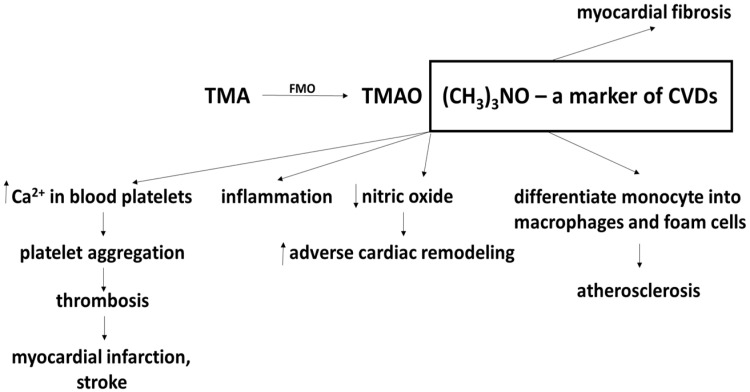
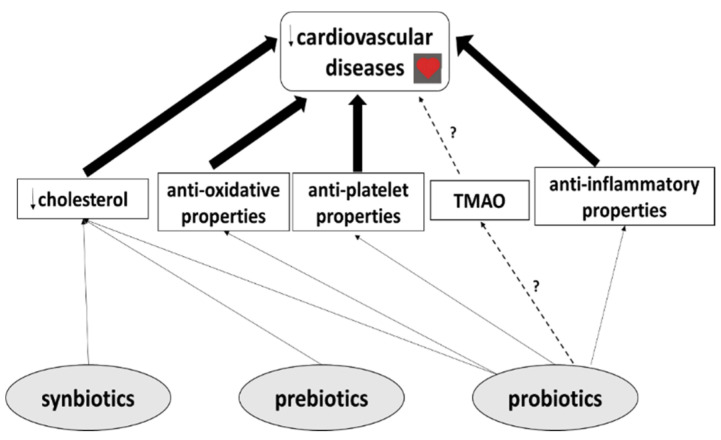
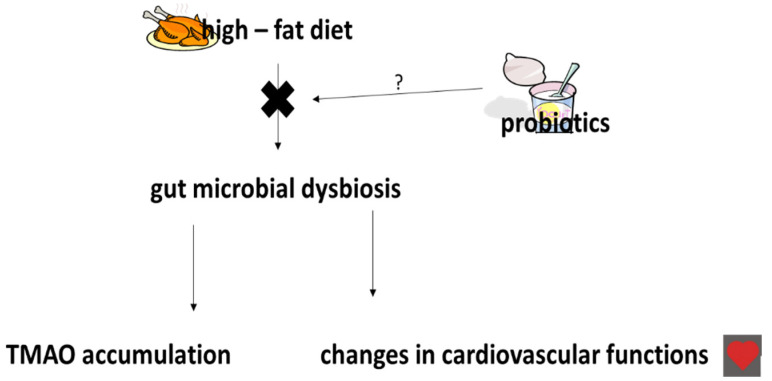
Recent evidence suggests that probiotics, prebiotics and synbiotics may serve as important dietary components in the prevention (especially) and treatment of cardiovascular diseases (CVD), but the recommendations for their use are often based on brief reports and small clinical studies. This review evaluates the current literature on the correlation between CVD and probiotics, prebiotics and synbiotics. Although research on probiotics, prebiotics and synbiotics has grown exponentially in recent years, particularly regarding the effect of probiotics on CVD, their mechanisms have not been clearly defined. It has been proposed that probiotics lower cholesterol levels, and may protect against CVD, by increasing bile salt synthesis and bile acid deconjugation. Similar effects have also been observed for prebiotics and synbiotics; however, probiotics also appear to have anti-oxidative, anti-platelet and anti-inflammatory properties. Importantly, probiotics not only have demonstrated effects in vitro and in animal models, but also in humans, where supplementation with probiotics decreases the risk factors of CVD. In addition, the properties of commercial probiotics, prebiotics and synbiotics remain undetermined, and further experimental research is needed before these substances can be used in the prevention and treatment of CVD. In particular, well-designed clinical trials are required to determine the influence of probiotics on trimethylamine-N-oxide (TMAO), which is believed to be a marker of CVDs, and to clarify the long-term effects, and action, of probiotic, prebiotic and synbiotic supplementation in combination with drug therapy (for example, aspirin). However, while it cannot be unequivocally stated whether such supplementation yields benefits in the prevention and treatment of CVDs, it is important to note that clinical studies performed to date have not identified any side-effects to use.
最近的证据表明,益生菌、益生元和合生菌可能是预防(尤其是)心血管疾病(CVD)的重要饮食成分,但它们的使用建议通常基于简短的报告和小型临床研究。本综述评估了关于 CVD 与益生菌、益生元和合生菌相关性的现有文献。尽管近年来益生菌、益生元和合生菌的研究呈指数级增长,特别是关于益生菌对 CVD 的影响,但它们的作用机制尚未明确界定。据提出,益生菌通过增加胆盐合成和胆汁酸去结合来降低胆固醇水平,并可能预防 CVD。益生元和合生菌也观察到了类似的作用;然而,益生菌似乎还具有抗氧化、抗血小板和抗炎特性。重要的是,益生菌不仅在体外和动物模型中显示出效果,而且在人类中也显示出效果,其中益生菌补充剂降低了 CVD 的风险因素。此外,商业益生菌、益生元和合生菌的特性仍不确定,在这些物质可用于 CVD 的预防和治疗之前,需要进行进一步的实验研究。特别是,需要进行精心设计的临床试验来确定益生菌对三甲胺 N-氧化物(TMAO)的影响,TMAO 被认为是 CVD 的标志物,并阐明益生菌、益生元和合生菌补充剂与药物治疗(例如阿司匹林)联合使用的长期效果和作用。然而,虽然不能明确表示这种补充剂是否对 CVD 的预防和治疗有益,但重要的是要注意,迄今为止进行的临床研究未发现任何副作用。