Harb Amal, Simpson Craig, Guo Wenbin, Govindan Ganesan, Kakani Vijaya Gopal, Sunkar Ramanjulu
Department of Biochemistry and Molecular Biology, Oklahoma State University, Stillwater, OK, United States.
Department of Biological Sciences, Faculty of Science, Yarmouk University, Irbid, Jordan.
Front Plant Sci. 2020 Dec 23;11:618491. doi: 10.3389/fpls.2020.618491. eCollection 2020.
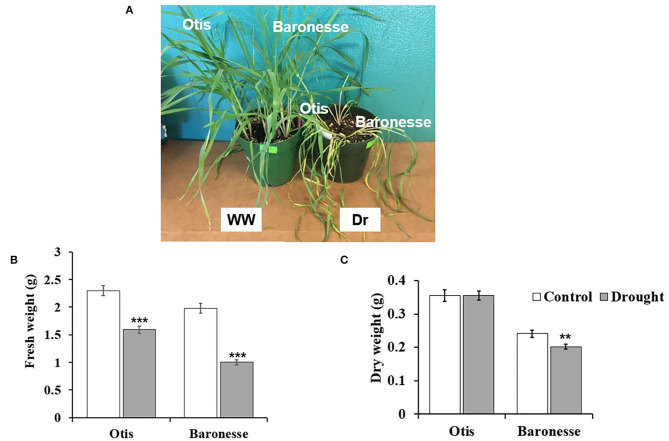
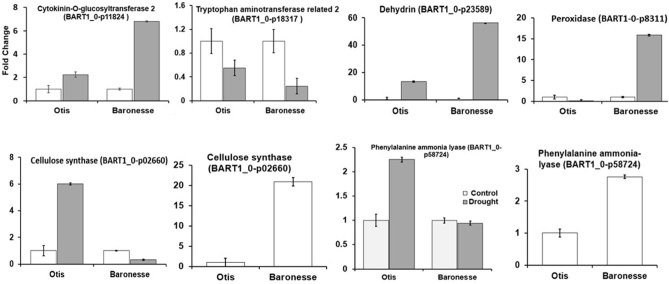
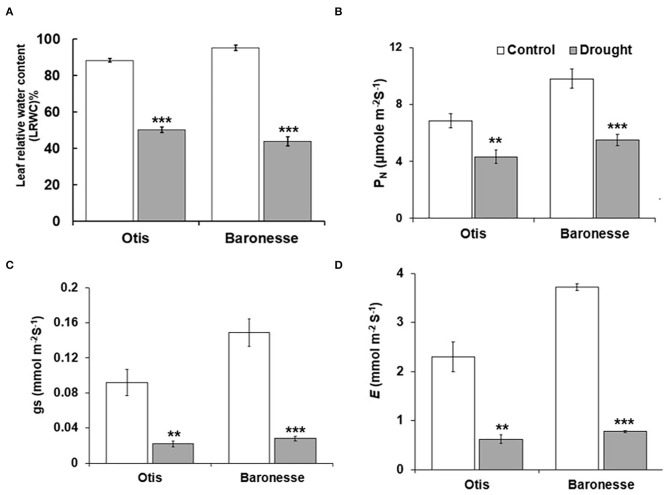
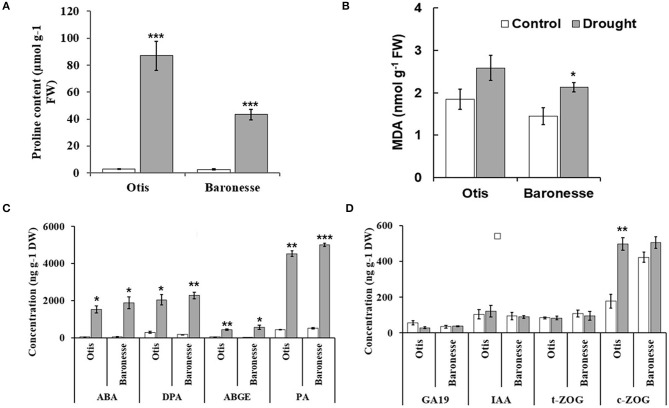
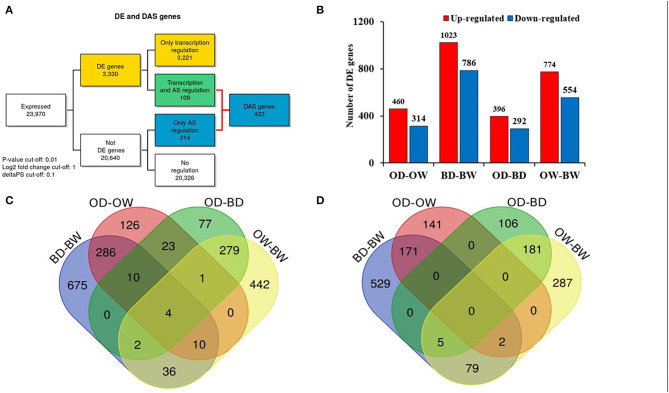
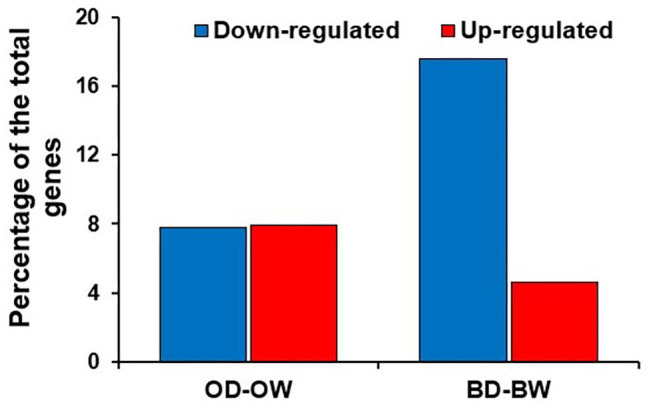
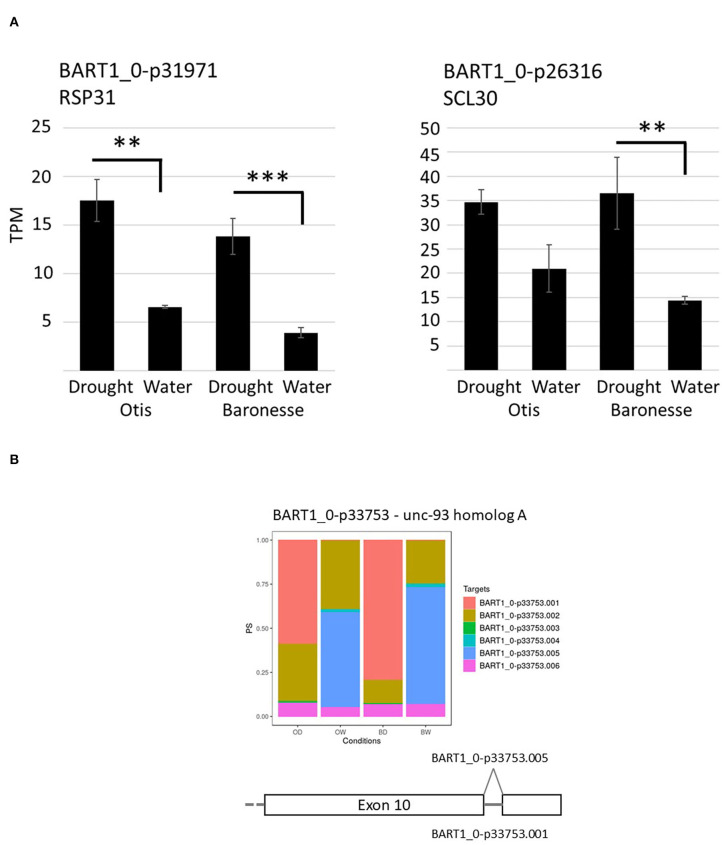
Like many cereal crops, barley is also negatively affected by drought stress. However, due to its simple genome as well as enhanced stress resilient nature compared to rice and wheat, barley has been considered as a model to decipher drought tolerance in cereals. In the present study, transcriptomic and hormonal profiles along with several biochemical features were compared between drought-tolerant (Otis) and drought-sensitive (Baronesse) barley genotypes subjected to drought to identify molecular and biochemical differences between the genotypes. The drought-induced decrease in the leaf relative water content, net photosynthesis, and biomass accumulation was relatively low in Otis compared to Baronesse. The hormonal profiles did not reveal significant differences for majority of the compounds other than the GA20 and the cis-zeatin-o-glucoside (c-ZOG), whose levels were greatly increased in Otis compared to Baronesse under drought. The major differences that emerged from the transcriptome analysis are; (1), the overall number of differentially expressed genes was relatively low in drought-tolerant Otis compared to drought-sensitive Baronesse; (2), a wax biosynthesis gene (CER1), and NAC transcription factors were specifically induced in Otis but not in Baronesse; (3), the degree of upregulation of betaine aldehyde dehydrogenase and a homeobox transcription factor (genes with proven roles in imparting drought tolerance), was greater in Otis compared to Baronesse; (4) the extent of downregulation of gene expression profiles for proteins of the reaction center photosystem II (PSII) (D1 and D2) was low in Otis compared to Baronesse; and, (5), alternative splicing (AS) was also found to differ between the genotypes under drought. Taken together, the overall transcriptional responses were low in drought-tolerant Otis but the genes that could confer drought tolerance were either specifically induced or greatly upregulated in the tolerant genotype and these differences could be important for drought tolerance in barley.
与许多谷类作物一样,大麦也受到干旱胁迫的负面影响。然而,由于其基因组简单,且与水稻和小麦相比具有更强的抗逆性,大麦被视为解析谷类作物耐旱性的模型。在本研究中,对耐旱(奥的斯)和干旱敏感(巴罗内塞)大麦基因型在干旱条件下的转录组和激素谱以及若干生化特征进行了比较,以确定基因型之间的分子和生化差异。与巴罗内塞相比,干旱诱导的奥的斯叶片相对含水量、净光合作用和生物量积累的下降幅度相对较小。除了GA20和顺式玉米素-O-葡萄糖苷(c-ZOG)外,大多数化合物的激素谱没有显示出显著差异,在干旱条件下,奥的斯中这两种化合物的水平比巴罗内塞大幅增加。转录组分析中出现的主要差异有:(1)与干旱敏感的巴罗内塞相比,耐旱的奥的斯中差异表达基因的总数相对较少;(2)一个蜡质生物合成基因(CER1)和NAC转录因子在奥的斯中被特异性诱导,但在巴罗内塞中没有;(3)甜菜碱醛脱氢酶和一个同源异型盒转录因子(在赋予耐旱性方面已证实有作用的基因)的上调程度,奥的斯比巴罗内塞更大;(4)与巴罗内塞相比,奥的斯中反应中心光系统II(PSII)(D1和D2)蛋白质的基因表达谱下调程度较低;(5)干旱条件下,两种基因型之间也发现了可变剪接(AS)的差异。综上所述,耐旱的奥的斯总体转录反应较低,但能够赋予耐旱性的基因在耐受基因型中要么被特异性诱导,要么大幅上调,这些差异可能对大麦的耐旱性很重要。