Lin Ji, Li Xiaokeng, Yin Jun, Qian Jin
Key Laboratory of Soft Machines and Smart Devices of Zhejiang Province, Department of Engineering Mechanics, Zhejiang University, Hangzhou, China.
State Key Laboratory of Fluid Power and Mechatronic Systems, Key Laboratory of 3D Printing Process and Equipment of Zhejiang Province, School of Mechanical Engineering, Zhejiang University, Hangzhou, China.
Front Bioeng Biotechnol. 2020 Dec 14;8:597867. doi: 10.3389/fbioe.2020.597867. eCollection 2020.
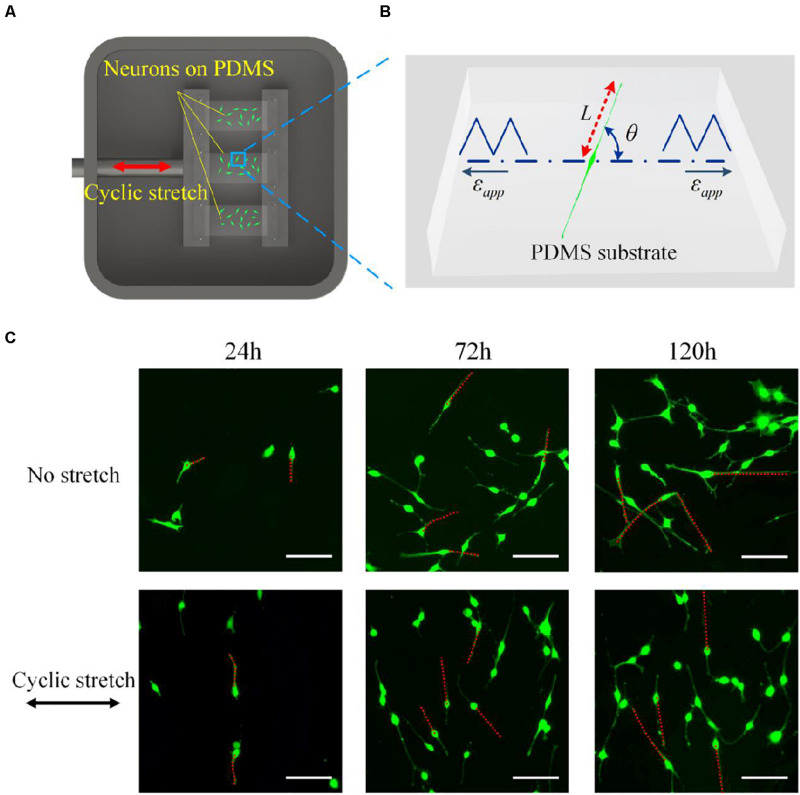
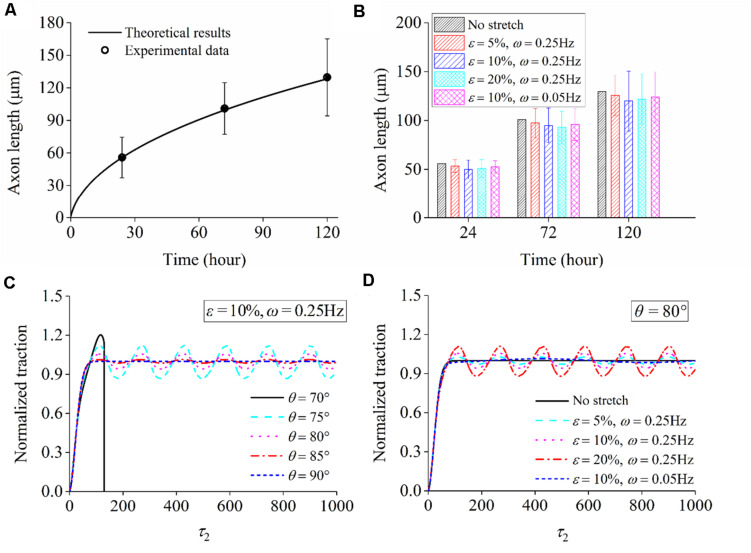
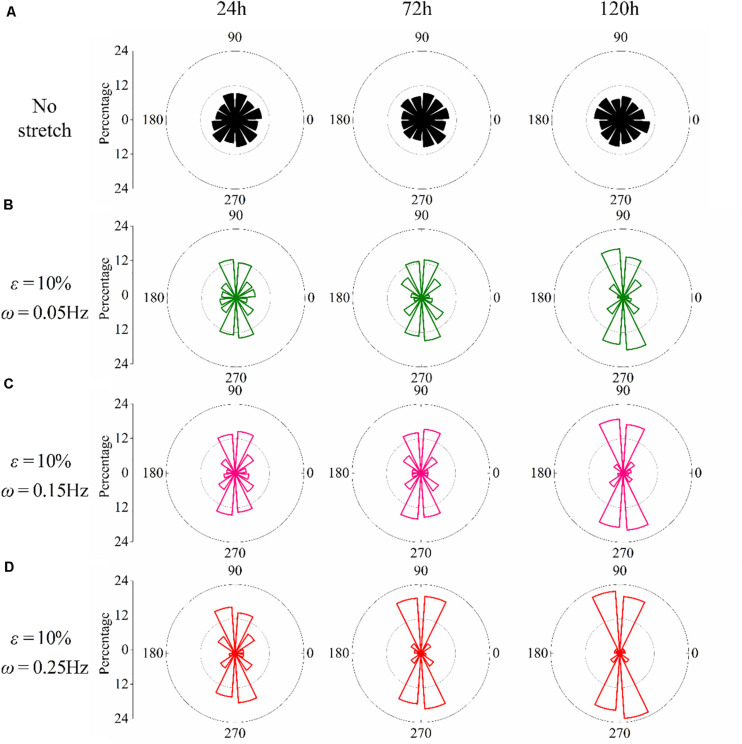
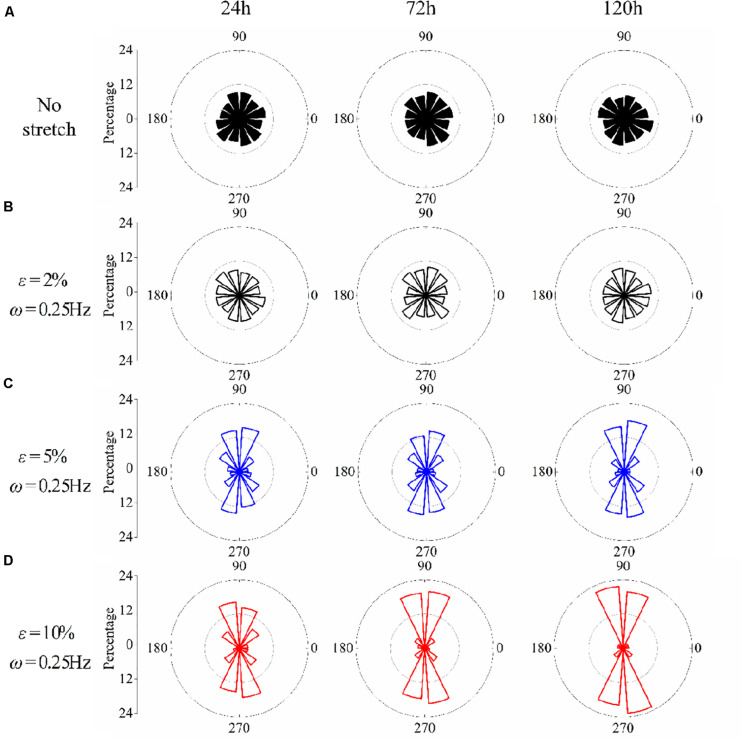
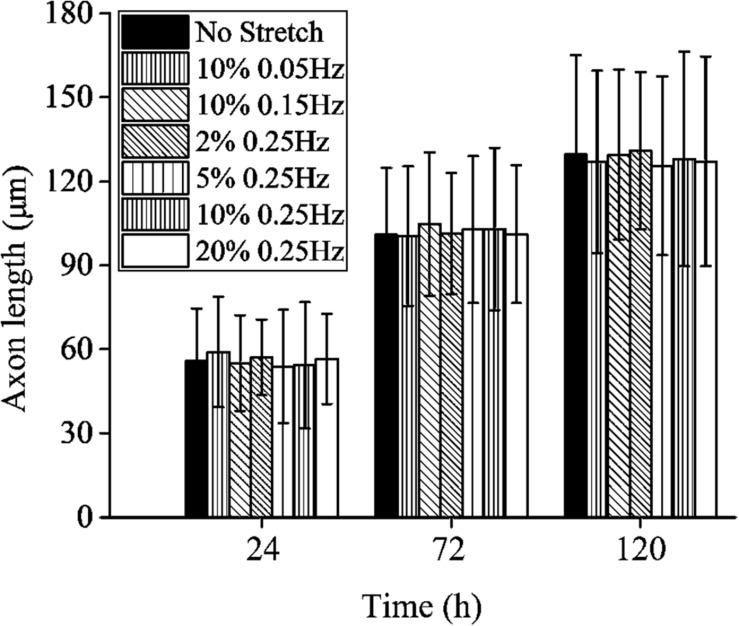
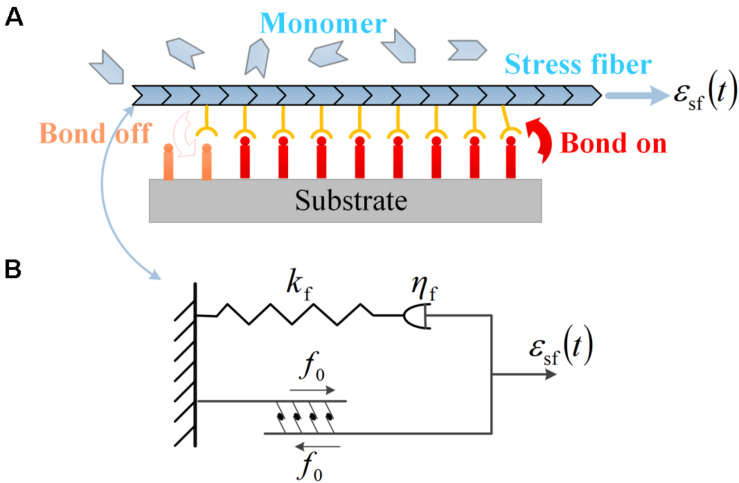
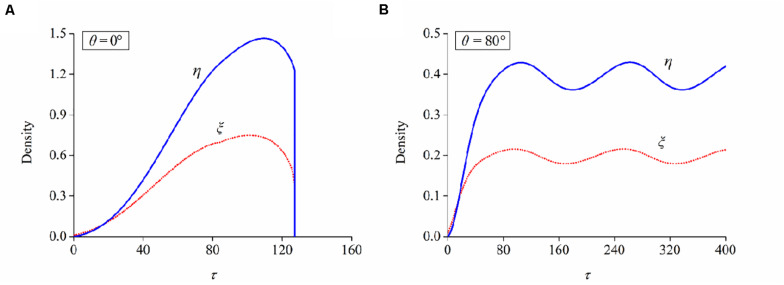
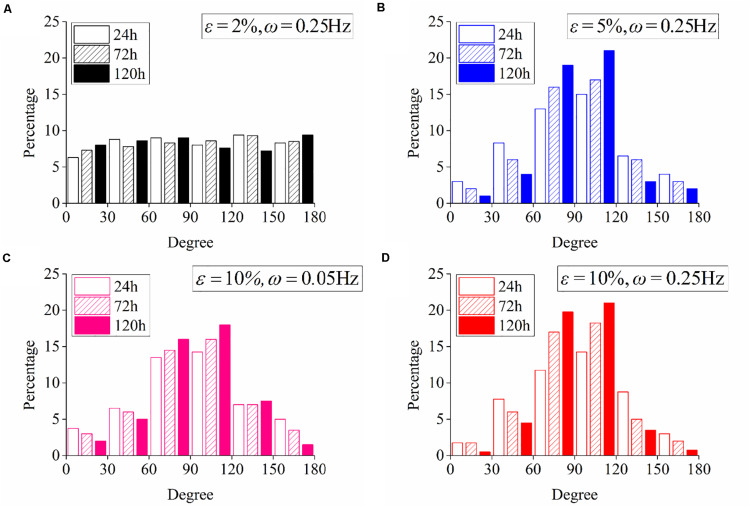
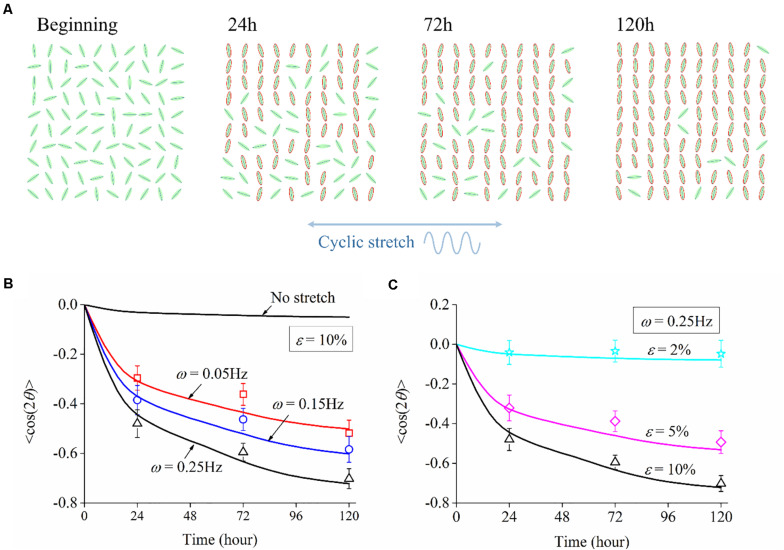
The directional alignment and outgrowth of neurons is a critical step of nerve regeneration and functional recovery of nerve systems, where neurons are exposed to a complex mechanical environment with subcellular structures such as stress fibers and focal adhesions acting as the key mechanical transducer. In this paper, we investigate the effects of cyclic stretch on neuron reorientation and axon outgrowth with a feasible stretching device that controls stretching amplitude and frequency. Statistical results indicate an evident frequency and amplitude dependence of neuron reorientation, that is, neurons tend to align away from stretch direction when stretching amplitude and frequency are large enough. On the other hand, axon elongation under cyclic stretch is very close to the reference case where neurons are not stretched. A mechanochemical framework is proposed by connecting the evolution of cellular configuration to the microscopic dynamics of subcellular structures, including stress fiber, focal adhesion, and microtubule, yielding theoretical predictions that are consistent with the experimental observations. The theoretical work provides an explanation of the neuron's mechanical response to cyclic stretch, suggesting that the contraction force generated by stress fiber plays an essential role in both neuron reorientation and axon elongation. This combined experimental and theoretical study on stretch-induced neuron reorientation may have potential applications in neurodevelopment and neuron regeneration.
神经元的定向排列和生长是神经再生以及神经系统功能恢复的关键步骤,在此过程中,神经元会暴露于复杂的力学环境中,诸如应力纤维和黏着斑等亚细胞结构充当关键的力学传感器。在本文中,我们使用一种能够控制拉伸幅度和频率的可行拉伸装置,研究了周期性拉伸对神经元重新定向和轴突生长的影响。统计结果表明神经元重新定向明显依赖于频率和幅度,也就是说,当拉伸幅度和频率足够大时,神经元倾向于朝着远离拉伸方向排列。另一方面,周期性拉伸下轴突的伸长与未拉伸神经元的对照情况非常接近。通过将细胞形态的演变与亚细胞结构(包括应力纤维、黏着斑和微管)的微观动力学联系起来,提出了一个机械化学框架,得出了与实验观察结果一致的理论预测。该理论工作解释了神经元对周期性拉伸的力学响应,表明应力纤维产生的收缩力在神经元重新定向和轴突伸长中都起着至关重要的作用。这种关于拉伸诱导神经元重新定向的实验与理论相结合的研究可能在神经发育和神经元再生方面具有潜在应用。