Kanetaka Kengo, Eguchi Susumu
Tissue Engineering and Regenerative Therapeutics in Gastrointestinal Surgery, Nagasaki University Graduate School of Biomedical Sciences, Japan.
Department of Surgery, Nagasaki University Graduate School of Biomedical Sciences, Japan.
Regen Ther. 2020 Aug 4;15:129-137. doi: 10.1016/j.reth.2020.07.002. eCollection 2020 Dec.
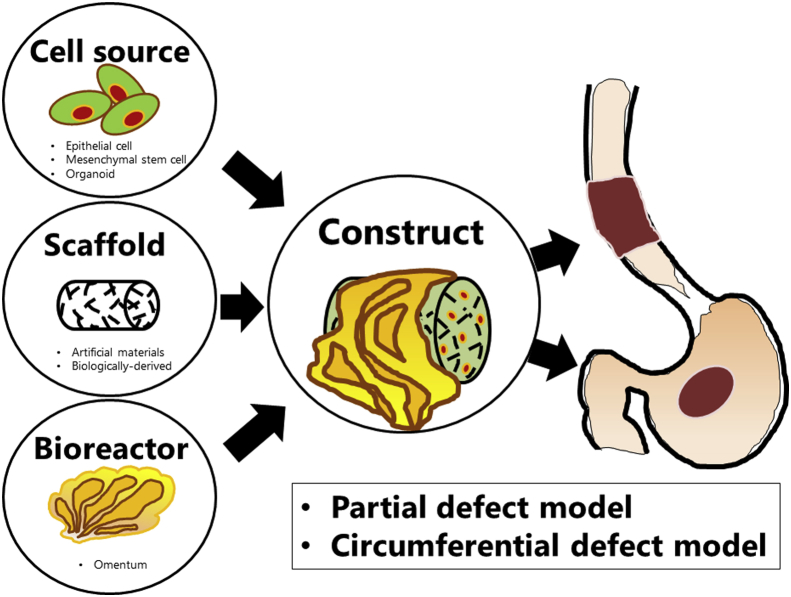
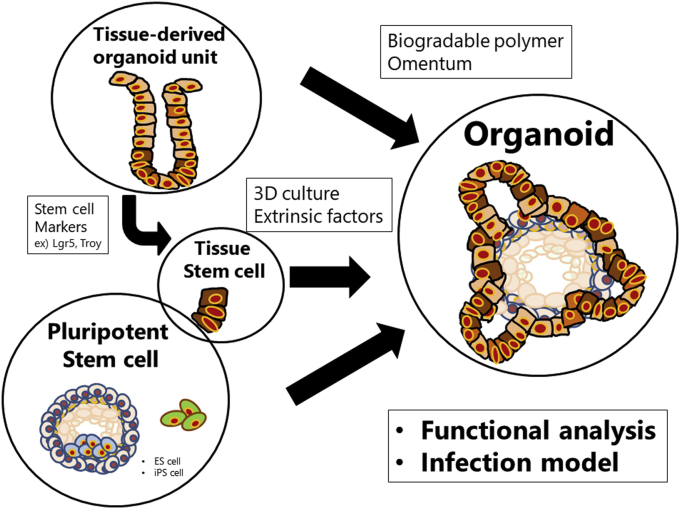
The main surgical strategy for gastrointestinal tract malignancy is resection, which consists of not only resection of the involved organs but also simultaneous resection of the surrounding or adjacent mesenteries that contain lymph vessels and nodes. After resection of the diseased organs, the defect of the gastrointestinal conduit is replaced with organs located downstream, such as the stomach and jejunum. However, esophageal and gastric reconstruction using these natural substitutes is associated with a diminished quality of life due to the loss of the reserve function, damage to the antireflux barrier, and dumping syndrome. Thus, replacement of the deficit after resection with the patient's own regenerated tissue to compensate for the lost function and tissue using regenerative medicine will be an ideal treatment. Many researchers have been trying to construct artificial organs through tissue engineering techniques; however, none have yet succeeded in growing a whole organ because of the complicated functions these organs perform, such as the processing and absorption of nutrients. While exciting results have been reported with regard to tissue engineering techniques concerning the upper gastrointestinal tract, such as the esophagus and stomach, most of these achievements have been observed in animal models, and few successful approaches in the clinical setting have been reported for the replacement of mucosal defects. We review the recent progress in regenerative medicine in relation to the upper gastrointestinal tract, such as the esophagus and stomach. We also focus on the functional capacity of regenerated tissue and its role as a culture system to recapitulate the mechanisms underlying infectious disease. With the emergence of technology such as the fabrication of decellularized constructs, organoids and cell sheet medicine, collaboration between gastrointestinal surgery and regenerative medicine is expected to help establish novel therapeutic modalities in the future.
胃肠道恶性肿瘤的主要手术策略是切除,这不仅包括切除受累器官,还包括同时切除包含淋巴管和淋巴结的周围或相邻系膜。切除患病器官后,用下游的器官(如胃和空肠)替代胃肠道管道的缺损。然而,使用这些天然替代物进行食管和胃重建会导致生活质量下降,原因包括储备功能丧失、抗反流屏障受损和倾倒综合征。因此,利用再生医学用患者自身的再生组织替代切除后的缺损,以补偿失去的功能和组织,将是一种理想的治疗方法。许多研究人员一直试图通过组织工程技术构建人工器官;然而,由于这些器官执行的功能复杂,如营养物质的处理和吸收,尚未有人成功培育出完整的器官。虽然关于食管和胃等上消化道的组织工程技术已报道了令人兴奋的结果,但这些成果大多是在动物模型中观察到的,在临床环境中用于替代黏膜缺损的成功方法报道较少。我们回顾了与食管和胃等上消化道相关的再生医学的最新进展。我们还关注再生组织的功能能力及其作为模拟传染病潜在机制的培养系统的作用。随着去细胞构建体、类器官和细胞片药物制造等技术的出现,预计胃肠外科与再生医学之间的合作将有助于在未来建立新的治疗模式。