Department of Oncology, The Affiliated Hospital of Qingdao University, Shandong Province, Qingdao, 266003, China.
Department of Oncology, Heze Municipal Hospital, Heze, 274000, Shandong Province, China.
BMC Complement Med Ther. 2021 Jan 11;21(1):25. doi: 10.1186/s12906-020-03191-0.
Fucoidan, a water-soluble polysaccharide, exerts anticoagulant and antiviral functions. It was recently reported that fucoidan also exerts an antitumor function. Lung cancer is one of the most common cancers in the world. The aim of this study was to investigate anti-tumor,apoptosis and anti-metastasis effects of fucoidan in both cell-based assays and mouse xenograft model, as well as to clarify possible role of m-TOR pathway in the protection.
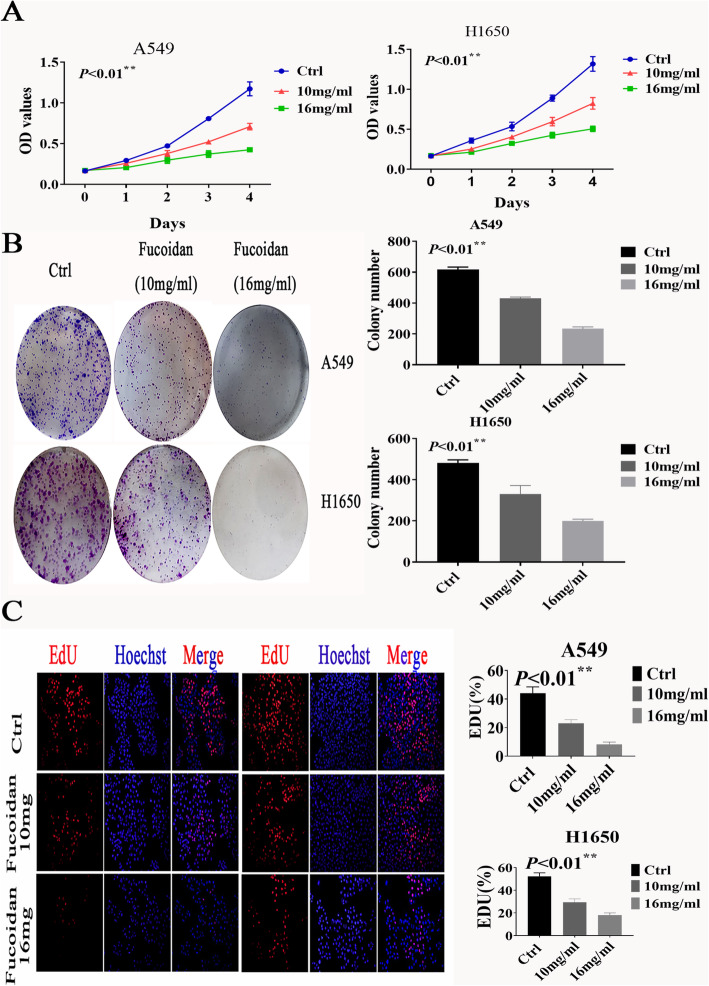
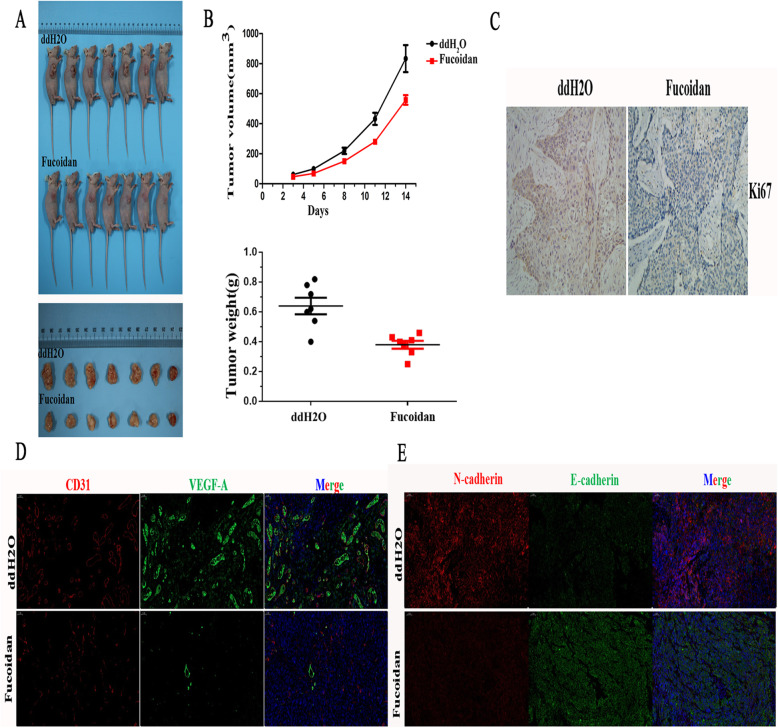
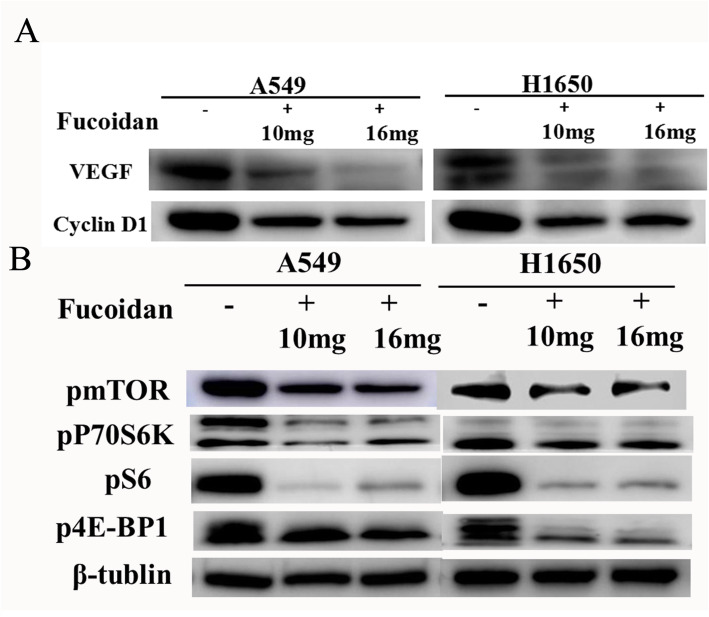
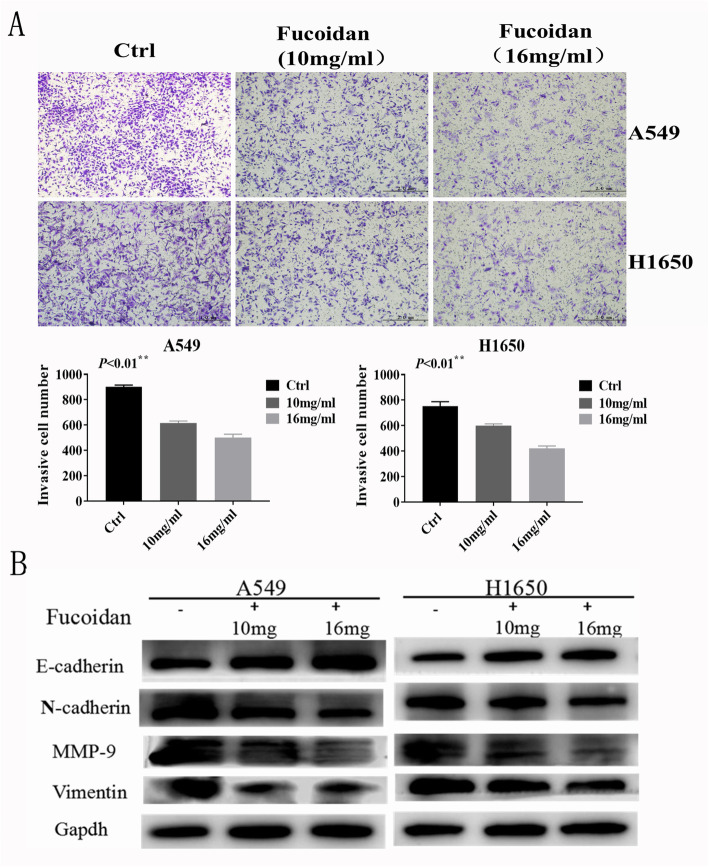
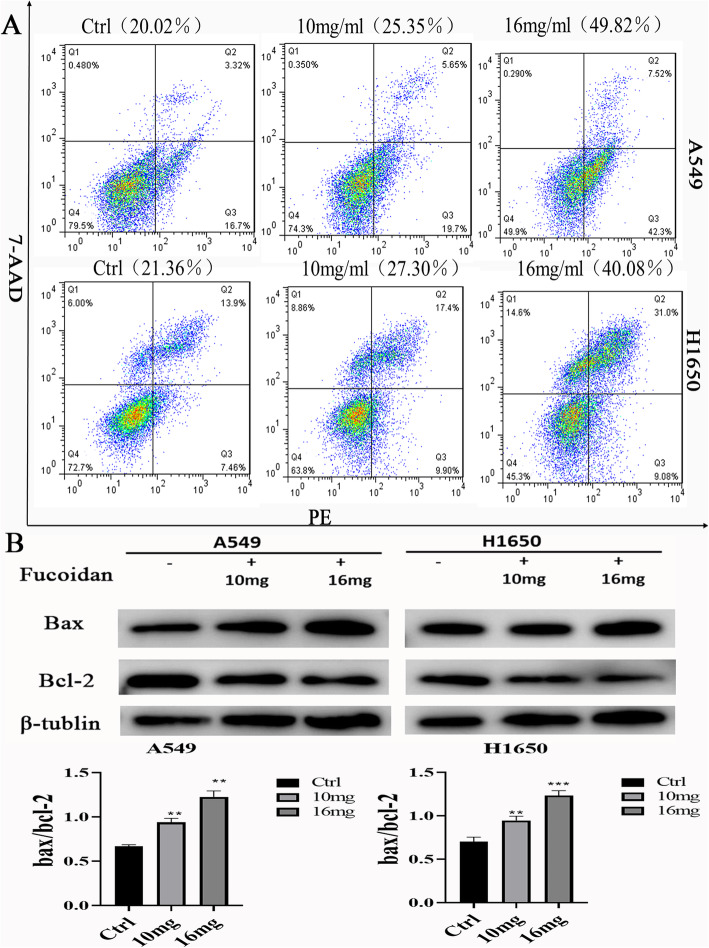
In vitro: Different concentrations of fucoidan were given to act on non-small cell lung cancer (NSCLC) cell lines A549 and H1650. The effects of fucoidan on cell proliferation were observed by detecting cyclin expression levels, CCK8 and EDU experiments and cloning experiments. The apoptotic level was detected by flow cytometry and the apoptotic protein level was detected by Westernblot. By detecting the expression of adhesion molecules, the expression of matrix metalloproteinase (MMP) family, and Transwell cell invasion and migration experiment, the effect of fucoidan on cell adhesion, invasion and migration was observed. Meanwhile the effect of fucoidan on angiogenesis was observed by detecting the expression of vascular endothelial growth factor (VEGF). In vivo experiment: An animal model of NSCLC cell mouse subcutaneous xenograft tumor was established to analyze the correlation between the consumption of fucoidan and the size and volume of xenograft tumor through gross observation. Through immunohistochemical staining and immunofluorescence double staining, ki67 and cell adhesion molecules (E-cadherin, N-cadherin and CD31) and VEGF-A in the tumor were detected, and the correlation between the amount of fucoidan and the above indexes was analyzed.
Fucoidan inhibited the proliferation and angiogenesis of NSCLC cells via the mTOR pathway and promoted their apoptosis by increasing the Bax/Bcl-2 ratio. Not only that, fucoidan inhibited NSCLC cell invasion via epithelial-mesenchymal transformation (EMT). The mice fed fucoidan exhibited significant reductions in tumor volumes and weights. These indicators (Ki67, VEGF-A,N-cadherin) were decreased and E-cadherin expression was up-regulated in A549 mice that treated with fucoidan. The results showed that fucoidan inhibited tumor proliferation in vivo by affecting the expression of related proteins.
Fucoidan conveys antitumor effects and our results represent an ideal therapeutic agent for NSCLC.
褐藻糖胶是一种水溶性多糖,具有抗凝和抗病毒功能。最近有报道称,褐藻糖胶还具有抗肿瘤功能。肺癌是世界上最常见的癌症之一。本研究旨在通过细胞实验和小鼠异种移植模型研究褐藻糖胶的抗肿瘤、凋亡和抗转移作用,并阐明 m-TOR 通路在保护中的可能作用。
体外实验:给予不同浓度的褐藻糖胶作用于非小细胞肺癌(NSCLC)细胞系 A549 和 H1650。通过检测细胞周期蛋白表达水平、CCK8 和 EDU 实验以及克隆实验观察褐藻糖胶对细胞增殖的影响。通过流式细胞术检测细胞凋亡水平,通过 Western blot 检测细胞凋亡蛋白水平。通过检测黏附分子的表达、基质金属蛋白酶(MMP)家族的表达以及 Transwell 细胞侵袭和迁移实验,观察褐藻糖胶对细胞黏附、侵袭和迁移的影响。同时,通过检测血管内皮生长因子(VEGF)的表达观察褐藻糖胶对血管生成的影响。体内实验:建立 NSCLC 细胞小鼠皮下异种移植肿瘤模型,通过大体观察分析褐藻糖胶消耗与异种移植肿瘤大小和体积的相关性。通过免疫组化染色和免疫荧光双重染色检测肿瘤中 ki67 和细胞黏附分子(E-钙黏蛋白、N-钙黏蛋白和 CD31)和 VEGF-A 的表达,并分析褐藻糖胶的量与上述指标的相关性。
褐藻糖胶通过 mTOR 通路抑制 NSCLC 细胞的增殖和血管生成,并通过增加 Bax/Bcl-2 比值促进其凋亡。不仅如此,褐藻糖胶还通过上皮-间充质转化(EMT)抑制 NSCLC 细胞侵袭。喂食褐藻糖胶的小鼠肿瘤体积和重量明显减小。在接受褐藻糖胶治疗的 A549 小鼠中,Ki67、VEGF-A、N-钙黏蛋白等指标降低,E-钙黏蛋白表达上调。结果表明,褐藻糖胶通过影响相关蛋白的表达抑制体内肿瘤的增殖。
褐藻糖胶具有抗肿瘤作用,为 NSCLC 的理想治疗药物。