Nebraska Center for Virology, University of Nebraska, Lincoln, NE 68583-0900, USA.
School of Biological Sciences, University of Nebraska, Lincoln, NE 68588-0118, USA.
Viruses. 2021 Jan 10;13(1):87. doi: 10.3390/v13010087.
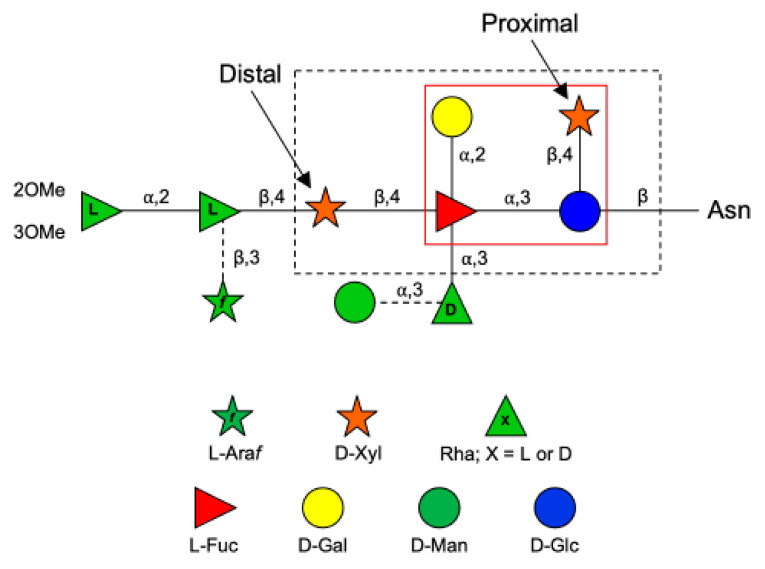
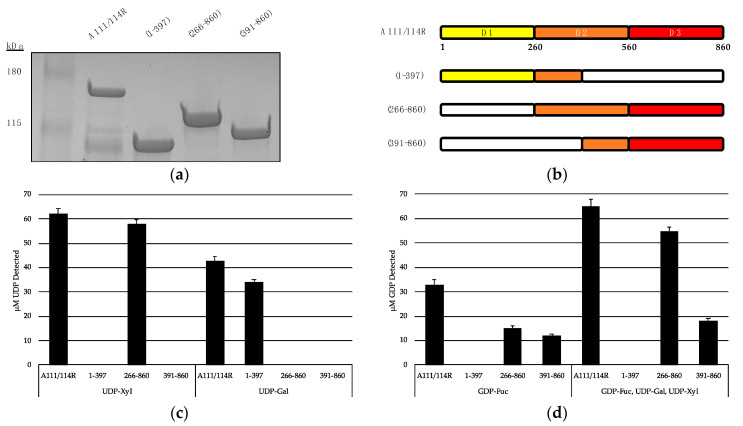
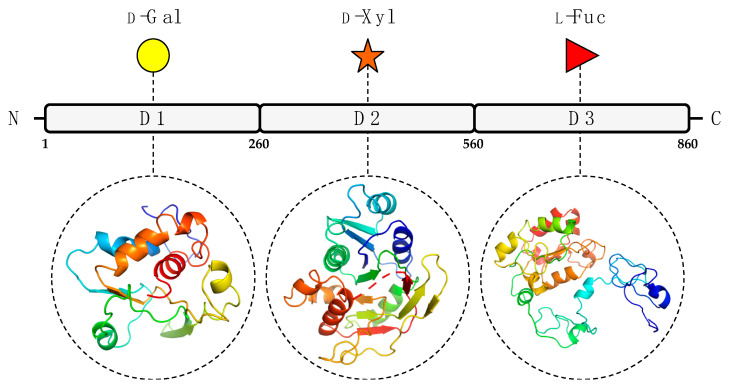
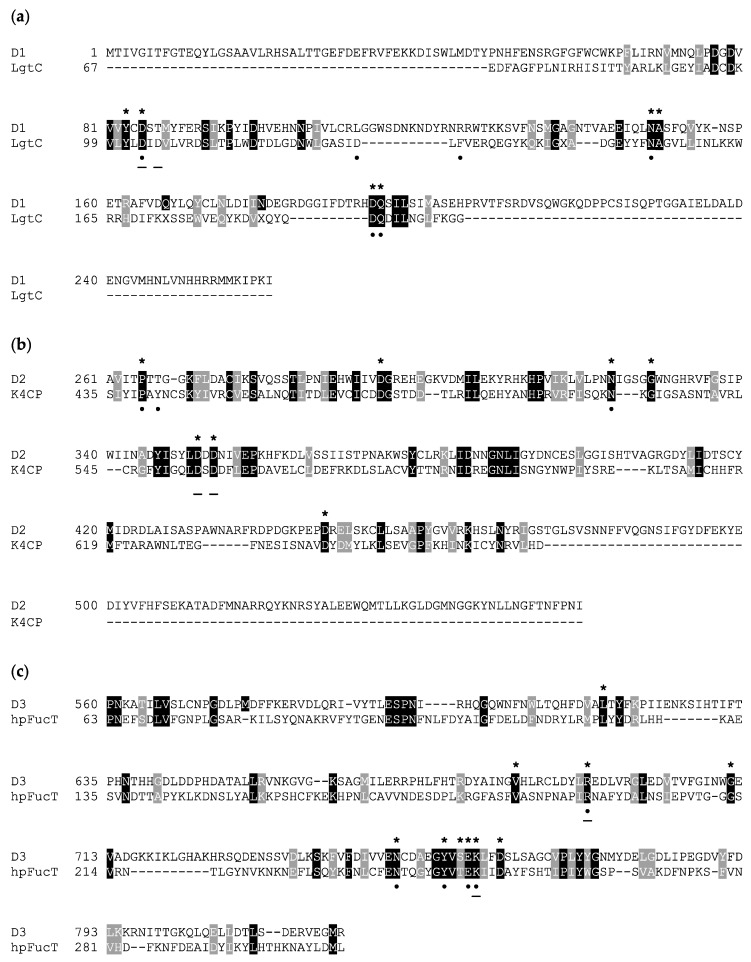
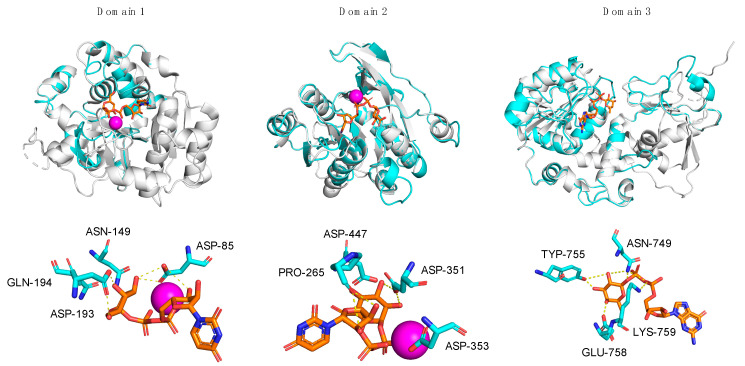
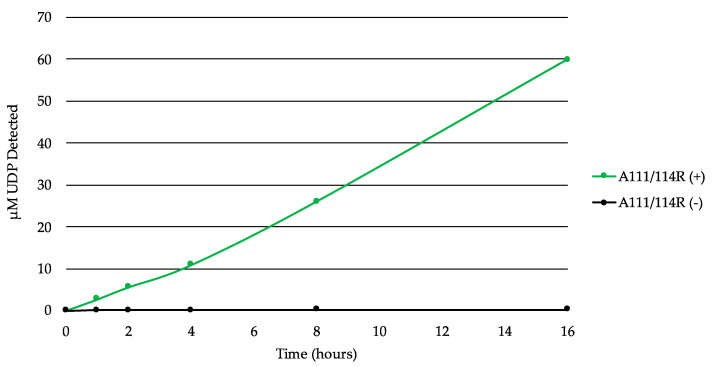
The structures of the four -linked glycans from the prototype chlorovirus PBCV-1 major capsid protein do not resemble any other glycans in the three domains of life. All known chloroviruses and antigenic variants (or mutants) share a unique conserved central glycan core consisting of five sugars, except for antigenic mutant virus P1L6, which has four of the five sugars. A combination of genetic and structural analyses indicates that the protein coded by PBCV-1 gene , conserved in all chloroviruses, is a glycosyltransferase with three putative domains of approximately 300 amino acids each. Here, in addition to in silico sequence analysis and protein modeling, we measured the hydrolytic activity of protein A111/114R. The results suggest that domain 1 is a galactosyltransferase, domain 2 is a xylosyltransferase and domain 3 is a fucosyltransferase. Thus, A111/114R is the protein likely responsible for the attachment of three of the five conserved residues of the core region of this complex glycan, and, if biochemically corroborated, it would be the second three-domain protein coded by PBCV-1 that is involved in glycan synthesis. Importantly, these findings provide additional support that the chloroviruses do not use the canonical host endoplasmic reticulum-Golgi glycosylation pathway to glycosylate their glycoproteins; instead, they perform glycosylation independent of cellular organelles using virus-encoded enzymes.
原型噬藻体 PBCV-1 主要衣壳蛋白的四连接聚糖的结构与生命三界中的任何其他聚糖都不相似。除了具有五个糖的抗原变异体(或突变体)外,所有已知的噬藻体和抗原变异体都具有独特的保守核心聚糖,由五个糖组成。遗传和结构分析的结合表明,PBCV-1 基因编码的蛋白质在所有噬藻体中都保守,是一种具有三个假定结构域的糖基转移酶,每个结构域约有 300 个氨基酸。在这里,除了进行计算机序列分析和蛋白质建模外,我们还测量了蛋白 A111/114R 的水解活性。结果表明,结构域 1 是半乳糖基转移酶,结构域 2 是木糖基转移酶,结构域 3 是岩藻糖基转移酶。因此,A111/114R 可能负责附着核心区域的五个保守残基中的三个,并且如果在生化上得到证实,它将是编码 PBCV-1 的第二个涉及糖合成的三结构域蛋白。重要的是,这些发现为噬藻体不使用经典的宿主内质网-高尔基体糖基化途径糖基化其糖蛋白提供了额外的支持;相反,它们使用病毒编码的酶在细胞器之外进行糖基化。