Walsh Jacob P, DesRochers Natasha, Renaud Justin B, Seifert Keith A, Yeung Ken K-C, Sumarah Mark W
London Research and Development Center, Agriculture and Agri-Food Canada, London, ON, N5V 4T3, Canada.
Department of Chemistry, University of Western Ontario, London, ON, N6A 5B7, Canada.
J Ginseng Res. 2021 Jan;45(1):156-162. doi: 10.1016/j.jgr.2019.08.008. Epub 2019 Sep 13.
It is estimated that 20-30% of ginseng crops in Canada are lost to root rot each harvest. This disease is commonly caused by fungal infection with , previously known as Previous reports have linked the virulence of fungal disease to the production of siderophores, a class of small-molecule iron chelators. However, these siderophores have not been identified in .
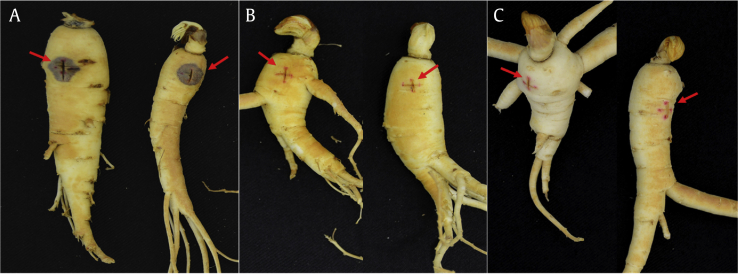
High-resolution LC-MS/MS was used to screen and strain extracts for secondary metabolite production. These strains were also tested for their ability to cause root rot in American ginseng and categorized as virulent or avirulent. The differences in detected metabolites between the virulent and avirulent strains were compared with a focus on siderophores.
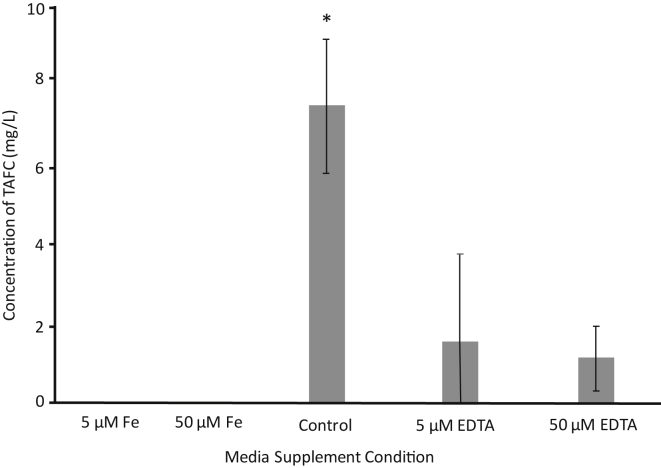
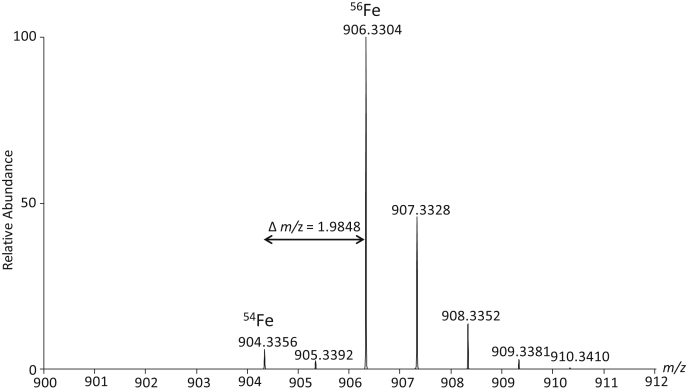
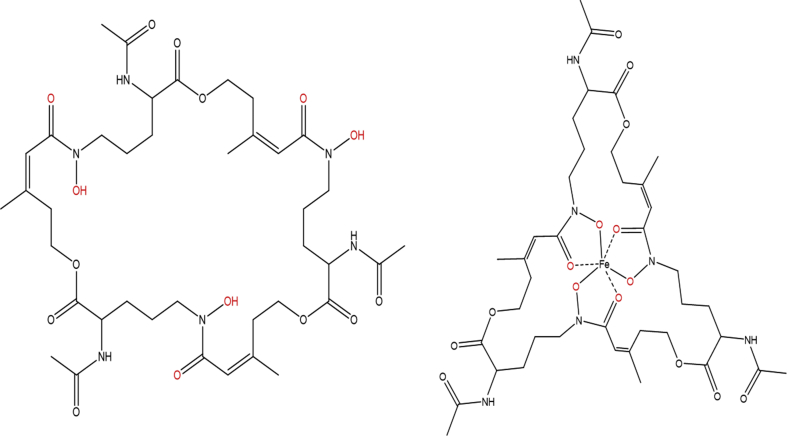
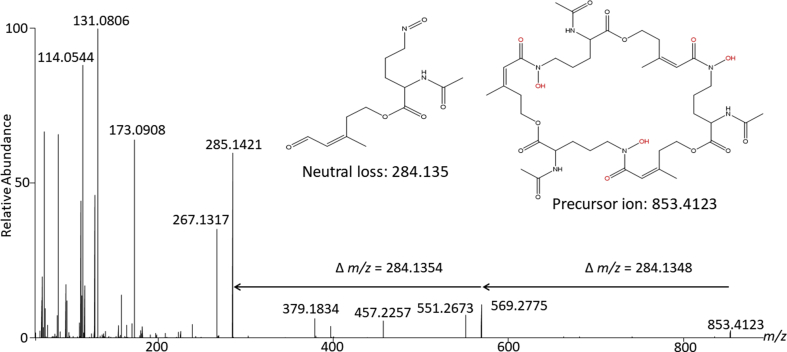
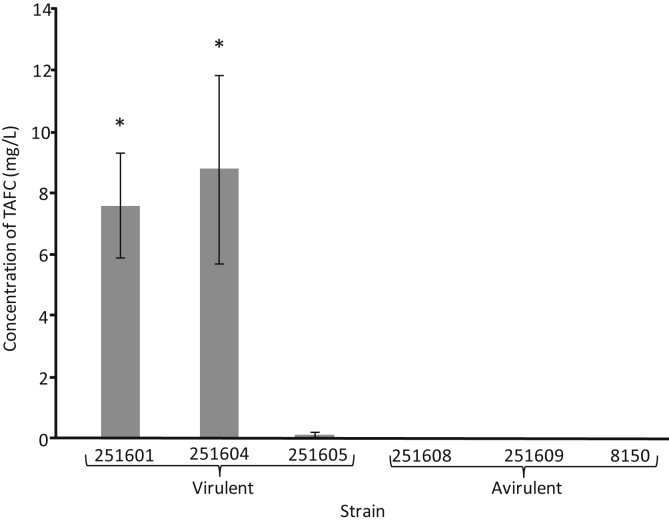
For the first time, a siderophore N,N',N″-triacetylfusarinine C (TAFC) has been identified in , and it appears to be linked to disease virulence. Siderophore production was suppressed as the concentration of iron increased, which is in agreement with previous reports.
The identification of the siderophore produced by gives us further insight into the root rot disease that heavily affects ginseng crop yields. This research identifies a molecular pathway previously unknown for ginseng root rot and could lead to new disease treatment options.
据估计,加拿大每次收获时,20%至30%的人参作物因根腐病而损失。这种疾病通常由真菌感染引起,以前称为 。先前的报告将真菌病的毒力与铁载体的产生联系起来,铁载体是一类小分子铁螯合剂。然而,尚未在 中鉴定出这些铁载体。
使用高分辨率液相色谱-串联质谱法(LC-MS/MS)筛选 和 菌株提取物中的次生代谢产物。还测试了这些菌株在美国人参中引起根腐病的能力,并将其分类为有毒或无毒。比较了有毒和无毒菌株中检测到的代谢产物的差异,重点是铁载体。
首次在 中鉴定出一种铁载体N,N',N''-三乙酰基富沙林宁C(TAFC),它似乎与疾病毒力有关。随着铁浓度的增加,铁载体的产生受到抑制,这与先前的报告一致。
对 产生的铁载体的鉴定使我们对严重影响人参作物产量的根腐病有了进一步的了解。这项研究确定了人参根腐病以前未知的分子途径,并可能带来新的疾病治疗选择。