Al-Halhouli Ala'aldeen, Al-Ghussain Loiy, Khallouf Osama, Rabadi Alexander, Alawadi Jafar, Liu Haipeng, Al Oweidat Khaled, Chen Fei, Zheng Dingchang
Mechatronics Engineering Department/NanoLab, School of Applied Technical Sciences, German Jordanian University, P.O. Box 35247, Amman 11180, Jordan.
Institute of Microtechnology, Technische Universität Braunschweig, 38124 Braunschweig, Germany.
Sensors (Basel). 2021 Jan 11;21(2):468. doi: 10.3390/s21020468.
Chronic Obstructive Pulmonary Disease (COPD) is a progressive disease that causes long-term breathing problems. The reliable monitoring of respiratory rate (RR) is very important for the treatment and management of COPD. Based on inkjet printing technology, we have developed a stretchable and wearable sensor that can accurately measure RR on normal subjects. Currently, there is a lack of comprehensive evaluation of stretchable sensors in the monitoring of RR on COPD patients. We aimed to investigate the measurement accuracy of our sensor on COPD patients.
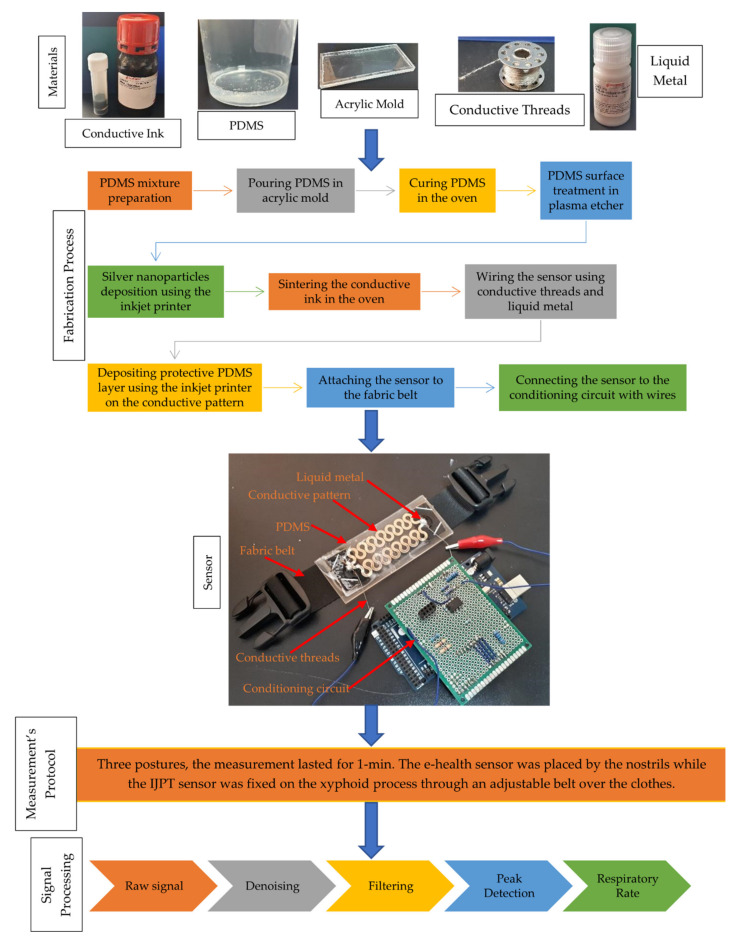
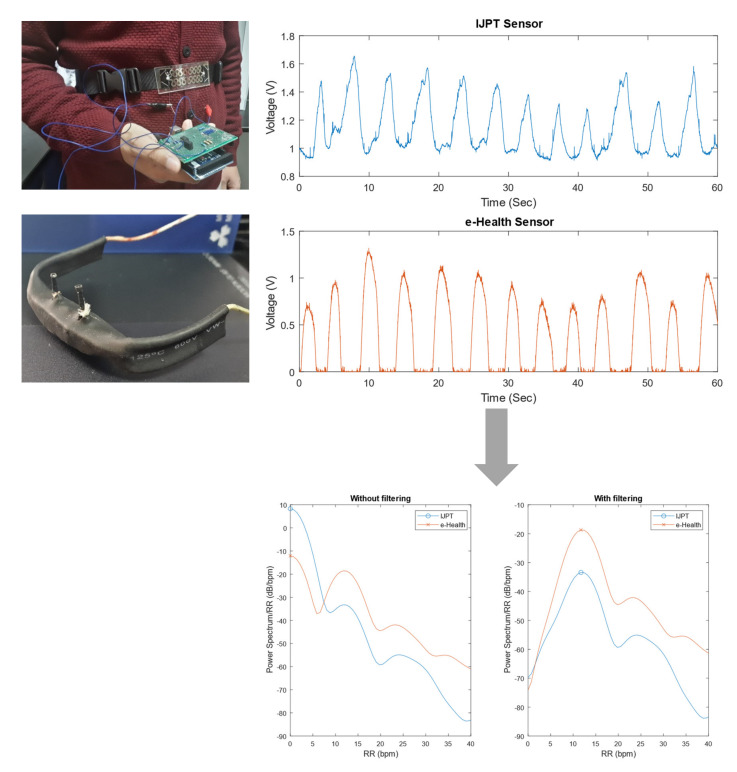
Thirty-five patients (Mean ± SD of age: 55.25 ± 13.76 years) in different stages of COPD were recruited. The measurement accuracy of our inkjet-printed (IJPT) sensor was evaluated at different body postures (i.e., standing, sitting at 90°, and lying at 45°) on COPD patients. The RR recorded by the IJPT sensor was compared with that recorded by the reference e-Health sensor using paired T-test and Wilcoxon signed-rank test. Analysis of variation (ANOVA) was performed to investigate if there was any significant effect of individual difference or posture on the measurement error. Statistical significance was defined as -value less than 0.05.
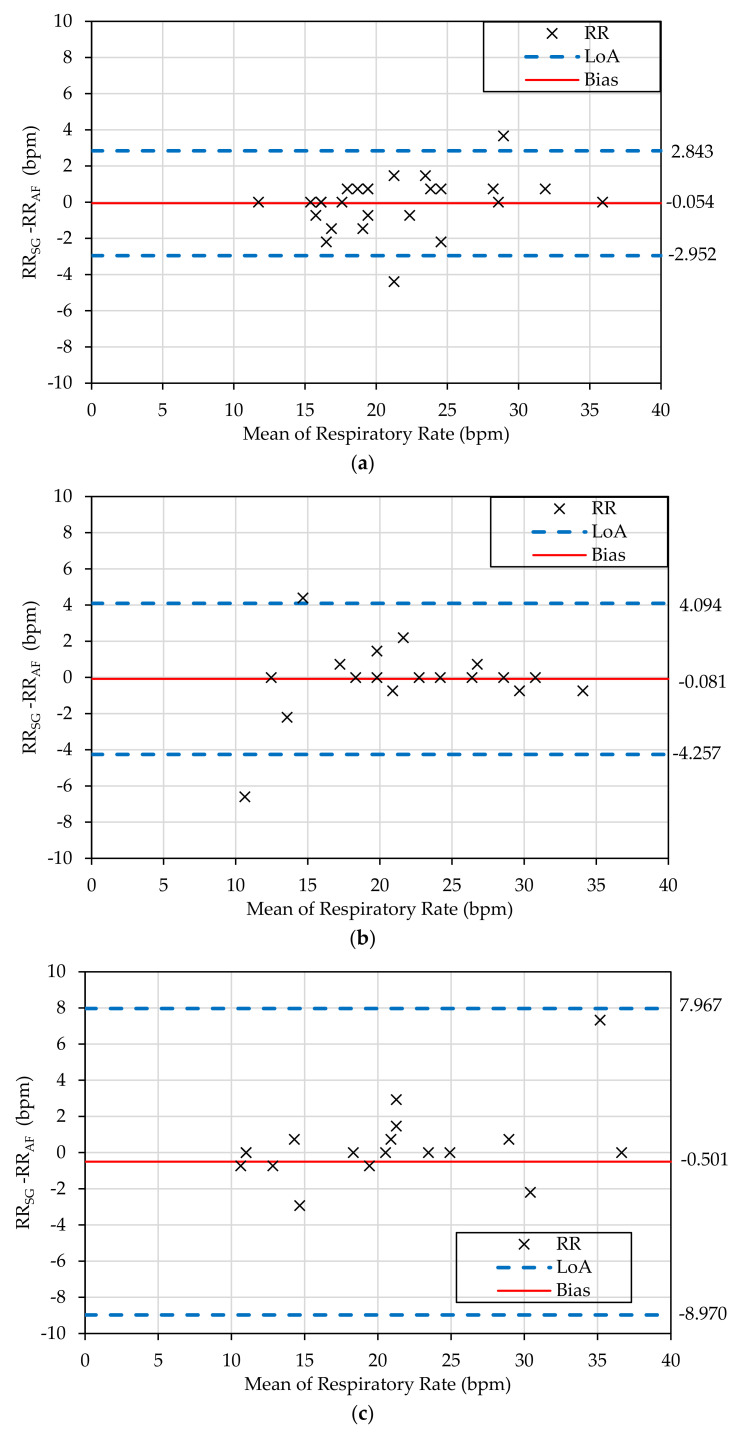
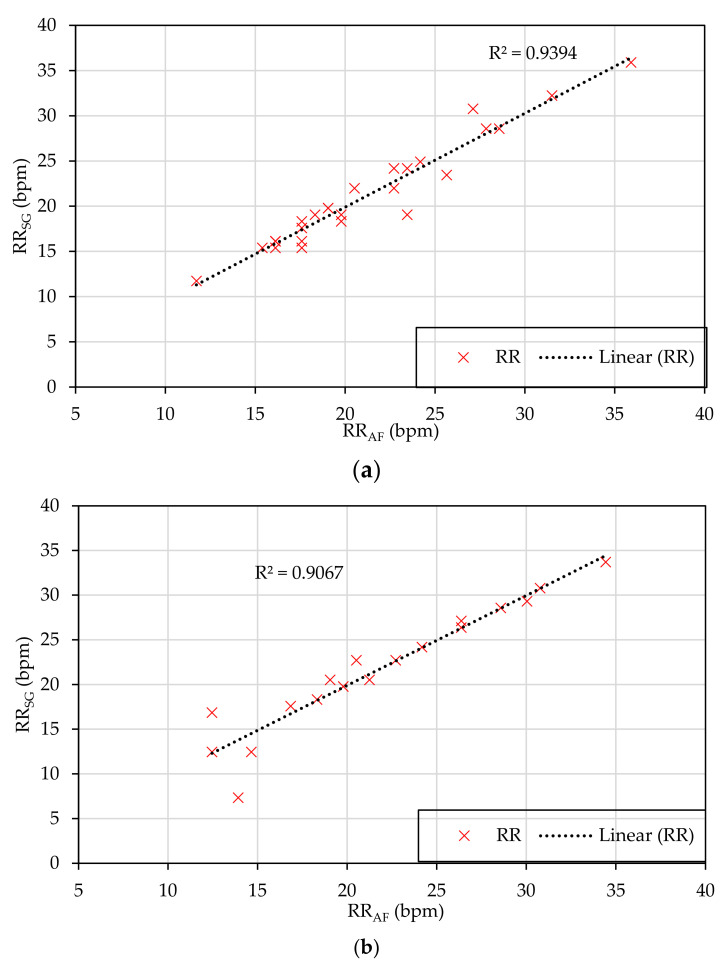
There was no significant difference between the RR measurements collected by the IJPT sensor and the e-Health reference sensor overall and in three postures ( > 0.05 in paired T-tests and Wilcoxon signed-rank tests). The sitting posture had the least measurement error of -0.0542 ± 1.451 bpm. There was no significant effect of posture or individual difference on the measurement error or relative measurement error ( > 0.05 in ANOVA).
The IJPT sensor can accurately measure the RR of COPD patients at different body postures, which provides the possibility for reliable monitoring of RR on COPD patients.
慢性阻塞性肺疾病(COPD)是一种导致长期呼吸问题的进行性疾病。可靠地监测呼吸频率(RR)对于COPD的治疗和管理非常重要。基于喷墨打印技术,我们开发了一种可拉伸的可穿戴传感器,该传感器能够在正常受试者身上准确测量RR。目前,在COPD患者RR监测中,缺乏对可拉伸传感器的全面评估。我们旨在研究我们的传感器在COPD患者身上的测量准确性。
招募了35名处于不同COPD阶段的患者(年龄均值±标准差:55.25±13.76岁)。在COPD患者的不同身体姿势(即站立、90°坐姿和45°躺姿)下评估我们的喷墨打印(IJPT)传感器的测量准确性。使用配对T检验和Wilcoxon符号秩检验将IJPT传感器记录的RR与参考电子健康传感器记录的RR进行比较。进行方差分析(ANOVA)以研究个体差异或姿势对测量误差是否有任何显著影响。统计学显著性定义为p值小于0.05。
IJPT传感器收集的RR测量值与电子健康参考传感器总体上以及在三种姿势下均无显著差异(配对T检验和Wilcoxon符号秩检验中p>0.05)。坐姿的测量误差最小,为-0.0542±1.451次/分钟。姿势或个体差异对测量误差或相对测量误差均无显著影响(方差分析中p>0.05)。
IJPT传感器能够在不同身体姿势下准确测量COPD患者的RR,这为可靠监测COPD患者的RR提供了可能性。