Center for Inherited Cardiovascular Disease, Stanford University, Stanford, CA, USA.
Department of Biomedical Data Science, Stanford University, Stanford, CA, USA.
Nat Commun. 2021 Jan 13;12(1):350. doi: 10.1038/s41467-020-20516-2.
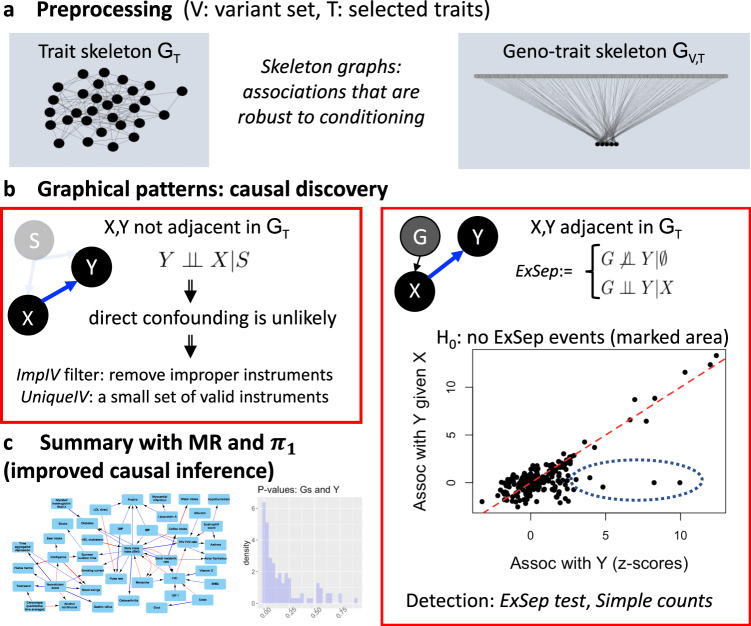
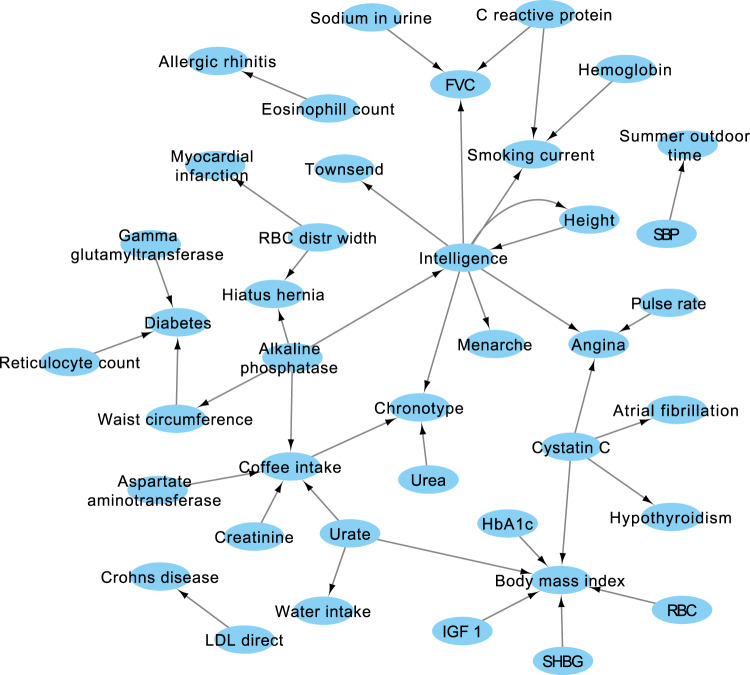
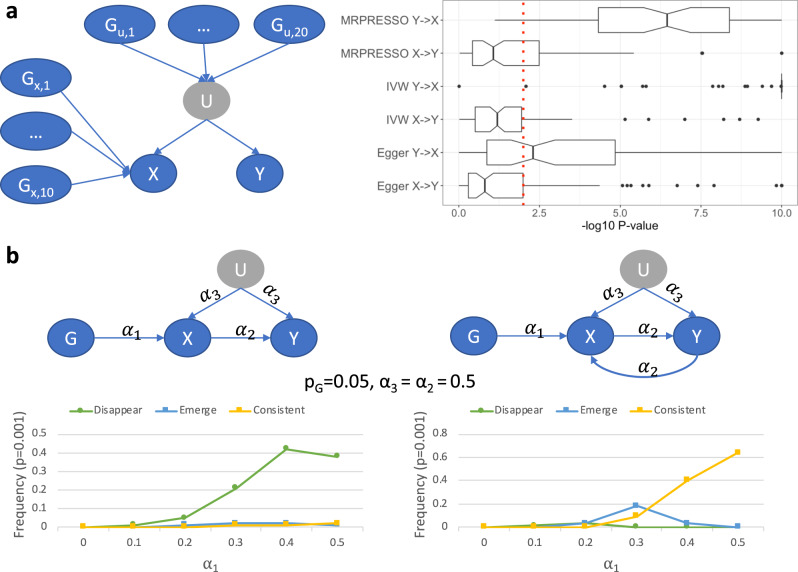
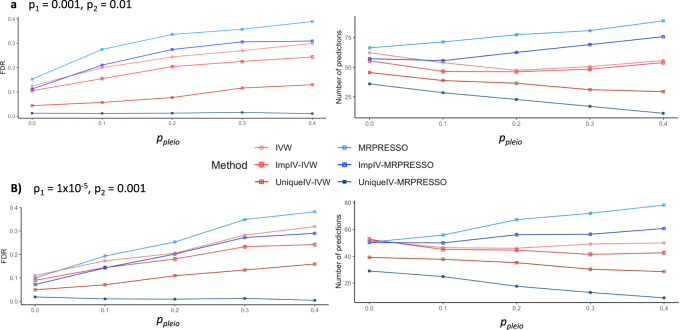
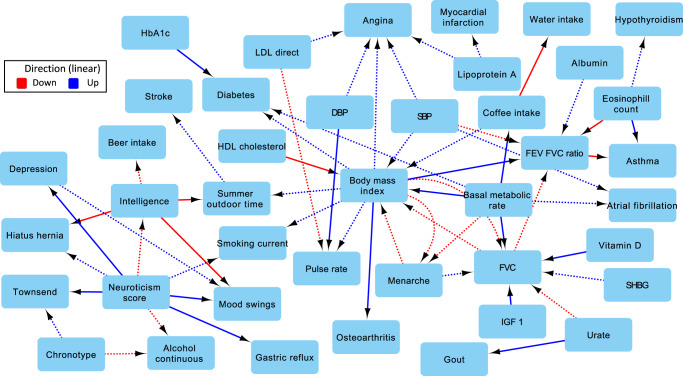
Causal inference via Mendelian randomization requires making strong assumptions about horizontal pleiotropy, where genetic instruments are connected to the outcome not only through the exposure. Here, we present causal Graphical Analysis Using Genetics (cGAUGE), a pipeline that overcomes these limitations using instrument filters with provable properties. This is achievable by identifying conditional independencies while examining multiple traits. cGAUGE also uses ExSep (Exposure-based Separation), a novel test for the existence of causal pathways that does not require selecting instruments. In simulated data we illustrate how cGAUGE can reduce the empirical false discovery rate by up to 30%, while retaining the majority of true discoveries. On 96 complex traits from 337,198 subjects from the UK Biobank, our results cover expected causal links and many new ones that were previously suggested by correlation-based observational studies. Notably, we identify multiple risk factors for cardiovascular disease, including red blood cell distribution width.
通过孟德尔随机化进行因果推断需要对水平多效性做出严格假设,即遗传工具不仅通过暴露与结果相关联。在这里,我们提出了使用遗传学进行因果图分析(cGAUGE),这是一种使用具有可证明属性的工具过滤器来克服这些限制的方法。这可以通过在检查多个性状时识别条件独立性来实现。cGAUGE 还使用了 ExSep(基于暴露的分离),这是一种新的测试方法,可以在不选择工具的情况下测试因果途径是否存在。在模拟数据中,我们说明了 cGAUGE 如何将经验性错误发现率降低多达 30%,同时保留大多数真实发现。在来自英国生物库的 337198 名受试者的 96 个复杂特征上,我们的结果涵盖了预期的因果联系以及许多以前通过基于相关性的观察性研究提出的新联系。值得注意的是,我们确定了多种心血管疾病的风险因素,包括红细胞分布宽度。