School of Nursing, College of Medicine and Health Science, Arba Minch University, Arba Minch, Ethiopia.
College of Health Sciences, Debre Markos University, Debre Markos, Ethiopia.
PLoS One. 2021 Jan 14;16(1):e0245252. doi: 10.1371/journal.pone.0245252. eCollection 2021.
The survival rate from breast cancer is lowest in African countries and the distribution of breast self-examination practice of and its determinants are not well investigated in Ethiopia. Therefore, this systematic review and meta-analysis was designed to determine the pooled prevalence of breast self-examination and its associated factors among women in Ethiopia.
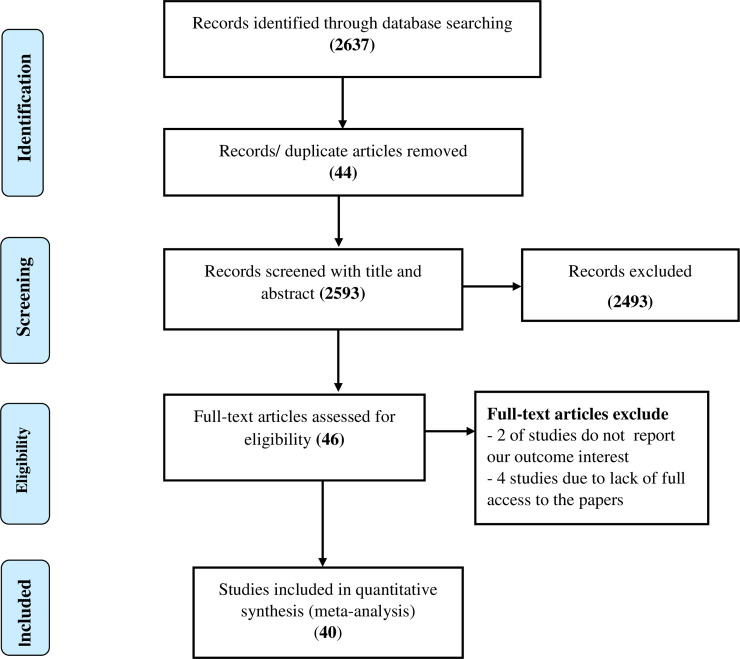
Preferred Reporting Items for Systematic Reviews and Meta-Analyses (PRISMA) guideline was followed for this systematic review and meta-analysis. The databases used were; PUBMED, Cochrane Library, Google Scholar, CINAHL, African Journals Online, Dimensions and Summon per country online databases. Search terms used were; breast self-examination, breast cancer screening, early detection of breast cancer and Ethiopia. Joanna Briggs Institute Meta-Analysis of Statistics Assessment and Review Instrument (JBI-MAStARI) was used for critical appraisal of studies. The meta-analysis was conducted using STATA 15 software. The pooled meta-analysis was computed to present the pooled prevalence and relative risks (RRs) of the determinate factors with 95% confidence intervals (CIs).
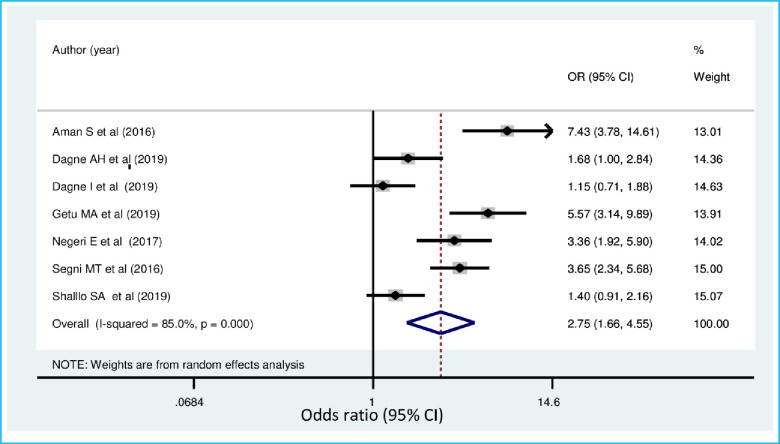
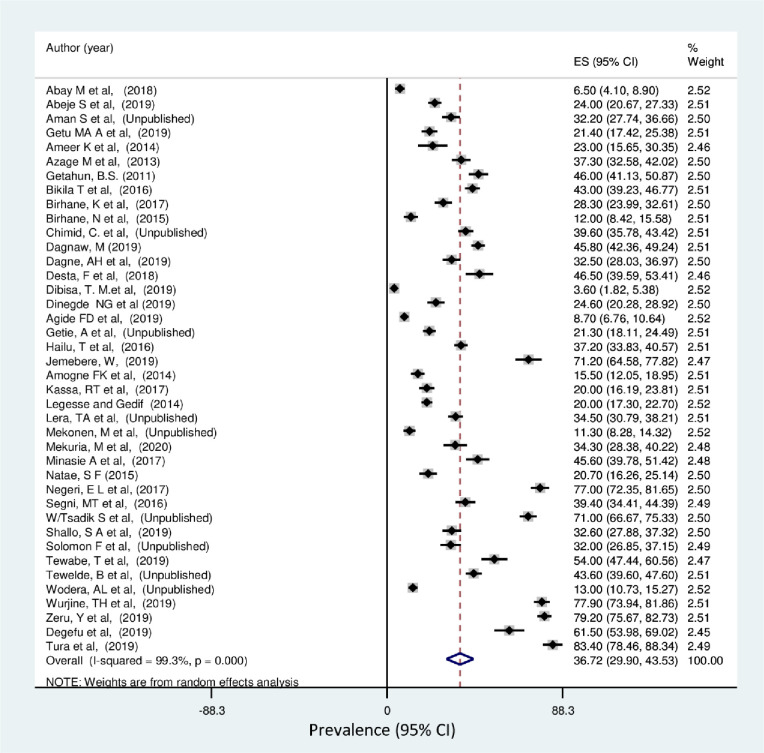
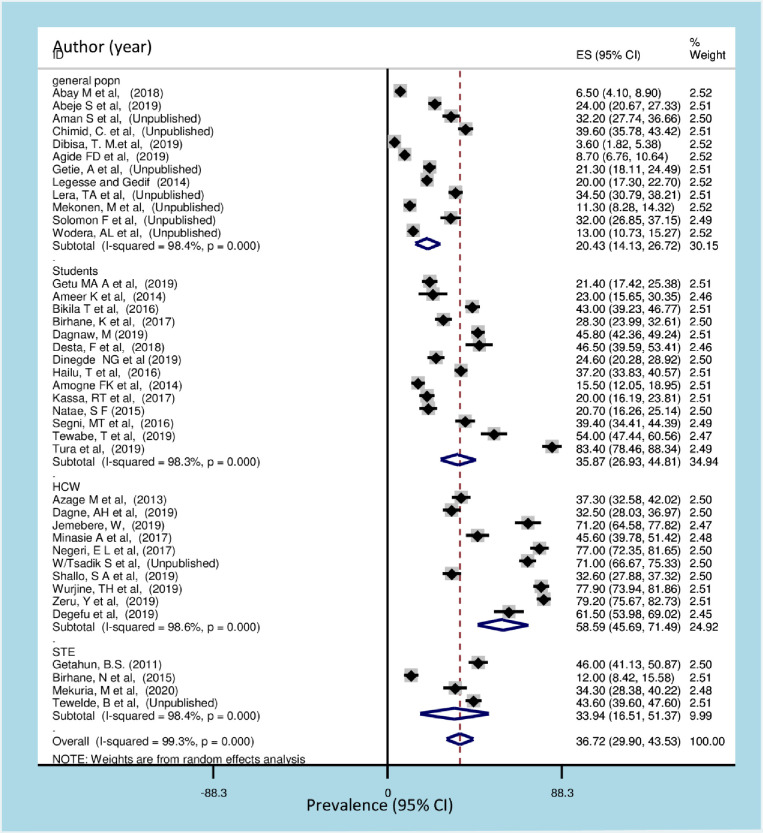
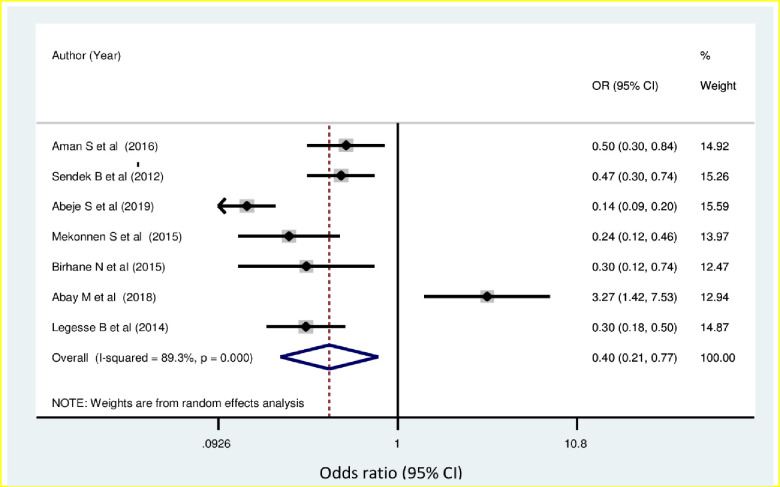
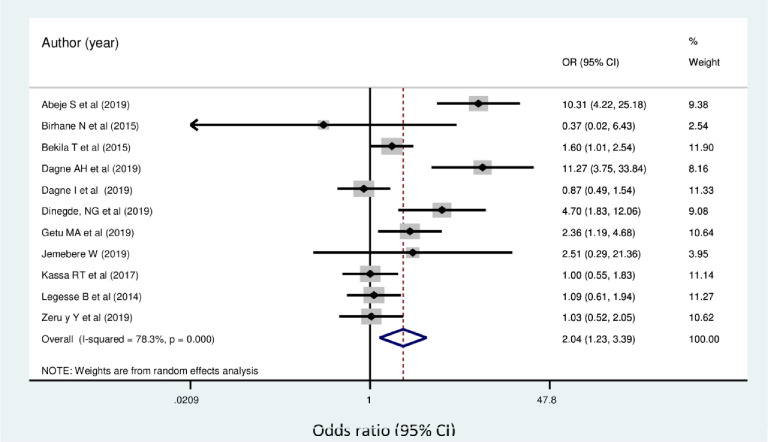
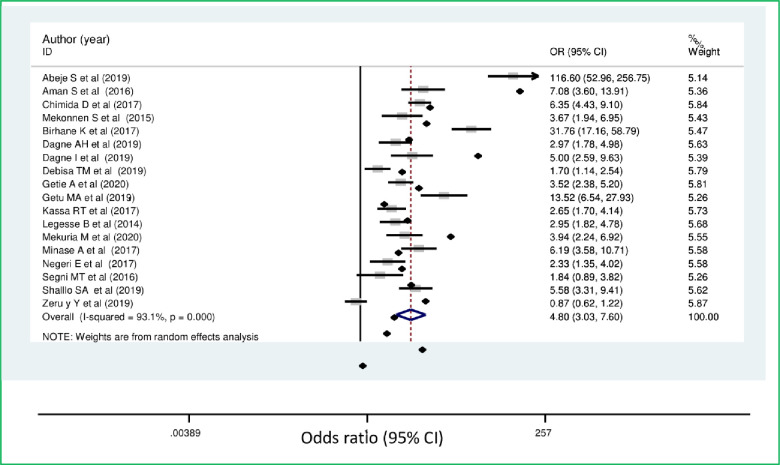
We identified 2,637 studies, of which, 40 articles (with 17,820 participants) were eligible for inclusion in the final meta-analysis. The pooled estimate of breast self-examination in Ethiopia was 36.72% (95% CI: 29.90, 43.53). The regional distribution breast self-examination ranged from 21.2% (95% CI: 4.49, 37.91) in Tigray to 61.5% (95% CI: 53.98, 69.02) in Gambela region. The lowest prevalence of breast self-examination was observed among the general population (20.43% (95% CI: 14.13, 26.72)). Women who had non-formal educational status (OR = 0.4 (95% CI: 0.21, 0.77)), family history of breast cancer (OR = 2.04 (95% CI: 1.23, 3.39)), good knowledge of breast self-examination (OR = 4.8 (95% CI: 3.03, 7.6)) and favorable attitude toward breast self-examination (OR = 2.75, (95% CI: 1.66, 4.55)) were significantly associated with practice of breast self-examination.
Only a third of women in Ethiopia practiced breast examination despite WHO guidelines advocating for this practice among all women of reproductive age. Intervention programs should address the factors that are associated with breast self-examination. Population specific programs are needed to promote breast self-examination.
乳腺癌的存活率在非洲国家最低,而且在埃塞俄比亚,对乳房自我检查的实施情况及其决定因素的分布情况也没有进行很好的调查。因此,本系统评价和荟萃分析旨在确定埃塞俄比亚妇女乳房自我检查的综合流行率及其相关因素。
本系统评价和荟萃分析遵循了系统评价和荟萃分析的首选报告项目(PRISMA)指南。使用的数据库包括:PUBMED、Cochrane 图书馆、Google Scholar、CINAHL、非洲在线期刊、Dimensions 和每个国家的在线数据库Summon。使用的搜索词是:乳房自我检查、乳腺癌筛查、乳腺癌早期发现和埃塞俄比亚。乔安娜·布里格斯研究所的荟萃分析统计评估和审查工具(JBI-MAStARI)用于评估研究。使用 STATA 15 软件进行荟萃分析。汇总荟萃分析用于呈现综合流行率和决定因素的相对风险(RR),置信区间(CI)为 95%。
我们确定了 2637 项研究,其中 40 项(涉及 17820 名参与者)符合纳入最终荟萃分析的条件。埃塞俄比亚乳房自我检查的综合估计值为 36.72%(95%CI:29.90,43.53)。区域性乳房自我检查的分布范围从提格雷地区的 21.2%(95%CI:4.49,37.91)到甘贝拉地区的 61.5%(95%CI:53.98,69.02)。乳房自我检查的最低流行率是在一般人群中观察到的(20.43%(95%CI:14.13,26.72%))。没有接受过正规教育的女性(OR = 0.4(95%CI:0.21,0.77))、有乳腺癌家族史的女性(OR = 2.04(95%CI:1.23,3.39))、对乳房自我检查有较好认识的女性(OR = 4.8(95%CI:3.03,7.6))和对乳房自我检查有良好态度的女性(OR = 2.75,(95%CI:1.66,4.55))与乳房自我检查的实施有显著关联。
尽管世卫组织建议所有育龄妇女都应进行乳房检查,但埃塞俄比亚只有三分之一的妇女进行了乳房检查。干预计划应针对与乳房自我检查相关的因素。需要制定针对特定人群的方案来促进乳房自我检查。