University of Michigan School of Public Health, Ann Arbor, USA.
United States Army Corps of Engineers, Engineering Research and Development Center, Vicksburg, USA.
BMC Geriatr. 2021 Jan 14;21(1):51. doi: 10.1186/s12877-020-01965-2.
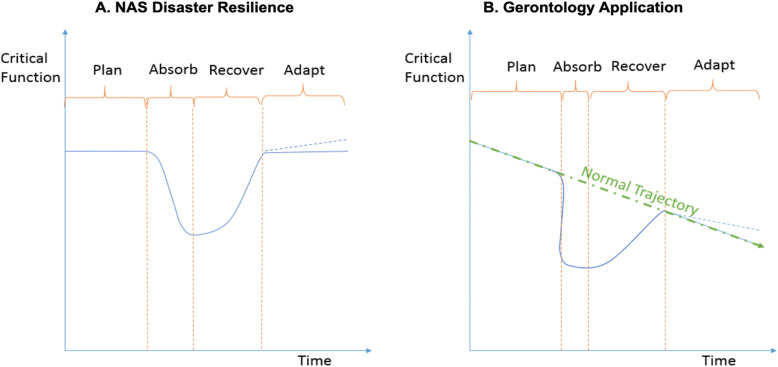
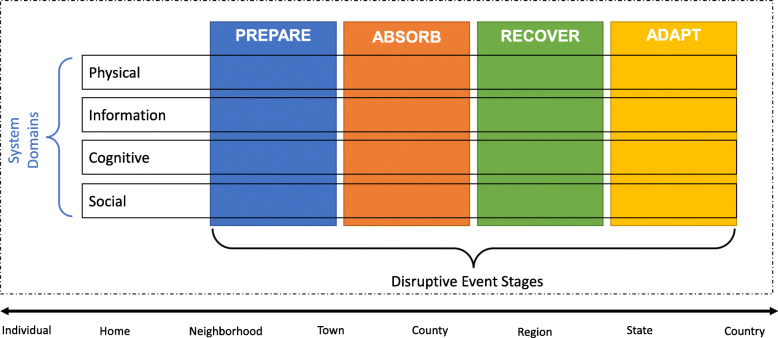
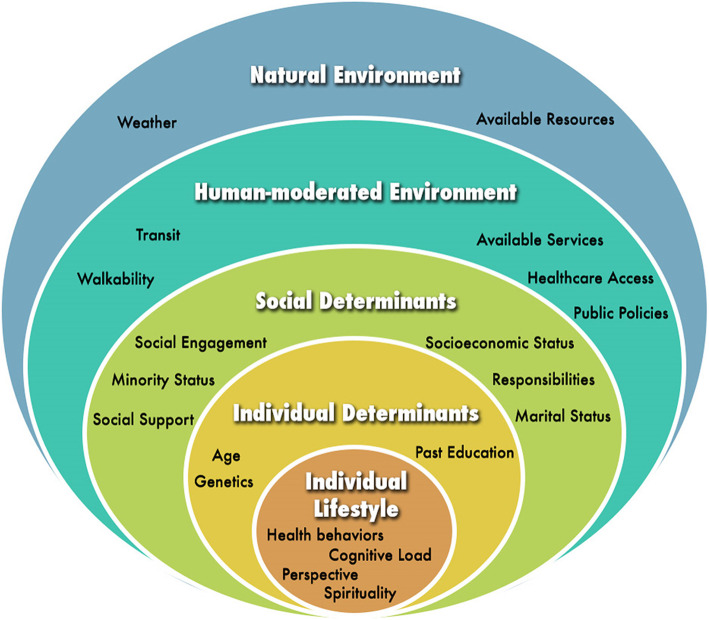
The care needs for aging adults are increasing burdens on health systems around the world. Efforts minimizing risk to improve quality of life and aging have proven moderately successful, but acute shocks and chronic stressors to an individual's systemic physical and cognitive functions may accelerate their inevitable degradations. A framework for resilience to the challenges associated with aging is required to complement on-going risk reduction policies, programs and interventions. Studies measuring resilience among the elderly at the individual level have not produced a standard methodology. Moreover, resilience measurements need to incorporate external structural and system-level factors that determine the resources that adults can access while recovering from aging-related adversities. We use the National Academies of Science conceptualization of resilience for natural disasters to frame resilience for aging adults. This enables development of a generalized theory of resilience for different individual and structural contexts and populations, including a specific application to the COVID-19 pandemic.
随着全球老龄化人口的增加,老年人的护理需求给医疗体系带来了越来越大的负担。虽然降低风险以提高生活质量和延缓衰老的努力已被证明取得了一定成效,但个人系统的生理和认知功能所面临的急性冲击和慢性压力源可能会加速其不可避免的衰退。需要建立一个应对与老龄化相关挑战的弹性框架,以补充正在进行的降低风险政策、项目和干预措施。衡量老年人个体层面弹性的研究尚未形成标准方法。此外,弹性测量需要纳入外部结构和系统层面的因素,这些因素决定了成年人在从与衰老相关的逆境中恢复时可以获得的资源。我们借鉴了美国国家科学院对自然灾害弹性的概念化框架来构建老年人的弹性。这使得针对不同个体和结构背景以及人群的弹性的一般理论得以发展,包括对 COVID-19 大流行的具体应用。