Shorten Connor, Khoshgoftaar Taghi M, Furht Borko
Florida Atlantic University, 777 Glades Road, Boca Raton, FL 33431 USA.
J Big Data. 2021;8(1):18. doi: 10.1186/s40537-020-00392-9. Epub 2021 Jan 11.
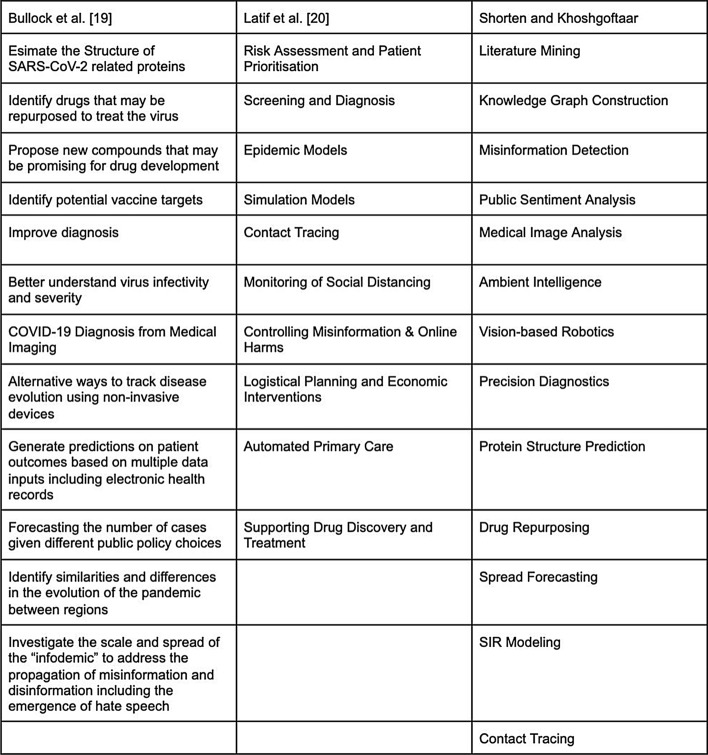
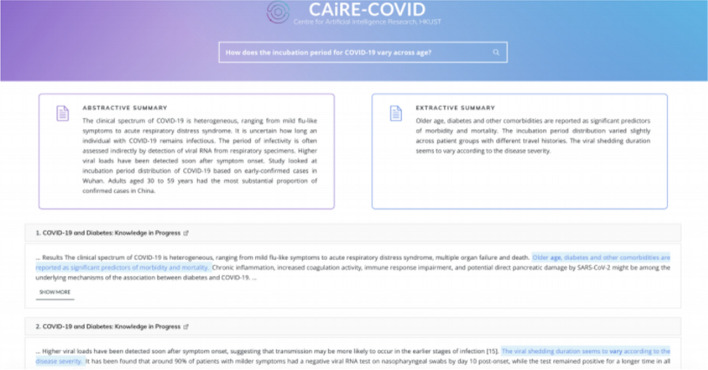
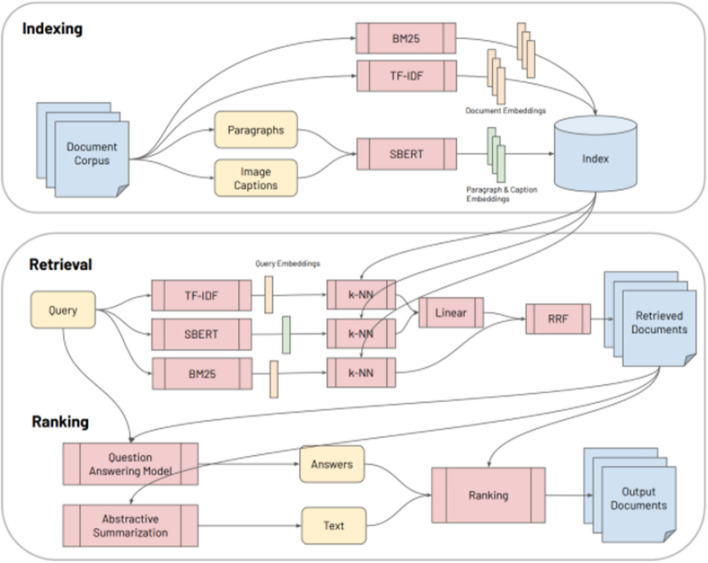
This survey explores how Deep Learning has battled the COVID-19 pandemic and provides directions for future research on COVID-19. We cover Deep Learning applications in Natural Language Processing, Computer Vision, Life Sciences, and Epidemiology. We describe how each of these applications vary with the availability of big data and how learning tasks are constructed. We begin by evaluating the current state of Deep Learning and conclude with key limitations of Deep Learning for COVID-19 applications. These limitations include Interpretability, Generalization Metrics, Learning from Limited Labeled Data, and Data Privacy. Natural Language Processing applications include mining COVID-19 research for Information Retrieval and Question Answering, as well as Misinformation Detection, and Public Sentiment Analysis. Computer Vision applications cover Medical Image Analysis, Ambient Intelligence, and Vision-based Robotics. Within Life Sciences, our survey looks at how Deep Learning can be applied to Precision Diagnostics, Protein Structure Prediction, and Drug Repurposing. Deep Learning has additionally been utilized in Spread Forecasting for Epidemiology. Our literature review has found many examples of Deep Learning systems to fight COVID-19. We hope that this survey will help accelerate the use of Deep Learning for COVID-19 research.
本调查探讨了深度学习如何应对新冠疫情,并为未来的新冠疫情研究提供了方向。我们涵盖了深度学习在自然语言处理、计算机视觉、生命科学和流行病学中的应用。我们描述了这些应用如何因大数据的可用性而有所不同,以及学习任务是如何构建的。我们首先评估深度学习的当前状态,并以深度学习在新冠疫情应用中的关键局限性作为结论。这些局限性包括可解释性、泛化指标、从有限标记数据中学习以及数据隐私。自然语言处理应用包括挖掘新冠疫情研究以进行信息检索和问答,以及错误信息检测和公众情绪分析。计算机视觉应用涵盖医学图像分析、环境智能和基于视觉的机器人技术。在生命科学领域,我们的调查着眼于深度学习如何应用于精准诊断、蛋白质结构预测和药物重新利用。深度学习还被用于流行病学的传播预测。我们的文献综述发现了许多深度学习系统抗击新冠疫情的例子。我们希望这项调查将有助于加速深度学习在新冠疫情研究中的应用。