Ballerini Lucia, McGrory Sarah, Valdés Hernández Maria Del C, Lovreglio Ruggiero, Pellegrini Enrico, MacGillivray Tom, Muñoz Maniega Susana, Henderson Ross, Taylor Adele, Bastin Mark E, Doubal Fergus, Trucco Emanuele, Deary Ian J, Wardlaw Joanna
Department of Neuroimaging Sciences, Centre for Clinical Brain Sciences, and VAMPIRE Project, University of Edinburgh, Edinburgh, EH16 4SB, UK.
Dementia Research Institute, University of Edinburgh, Edinburgh, UK.
Cereb Circ Cogn Behav. 2020;1:100002. doi: 10.1016/j.cccb.2020.100002.
Perivascular Spaces (PVS) become increasingly visible with advancing age on brain MRI, yet their relationship to morphological changes in the underlying microvessels remains poorly understood. Retinal and cerebral microvessels share morphological and physiological properties. We compared computationally-derived PVS morphologies with retinal vessel morphologies in older people.
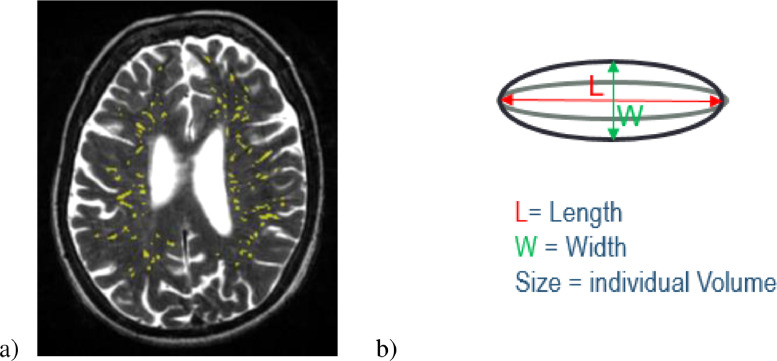
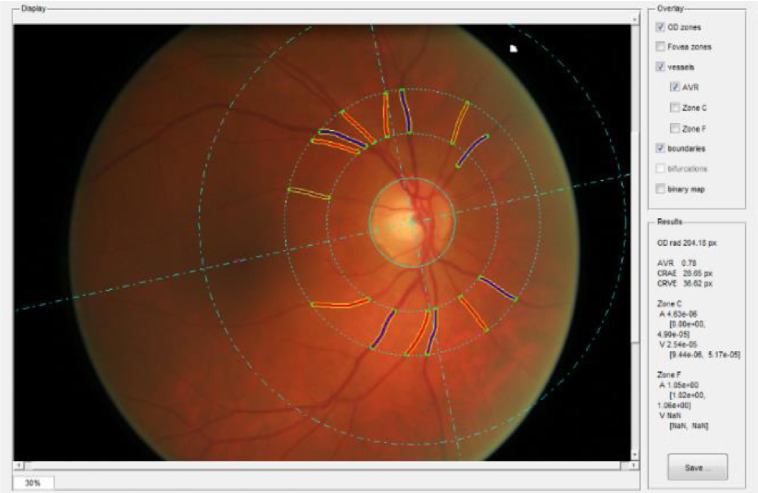
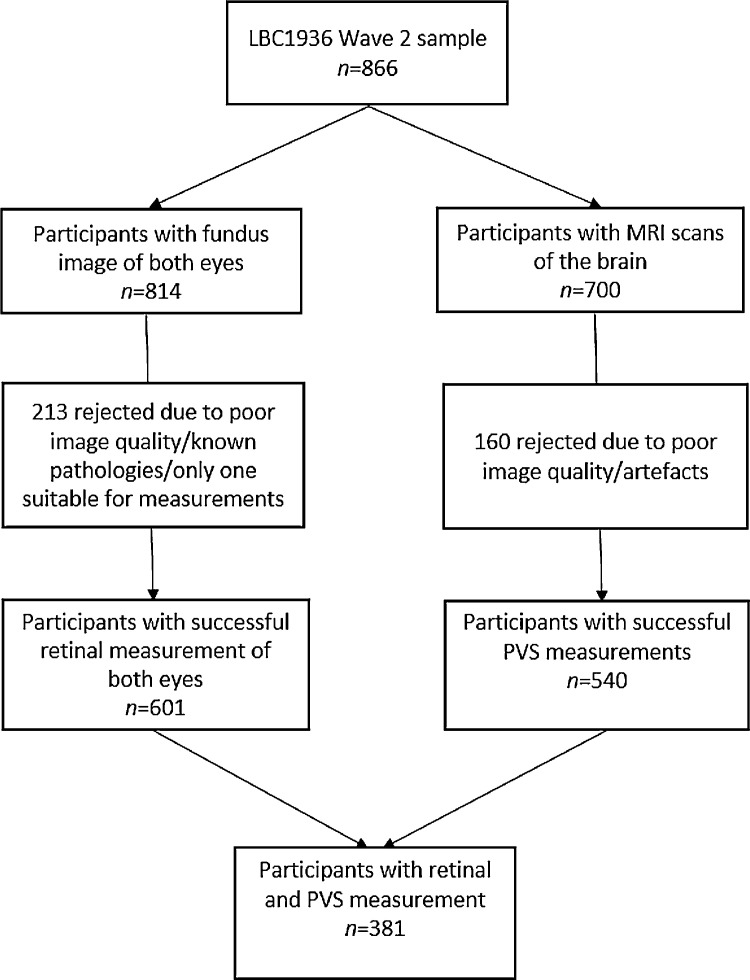
We analysed data from community-dwelling individuals who underwent multimodal brain MRI and retinal fundus camera imaging at mean age 72.55 years (SD=0.71). We assessed centrum semiovale PVS computationally to determine PVS total volume and count, and mean per-subject individual PVS length, width and size. We analysed retinal images using the VAMPIRE software suite, obtaining the Central Retinal Artery and Vein Equivalents (CRVE and CRAE), Arteriole-to-Venule ratio (AVR), and fractal dimension (FD) of both eyes. We investigated associations using general linear models, adjusted for age, gender, and major vascular risk factors.
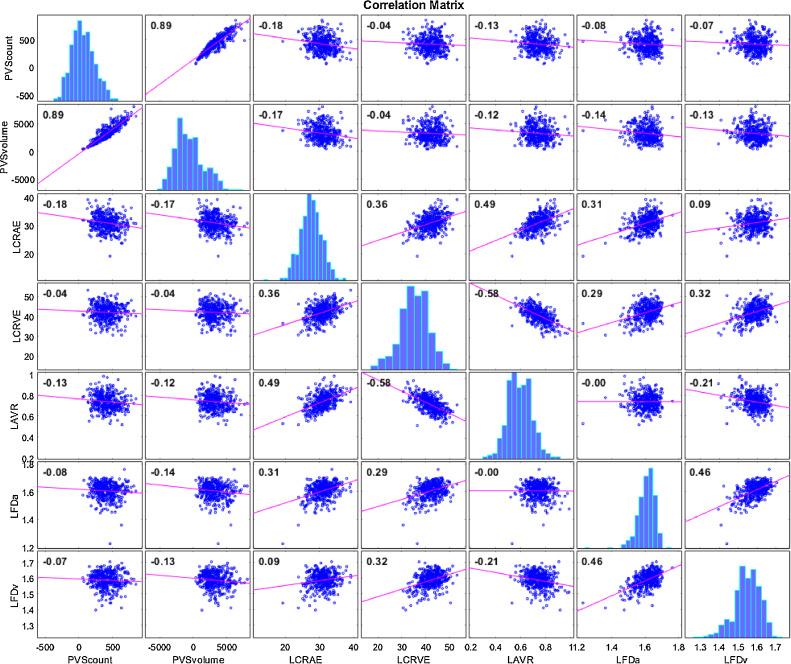
In 381 subjects with all measures, increasing total PVS volume and count were associated with decreased CRAE in the left eye (volume =-0.170, count =-0.184, <0.001). No associations of PVS with CRVE were found. The PVS total volume, individual width and size increased with decreasing FD of the arterioles (a) and venules (v) of the left eye (total volume: FDa =-0.137, FDv =-0.139, <0.01; width: FDa =-0.144, FDv =-0.158, <0.01; size: FDa =-0.157, FDv =-0.162, <0.01).
Increase in PVS number and size visible on MRI reflect arteriolar narrowing and lower retinal arteriole and venule branching complexity, both markers of impaired microvascular health. Computationally-derived PVS metrics may be an early indicator of failing vascular health and should be tested in longitudinal studies.
脑磁共振成像(MRI)显示,随着年龄增长,血管周围间隙(PVS)越来越明显,但其与潜在微血管形态变化的关系仍知之甚少。视网膜和脑微血管具有共同的形态和生理特性。我们比较了老年人通过计算得出的PVS形态与视网膜血管形态。
我们分析了社区居住个体的数据,这些个体平均年龄为72.55岁(标准差=0.71),接受了多模态脑MRI和视网膜眼底相机成像。我们通过计算评估半卵圆中心PVS,以确定PVS总体积和数量,以及每个受试者的个体PVS平均长度、宽度和大小。我们使用VAMPIRE软件套件分析视网膜图像,获得双眼的视网膜中央动脉和静脉等效值(CRVE和CRAE)、动静脉比(AVR)和分形维数(FD)。我们使用一般线性模型进行关联研究,并对年龄、性别和主要血管危险因素进行了调整。
在381名接受了所有测量的受试者中,PVS总体积和数量的增加与左眼CRAE的降低相关(体积=-0.170,数量=- 0.184,P<0.001)。未发现PVS与CRVE之间存在关联。左眼小动脉(a)和小静脉(v)的FD降低时,PVS总体积、个体宽度和大小增加(总体积:FDa=-0.137,FDv=-0.139,P<0.01;宽度:FDa=-0.144,FDv=-0.158,P<0.01;大小:FDa=-0.157,FDv=-0.162,P<0.01)。
MRI上可见PVS数量和大小的增加反映了小动脉狭窄以及视网膜小动脉和小静脉分支复杂性降低,这两者都是微血管健康受损的标志。通过计算得出的PVS指标可能是血管健康衰退的早期指标,应在纵向研究中进行检验。