Centre for Colorectal Disease, St Vincent's University Hospital, School of Medicine, University College Dublin, Dublin, Ireland.
Department of Biological Sciences, Health Research Institute, University of Limerick, Limerick, Ireland.
J Crohns Colitis. 2021 Aug 2;15(8):1316-1325. doi: 10.1093/ecco-jcc/jjab014.
Inflammatory bowel diseases [IBD], comprising Crohn's disease [CD] and ulcerative colitis [UC], are chronic conditions characterized by severe dysregulation of innate and adaptive immunity resulting in the destruction of the intestinal mucosa. Natural killer [NK] cells play a pivotal role in the dynamic interaction between the innate and adaptive immune response. There is an increasing appreciation for the key role immunometabolism plays in the regulation of NK cell function, yet little remains known about the metabolic profile, cytokine secretion, and killing capacity of human NK cells during active IBD.
Peripheral blood mononuclear cells were isolated from peripheral blood of patients with moderate to severely active IBD and healthy controls. NK cells were stained with a combination of cell surface receptors, intracellular cytokines, and proteins and analyzed by flow cytometry. For measurements of NK cell cytotoxicity, the calcein-AM release assay was performed. The metabolic profile was analyzed by an extracellular flux analyzer.
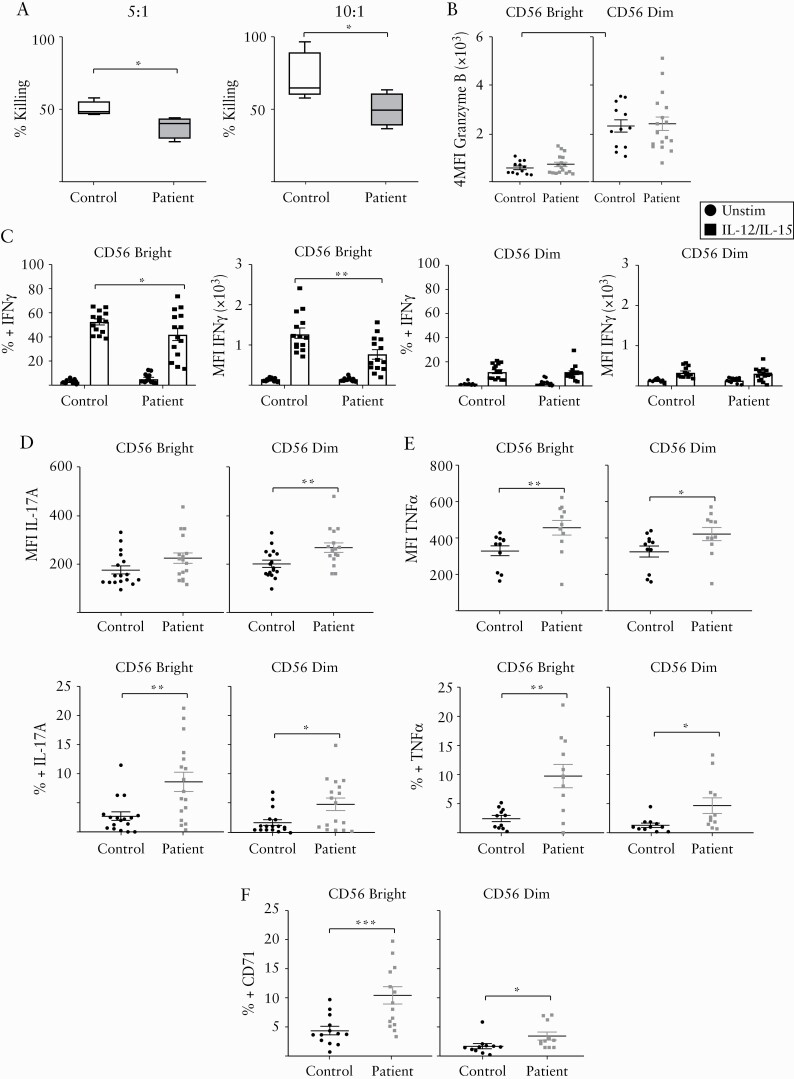
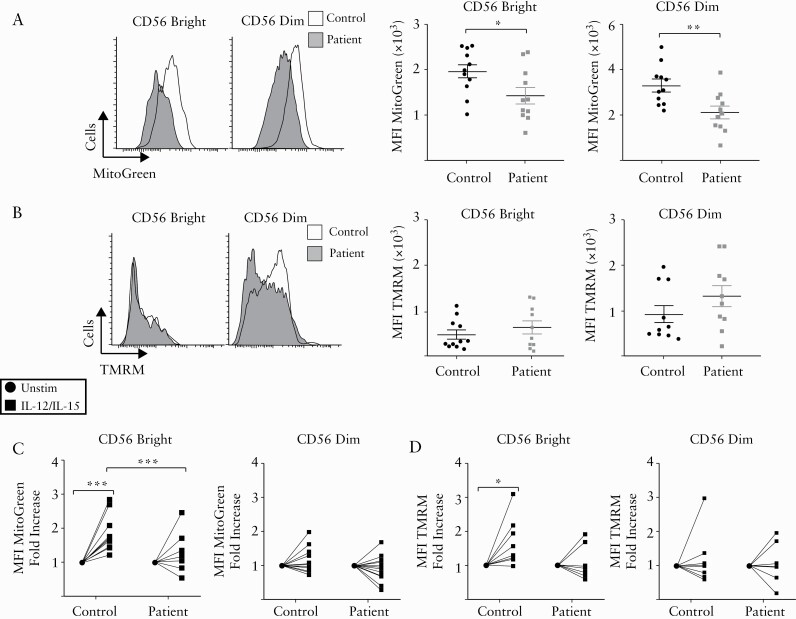
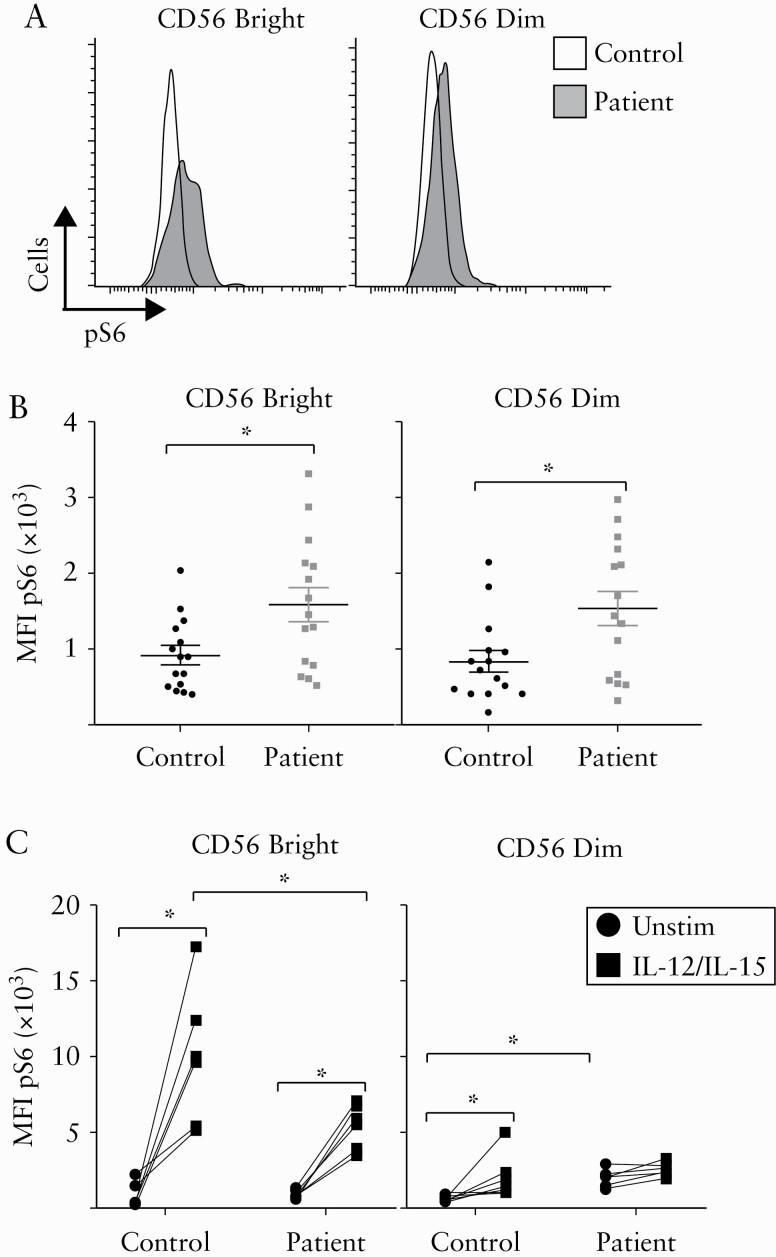
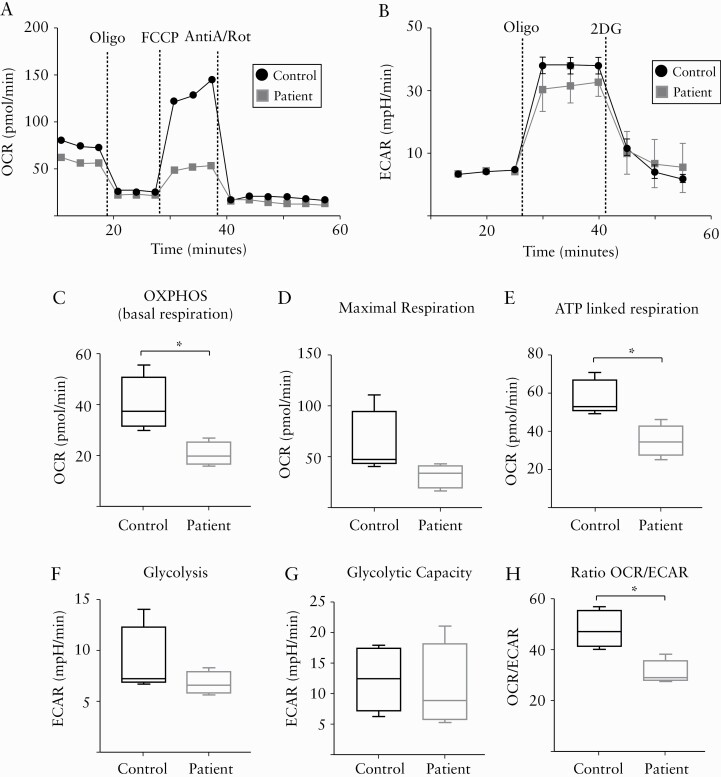
NK cells from IBD patients produce large quantities of pro-inflammatory cytokines, IL-17A and TNF-α ex vivo, but have limited killing capability. Furthermore, patient NK cells have reduced mitochondrial mass and oxidative phosphorylation. mTORC1, an important cell and metabolic regulator, demonstrated limited activity in both freshly isolated cells and cytokine-stimulated cells.
Our results demonstrate that circulating NK cells of IBD patients have an unbalanced metabolic profile, with faulty mitochondria and reduced capacity to kill. These aberrations in NK cell metabolism may contribute to defective killing and thus the secondary infections and increased risk of cancer observed in IBD patients.
炎症性肠病(IBD)包括克罗恩病(CD)和溃疡性结肠炎(UC),是由固有免疫和适应性免疫的严重失调导致肠道黏膜破坏的慢性疾病。自然杀伤(NK)细胞在固有免疫和适应性免疫反应的动态相互作用中起着关键作用。人们越来越认识到免疫代谢在调节 NK 细胞功能中的关键作用,但对于活动期 IBD 患者 NK 细胞的代谢谱、细胞因子分泌和杀伤能力仍知之甚少。
从活动期中重度 IBD 患者和健康对照者的外周血中分离外周血单个核细胞。用细胞表面受体、细胞内细胞因子和蛋白的组合对 NK 细胞进行染色,并用流式细胞术进行分析。为了测量 NK 细胞的细胞毒性,进行 calcein-AM 释放试验。通过细胞外通量分析仪分析代谢谱。
IBD 患者的 NK 细胞在体外产生大量促炎细胞因子 IL-17A 和 TNF-α,但杀伤能力有限。此外,患者 NK 细胞的线粒体质量和氧化磷酸化减少。mTORC1 是一种重要的细胞和代谢调节剂,在新鲜分离的细胞和细胞因子刺激的细胞中均表现出有限的活性。
我们的研究结果表明,IBD 患者循环 NK 细胞的代谢谱失衡,线粒体功能障碍,杀伤能力降低。NK 细胞代谢的这些异常可能导致杀伤功能缺陷,从而导致 IBD 患者的继发性感染和癌症风险增加。