Shanxi Medical University School and Hospital of Stomatology, Taiyuan, 030001, China.
Shanxi Province Key Laboratory of Oral Diseases Prevention and New Materials, Taiyuan, 030001, Shanxi, China.
Sci Rep. 2021 Jan 18;11(1):1725. doi: 10.1038/s41598-021-81218-3.
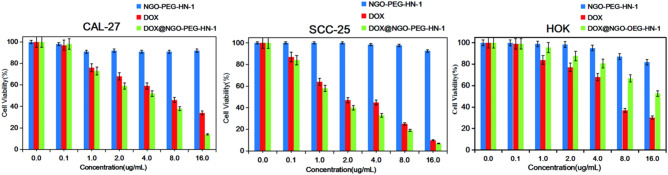
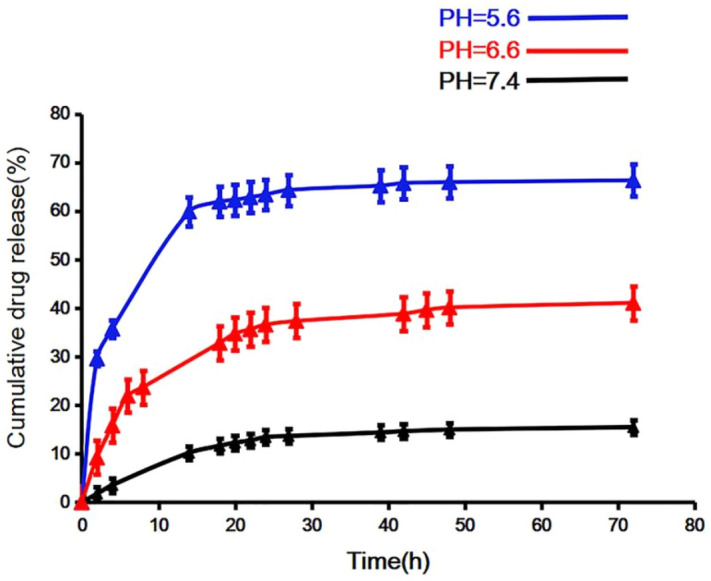
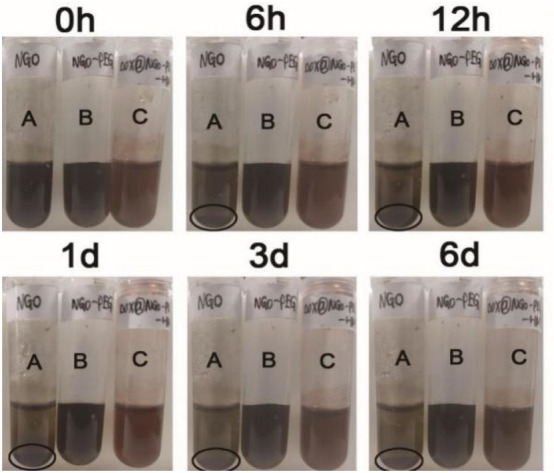
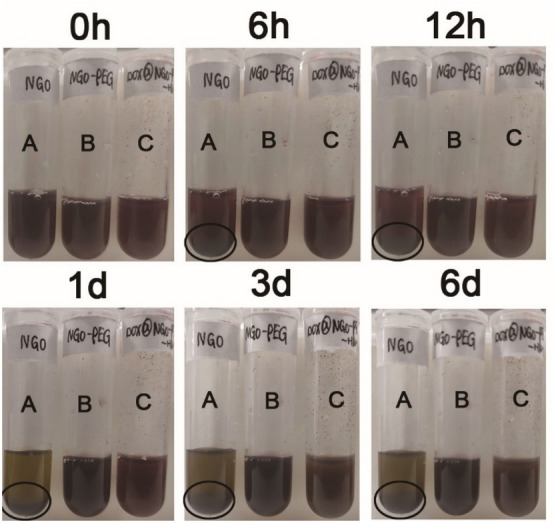
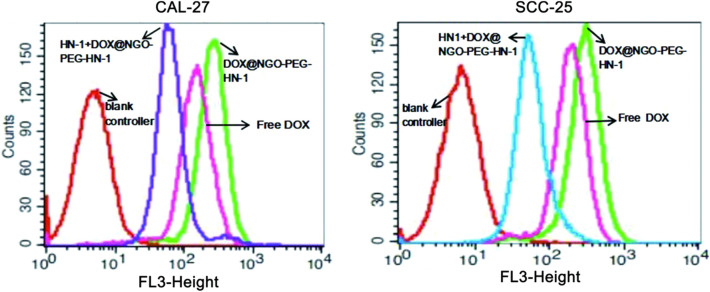
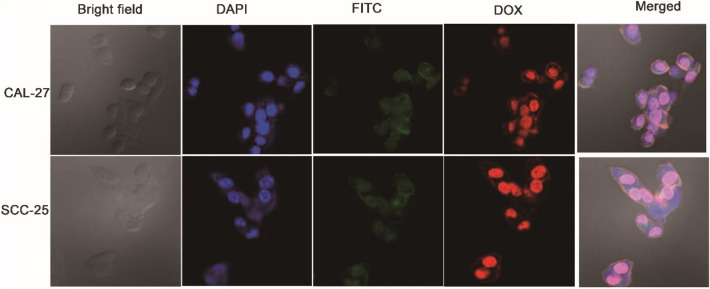
In the present work, we constructed nanoscale graphene oxide (NGO) as a drug nanocarrier to improve the process of tumor-targeted drug releases, promote cellular uptake and accumulation of chemotherapy drugs in tumor tissues, and reduce the toxic effects of chemotherapy drugs on normal cells. Hence, great stability was obtained in the biological solution. Moreover, we designed an effective nanoparticle system for the doxorubicin (DOX) delivery targeting the oral squamous cell carcinoma (OSCC) by mediating the HN-1 (TSPLNIHNGQKL) through hydrogen and π-π bonds. DOX@NGO-PEG-HN-1 showed significantly higher cellular uptakes and cytotoxicity in OSCC cells (CAL-27 and SCC-25), compared to free DOX. Moreover, HN-1 showed considerable tumor-targeting and competition inhibition phenomenon. As we expected, the nanocarrier showed pH-responsive drug release. In total, our study represented a good technique to construct OSCC-targeted delivery of nanoparticles and improve the anticancer medicines' efficiency.
在本工作中,我们构建了纳米氧化石墨烯(NGO)作为药物纳米载体,以改善肿瘤靶向药物释放过程,促进化疗药物在肿瘤组织中的细胞摄取和积累,并降低化疗药物对正常细胞的毒性作用。因此,在生物溶液中获得了很好的稳定性。此外,我们通过氢键和π-π 键介导 HN-1(TSPLNIHNGQKL)设计了一种用于靶向口腔鳞状细胞癌(OSCC)的阿霉素(DOX)传递的有效纳米颗粒系统。与游离 DOX 相比,DOX@NGO-PEG-HN-1 在 OSCC 细胞(CAL-27 和 SCC-25)中表现出明显更高的细胞摄取率和细胞毒性。此外,HN-1 表现出相当大的肿瘤靶向和竞争抑制现象。正如我们所预期的那样,该纳米载体表现出 pH 响应性药物释放。总的来说,我们的研究代表了构建 OSCC 靶向递药纳米载体和提高抗癌药物效率的一种良好技术。