Kim Sera, Kim Mingyeong, Kang Min-Cheol, Lee Hyun Hee L, Cho Chi Heung, Choi Inwook, Park Yongkon, Lee Sang-Hoon
Korea Food Research Institute, Wanju 55365, Korea.
Department of Food Biotechnology, Korea University of Science and Technology (UST), Daejeon 34113, Korea.
Antioxidants (Basel). 2021 Jan 14;10(1):112. doi: 10.3390/antiox10010112.
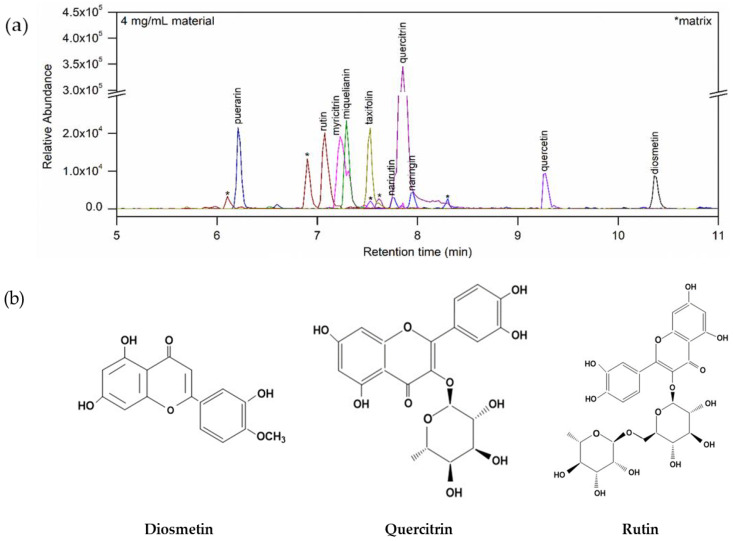
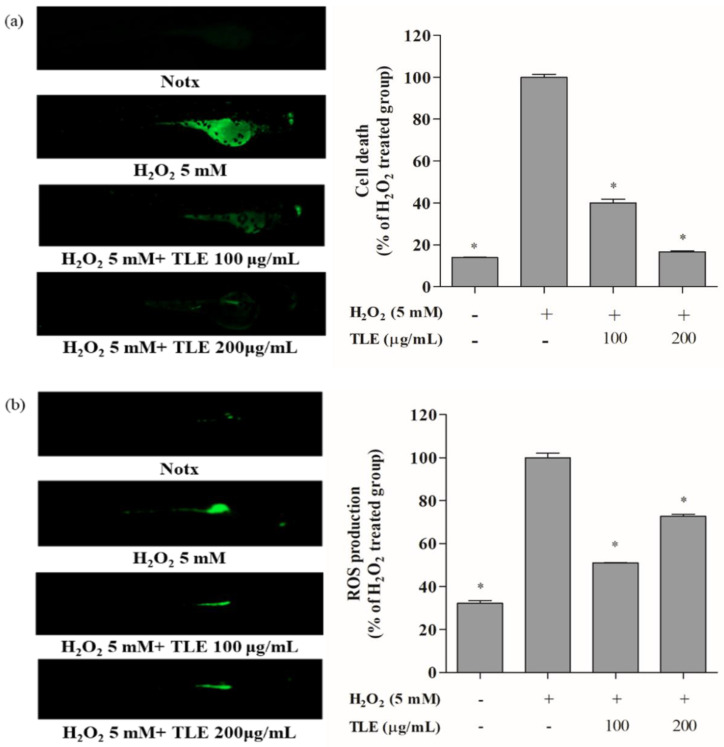
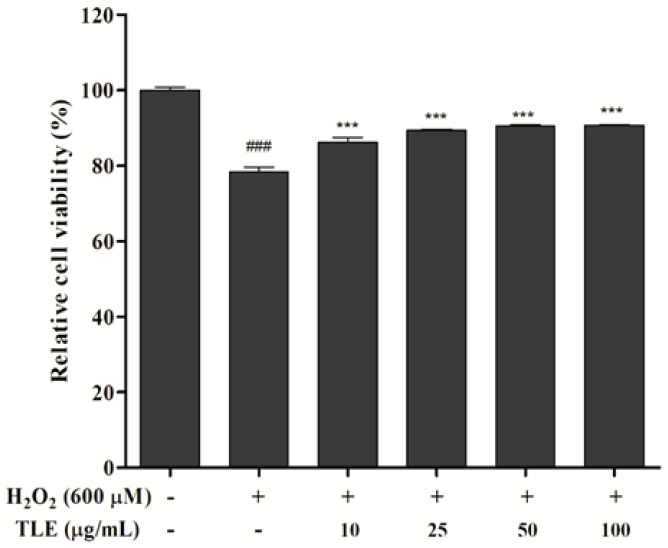
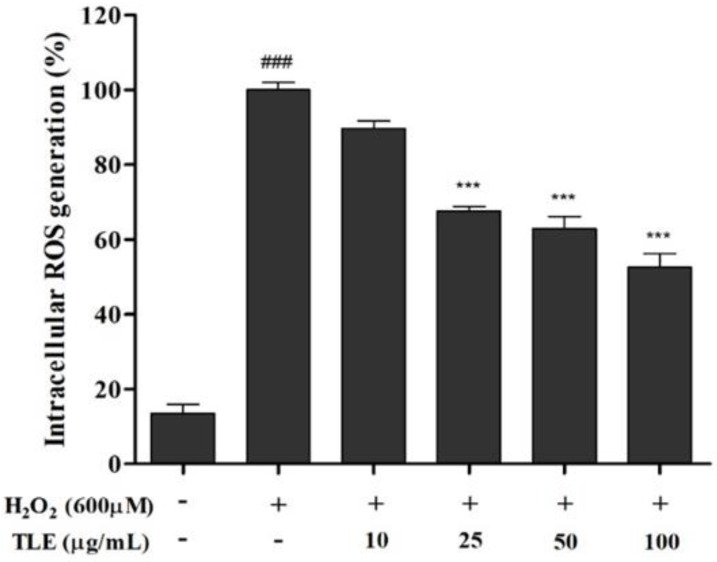
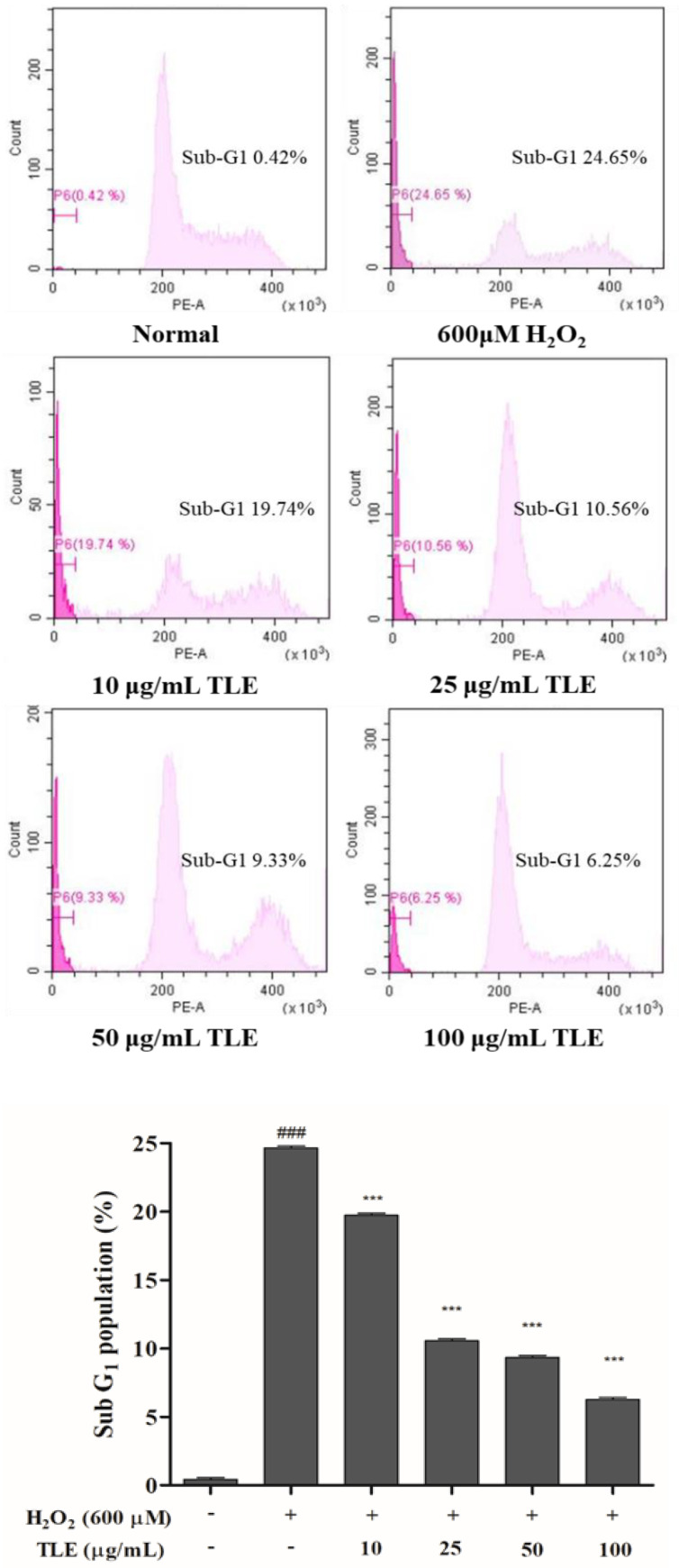
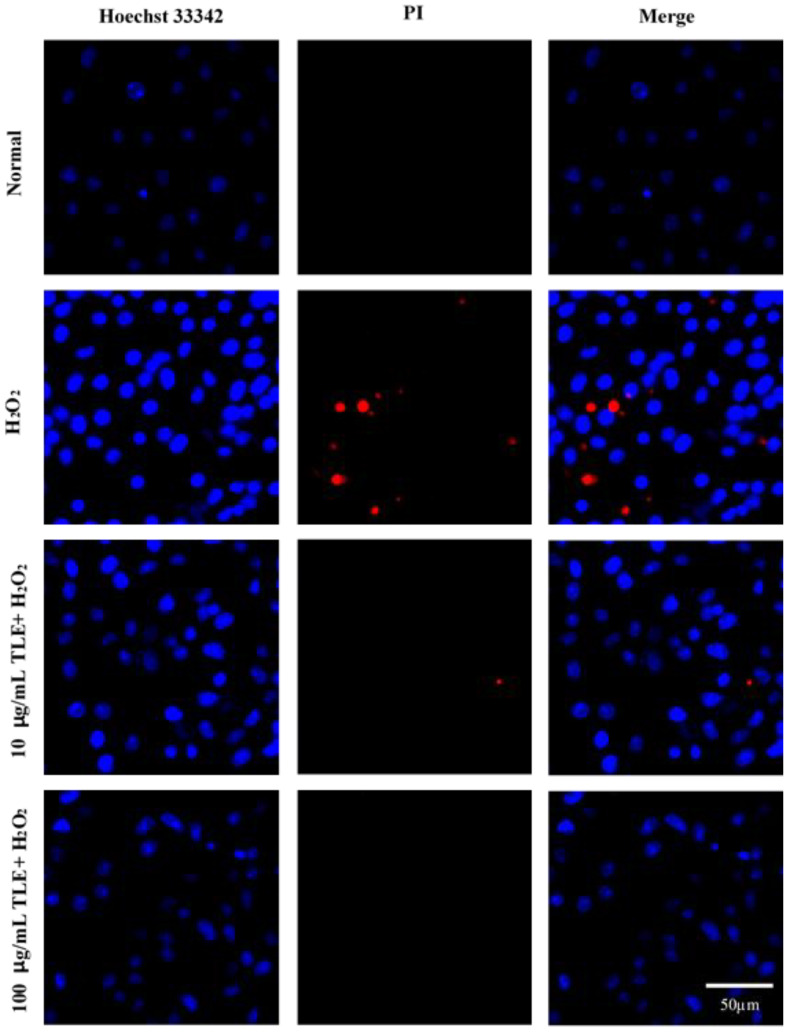
Oxidative stress, caused by the excessive production of reactive oxygen species (ROS), results in cellular damage. Therefore, functional materials with antioxidant properties are necessary to maintain redox balance. Turmeric leaves ( L. leaves; TL) are known to have antioxidant properties, including 2,2-Diphenyl-1-picrylhydrazyl (DPPH), 2,2'-Azino-di-(3-ethylbenzothiazoline)-6-sulfonic acid (ABTS), and Hydrogen peroxide (HO) radical scavenging activity in several studies. The antioxidant effects of TL come from distinct bioactive compounds, such as curcumin, total phenolic compounds, and flavonoids. Therefore, in this study, the antioxidant effects of a water extract of TL (TLE) against HO treatment were assessed in vitro Vero cells and in vivo zebrafish models. The intracellular ROS generation and the proportion of sub-G1 phase cells were evaluated in HO- or/and TLE-treated Vero cells to measure the antioxidant activity of TLE. TLE showed outstanding intracellular ROS scavenging activity and significantly decreased the proportion of cells in the sub-G1 phase in a dose-dependent manner. Furthermore, cell death, ROS generation, and lipid peroxidation in the HO-treated zebrafish model were attenuated as a consequence of TLE treatment. Collectively, the results from this study suggested that TLE may be an alternative material to relieve ROS generation through its antioxidant properties or a suitable material for the application in a functional food industry.
由活性氧(ROS)过量产生引起的氧化应激会导致细胞损伤。因此,具有抗氧化特性的功能材料对于维持氧化还原平衡是必要的。在多项研究中,姜黄叶(L. leaves;TL)已知具有抗氧化特性,包括2,2-二苯基-1-苦基肼(DPPH)、2,2'-偶氮二(3-乙基苯并噻唑啉)-6-磺酸(ABTS)和过氧化氢(HO)自由基清除活性。TL的抗氧化作用来自不同的生物活性化合物,如姜黄素、总酚类化合物和黄酮类化合物。因此,在本研究中,在体外Vero细胞和体内斑马鱼模型中评估了TL水提取物(TLE)对HO处理的抗氧化作用。在HO或/和TLE处理的Vero细胞中评估细胞内ROS的产生和亚G1期细胞的比例,以测量TLE的抗氧化活性。TLE表现出出色的细胞内ROS清除活性,并以剂量依赖的方式显著降低了亚G1期细胞的比例。此外,由于TLE处理,HO处理的斑马鱼模型中的细胞死亡、ROS产生和脂质过氧化作用减弱。总的来说,本研究结果表明,TLE可能是一种通过其抗氧化特性减轻ROS产生的替代材料,或者是一种适用于功能性食品工业的材料。