Drury Benjamin, Ratel Sébastien, Clark Cain C T, Fernandes John F T, Moran Jason, Behm David G
Department of Applied Sport Sciences, Hartpury University, Gloucestershire GL19 3BE, England, UK.
Laboratoire des Adaptations Métaboliques à l'Exercice en conditions Physiologiques et Pathologiques (AME2P, EA 3533), Université Clermont Auvergne, F-63000 Clermont-Ferrand, France.
J Funct Morphol Kinesiol. 2019 Nov 28;4(4):70. doi: 10.3390/jfmk4040070.
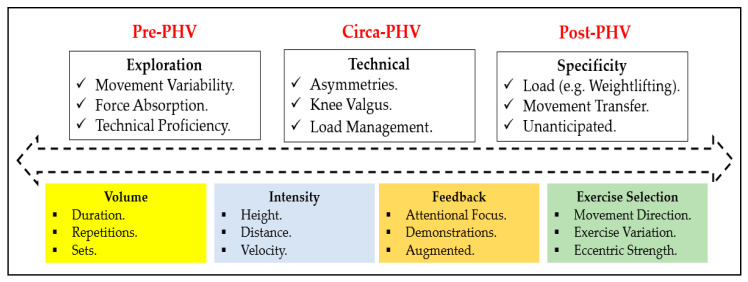
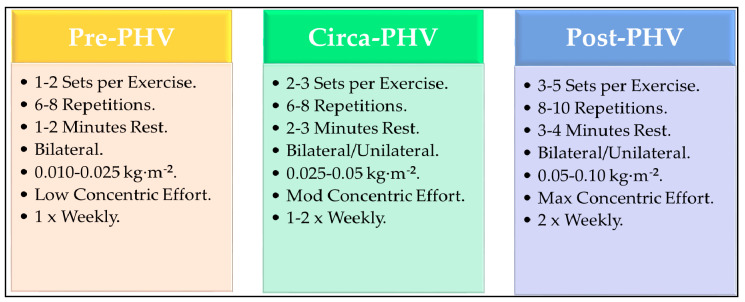
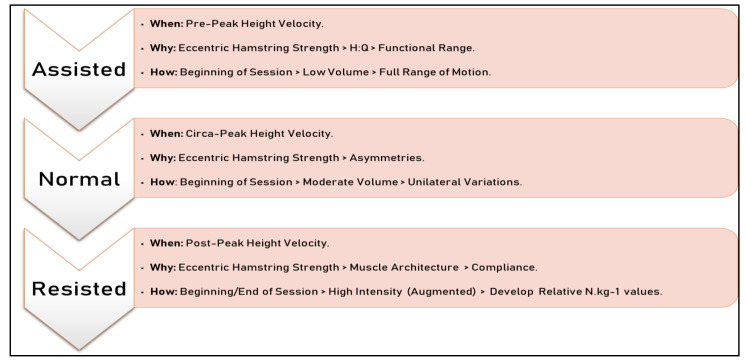
The purpose of this narrative review is to discuss the role of eccentric resistance training in youth and how this training modality can be utilized within long-term physical development. Current literature on responses to eccentric exercise in youth has demonstrated that potential concerns, such as fatigue and muscle damage, compared to adults are not supported. Considering the importance of resistance training for youth athletes and the benefits of eccentric training in enhancing strength, power, speed, and resistance to injury, its inclusion throughout youth may be warranted. In this review we provide a brief overview of the physiological responses to exercise in youth with specific reference to the different responses to eccentric resistance training between children, adolescents, and adults. Thereafter, we discuss the importance of ensuring that force absorption qualities are trained throughout youth and how these may be influenced by growth and maturation. In particular, we propose practical methods on how eccentric resistance training methods can be implemented in youth via the inclusion of efficient landing mechanics, eccentric hamstrings strengthening and flywheel inertia training. This article proposes that the use of eccentric resistance training in youth should be considered a necessity to help develop both physical qualities that underpin sporting performance, as well as reducing injury risk. However, as with any other training modality implemented within youth, careful consideration should be given in accordance with an individual's maturity status, training history and technical competency as well as being underpinned by current long-term physical development guidelines.
本叙述性综述的目的是探讨离心阻力训练在青少年中的作用,以及这种训练方式如何在长期身体发育中得到应用。关于青少年对离心运动反应的现有文献表明,与成年人相比,诸如疲劳和肌肉损伤等潜在问题并无依据。考虑到阻力训练对青少年运动员的重要性,以及离心训练在增强力量、功率、速度和抗损伤能力方面的益处,在整个青少年时期纳入离心训练可能是必要的。在本综述中,我们简要概述了青少年运动的生理反应,特别提及儿童、青少年和成年人对离心阻力训练的不同反应。此后,我们讨论了在整个青少年时期确保训练力量吸收能力的重要性,以及这些能力如何受到生长和成熟的影响。特别是,我们提出了一些实用方法,说明如何通过纳入有效的落地力学、离心腘绳肌强化训练和飞轮惯性训练,在青少年中实施离心阻力训练方法。本文提出,在青少年中使用离心阻力训练应被视为必要,这有助于发展支撑运动表现的身体素质,并降低受伤风险。然而,与在青少年中实施的任何其他训练方式一样,应根据个人的成熟程度、训练历史和技术能力,以及当前长期身体发育指南进行仔细考虑。