Yeh Wen-Hsiu, Hsueh Jen-Jui, Shaw Fu-Zen
Institute of Basic Medical Science, National Cheng Kung University, Tainan, Taiwan.
Mind Research and Imaging Center, National Cheng Kung University, Tainan, Taiwan.
Front Hum Neurosci. 2021 Jan 5;14:562360. doi: 10.3389/fnhum.2020.562360. eCollection 2020.
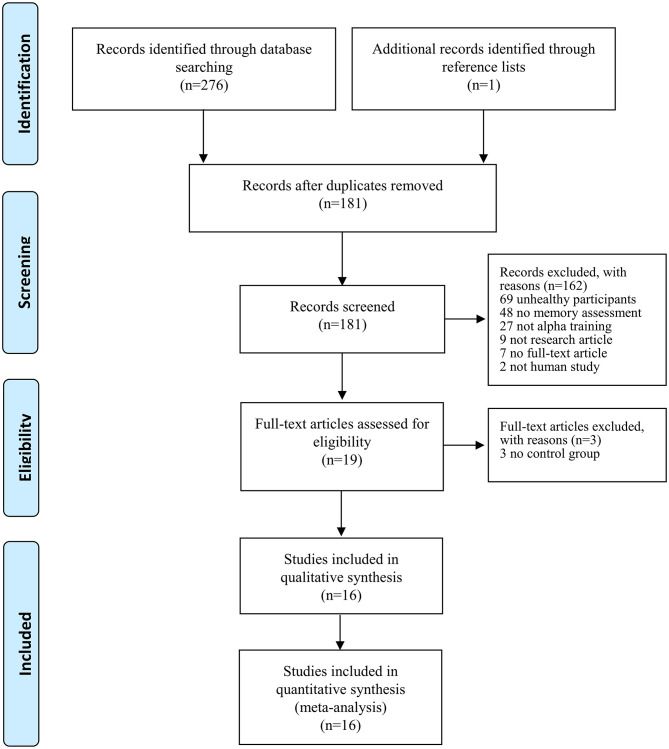
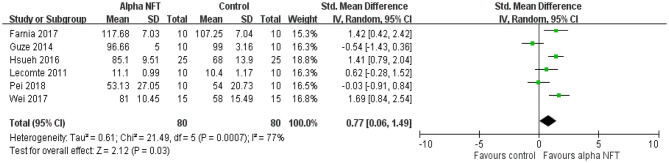
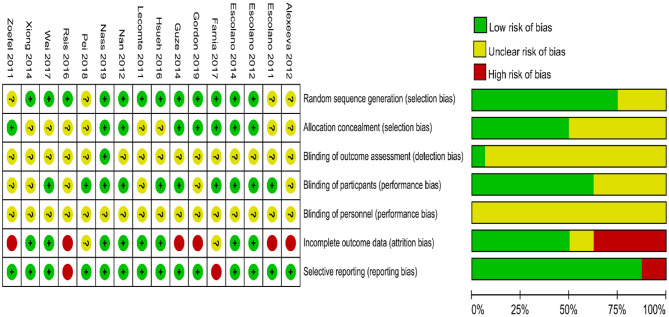
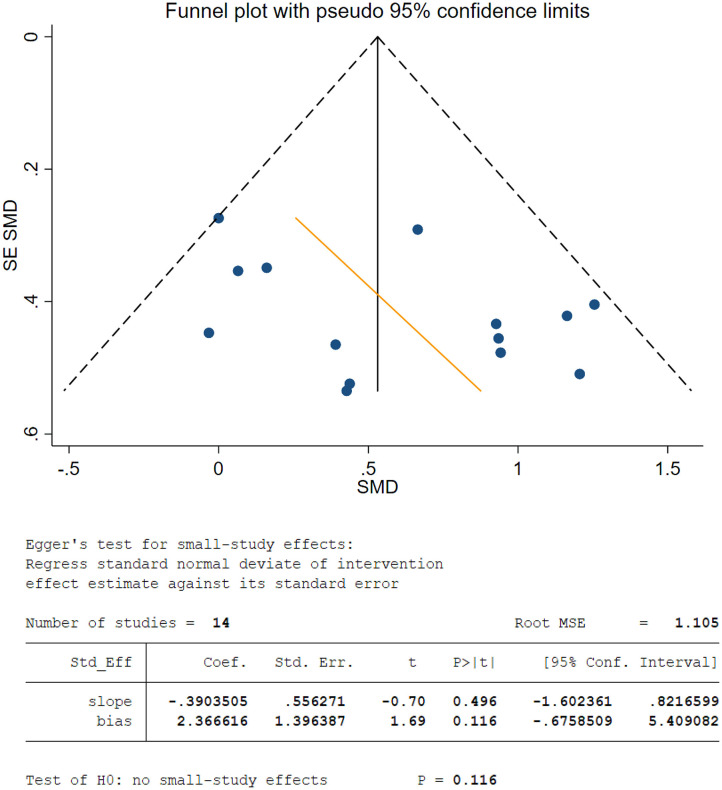
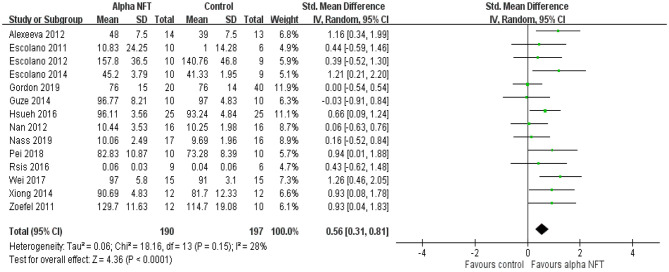
Neurofeedback training (NFT) has recently been proposed as a valuable technique for cognitive enhancement and psychiatric amelioration. However, effect of NFT of alpha activity on memory is controversial. The current study analyzed previous works in terms of randomized and blinded analyses, training paradigms, and participant characteristics to validate the efficacy of alpha NFT on memory in a healthy population. A systematic meta-analysis of studies with randomized controlled trials was performed to explore the effect of alpha NFT on working memory (WM) and episodic memory (EM) in a healthy population. We searched PubMed, Embase, and Cochrane Library from January 1, 1999, to November 30, 2019. Previous studies were evaluated with the Cochrane risk of bias (RoB). A meta-analysis calculating absolute weighted standardized mean difference (SMD) using random-effects models was employed. Heterogeneity was estimated using statistics. Funnel plots and Egger's test were performed to evaluate the quality of evidence. Sixteen studies with 217 healthy participants in the control group and 210 participants in the alpha group met the eligibility criteria. Alpha NFT studies with WM measures presented little publication bias ( = 0.116), and 5 of 7 domains in the Cochrane RoB exhibited a low risk of bias. The overall effect size from 14 WM studies was 0.56 (95% CI 0.31-0.81, < 0.0001; = 28%). Six EM studies exhibited an effect size of 0.77 (95% CI 0.06-1.49, = 0.03; = 77%). Meta-analysis results suggest that alpha NFT seems to have a positive effect on the WM and EM of healthy participants. Future efforts should focus on the neurophysiological mechanisms of alpha NFT in memory.
神经反馈训练(NFT)最近被认为是一种用于认知增强和精神改善的有价值技术。然而,α波活动的NFT对记忆的影响存在争议。本研究从随机和盲法分析、训练范式以及参与者特征等方面分析了以往的研究,以验证α波NFT对健康人群记忆的有效性。对随机对照试验的研究进行了系统的荟萃分析,以探讨α波NFT对健康人群工作记忆(WM)和情景记忆(EM)的影响。我们检索了1999年1月1日至2019年11月30日期间的PubMed、Embase和Cochrane图书馆。以往的研究采用Cochrane偏倚风险(RoB)进行评估。采用随机效应模型计算绝对加权标准化均值差(SMD)的荟萃分析。使用 统计量估计异质性。进行漏斗图和Egger检验以评估证据质量。16项研究符合纳入标准,其中对照组有217名健康参与者,α波组有210名参与者。采用WM测量的α波NFT研究几乎没有发表偏倚( = 0.116),Cochrane RoB的7个领域中有5个显示出低偏倚风险。14项WM研究的总体效应量为0.56(95%CI 0.31 - 0.81, < 0.0001; = 28%)。6项EM研究的效应量为0.77(95%CI 0.06 - 1.49, = 0.03; = 77%)。荟萃分析结果表明,α波NFT似乎对健康参与者的WM和EM有积极影响。未来的研究应集中在α波NFT在记忆中的神经生理机制上。