Division of Neuronic Engineering, KTH Royal Institute of Technology, Hälsovägen 11C, 141 52, Huddinge, Sweden.
Dyson School of Design Engineering, Imperial College London, London, UK.
Ann Biomed Eng. 2021 Mar;49(3):1097-1109. doi: 10.1007/s10439-020-02703-w. Epub 2021 Jan 21.
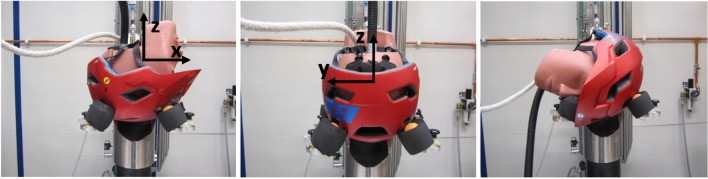
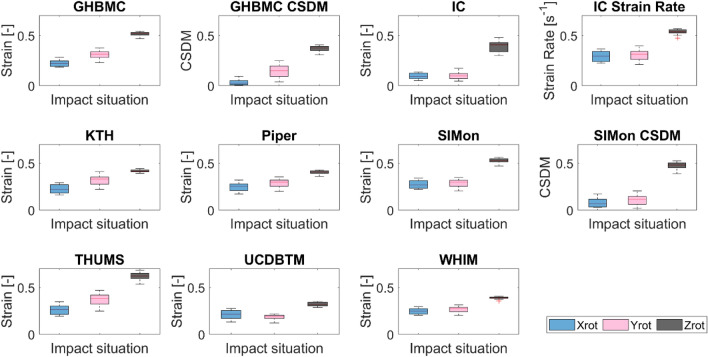
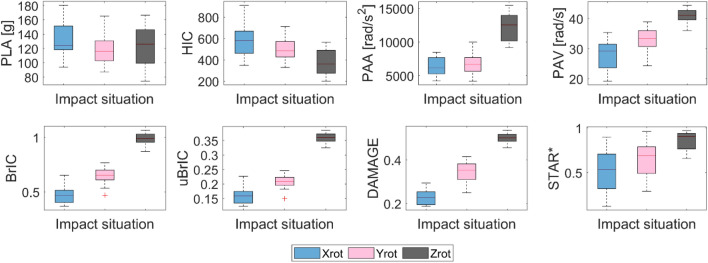
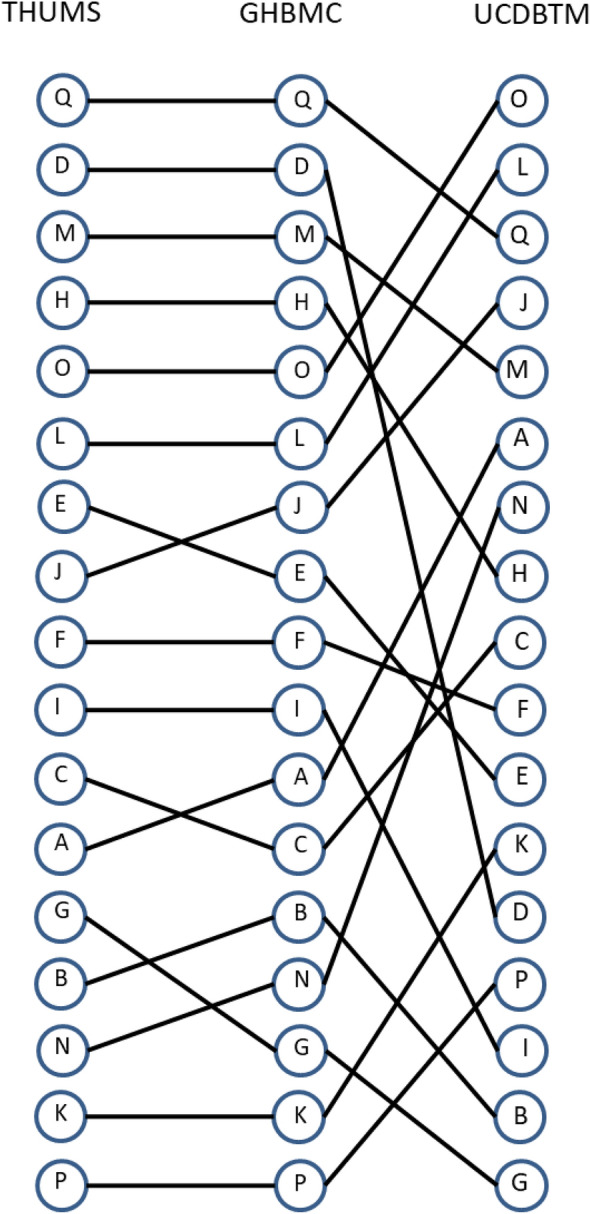
Bicycle helmets are shown to offer protection against head injuries. Rating methods and test standards are used to evaluate different helmet designs and safety performance. Both strain-based injury criteria obtained from finite element brain injury models and metrics derived from global kinematic responses can be used to evaluate helmet safety performance. Little is known about how different injury models or injury metrics would rank and rate different helmets. The objective of this study was to determine how eight brain models and eight metrics based on global kinematics rank and rate a large number of bicycle helmets (n=17) subjected to oblique impacts. The results showed that the ranking and rating are influenced by the choice of model and metric. Kendall's tau varied between 0.50 and 0.95 when the ranking was based on maximum principal strain from brain models. One specific helmet was rated as 2-star when using one brain model but as 4-star by another model. This could cause confusion for consumers rather than inform them of the relative safety performance of a helmet. Therefore, we suggest that the biomechanics community should create a norm or recommendation for future ranking and rating methods.
研究表明,自行车头盔可提供头部受伤防护。通过使用评级方法和测试标准,可评估不同头盔设计和安全性能。基于应变的损伤准则可通过有限元脑损伤模型获得,而基于整体运动学响应的指标可用于评估头盔的安全性能。目前尚不清楚不同的损伤模型或损伤指标如何对不同的头盔进行排名和评级。本研究旨在确定 8 种大脑模型和 8 种基于整体运动学的指标如何对大量(n=17)受到斜向冲击的自行车头盔进行排名和评级。结果表明,选择模型和指标会影响排名和评级。当基于大脑模型的最大主应变进行排名时,Kendall's tau 介于 0.50 至 0.95 之间。一个特定的头盔在使用一种大脑模型时被评为 2 星级,但在另一种模型中被评为 4 星级。这可能会使消费者感到困惑,而不是向他们提供头盔相对安全性能的信息。因此,我们建议生物力学界应为未来的排名和评级方法制定规范或建议。