Ko Han-Seung, Lee Sangwoon, Lee Doyoung, Jho Jae Young
School of Chemical and Biological Engineering, Seoul National University, Seoul 08826, Korea.
Nanomaterials (Basel). 2021 Jan 18;11(1):249. doi: 10.3390/nano11010249.
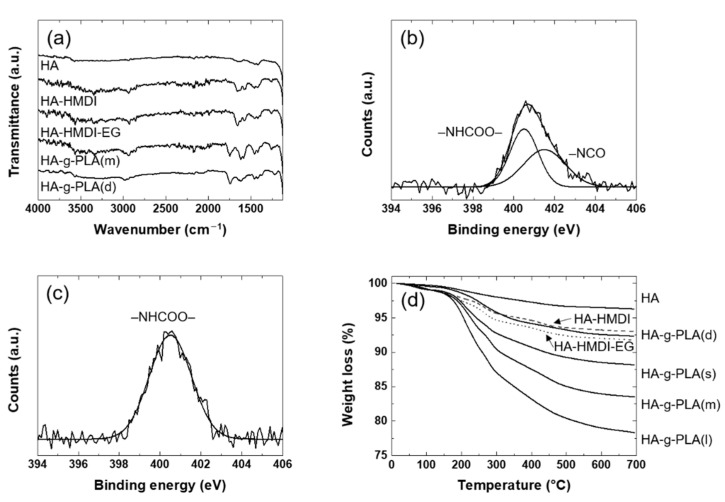
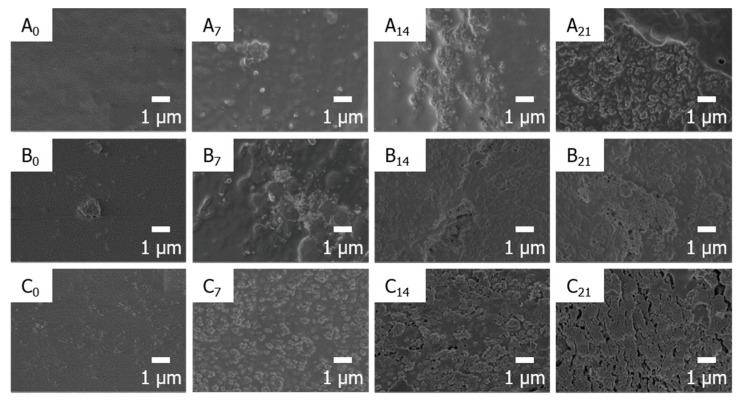
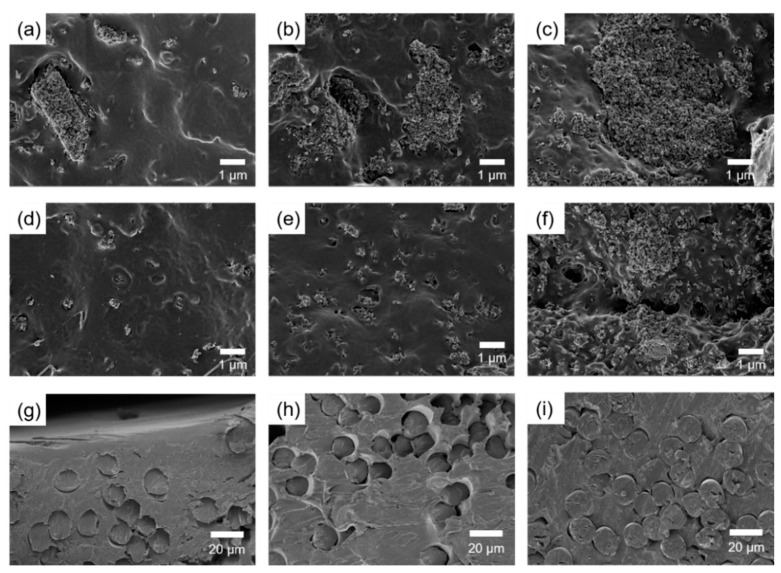
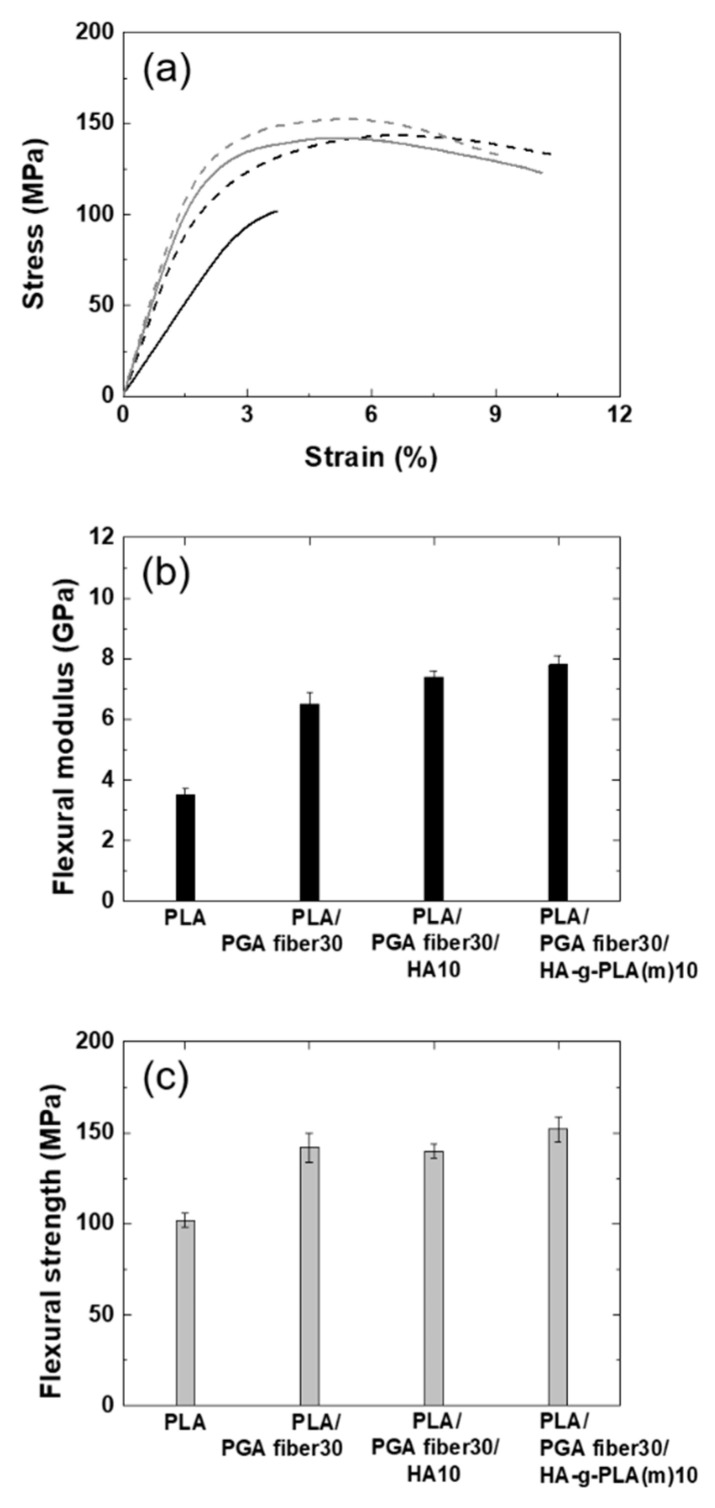
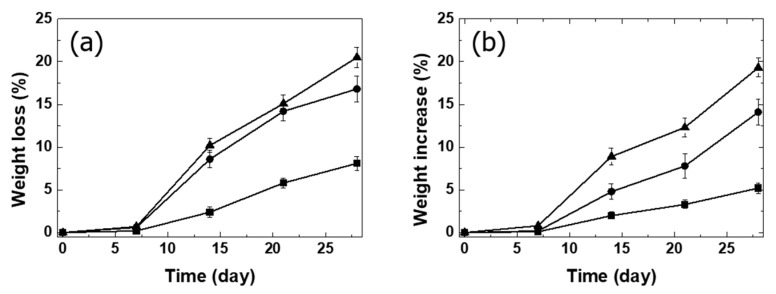
To enhance the mechanical strength and bioactivity of poly(lactic acid) (PLA) to the level that can be used as a material for spinal implants, poly(glycolic acid) (PGA) fibers and hydroxyapatite (HA) were introduced as fillers to PLA composites. To improve the poor interface between HA and PLA, HA was grafted by PLA to form HA-g-PLA through coupling reactions, and mixed with PLA. The size of the HA particles in the PLA matrix was observed to be reduced from several micrometers to sub-micrometer by grafting PLA onto HA. The tensile and flexural strength of PLA/HA-g-PLA composites were increased compared with those of PLA/HA, apparently due to the better dispersion of HA and stronger interfacial adhesion between the HA and PLA matrix. We also examined the effects of the length and frequency of grafted PLA chains on the tensile strength of the composites. By the addition of unidirectionally aligned PGA fibers, the flexural strength of the composites was greatly improved to a level comparable with human compact bone. In the bioactivity tests, the growth of apatite on the surface was fastest and most uniform in the PLA/PGA fiber/HA-g-PLA composite.
为了将聚乳酸(PLA)的机械强度和生物活性提高到可作为脊柱植入物材料的水平,将聚乙醇酸(PGA)纤维和羟基磷灰石(HA)作为填料引入到PLA复合材料中。为了改善HA与PLA之间较差的界面,通过偶联反应将PLA接枝到HA上以形成HA-g-PLA,并与PLA混合。通过将PLA接枝到HA上,观察到PLA基体中HA颗粒的尺寸从几微米减小到亚微米。与PLA/HA相比,PLA/HA-g-PLA复合材料的拉伸强度和弯曲强度有所提高,这显然是由于HA的分散性更好以及HA与PLA基体之间的界面粘附力更强。我们还研究了接枝PLA链的长度和频率对复合材料拉伸强度的影响。通过添加单向排列的PGA纤维,复合材料的弯曲强度大大提高到与人体密质骨相当的水平。在生物活性测试中,PLA/PGA纤维/HA-g-PLA复合材料表面磷灰石的生长最快且最均匀。