Plant Cytogenetics and Molecular Biology Group, Institute of Biology, Biotechnology and Environmental Protection, University of Silesia in Katowice, 40-032 Katowice, Poland.
Institute of Biological, Environmental and Rural Sciences (IBERS), Aberystwyth University, Aberystwyth SY23 3DA, UK.
Int J Mol Sci. 2021 Jan 19;22(2):949. doi: 10.3390/ijms22020949.
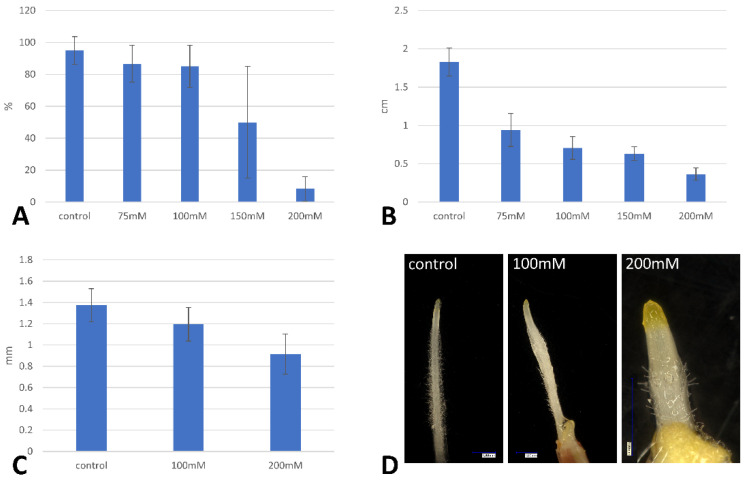
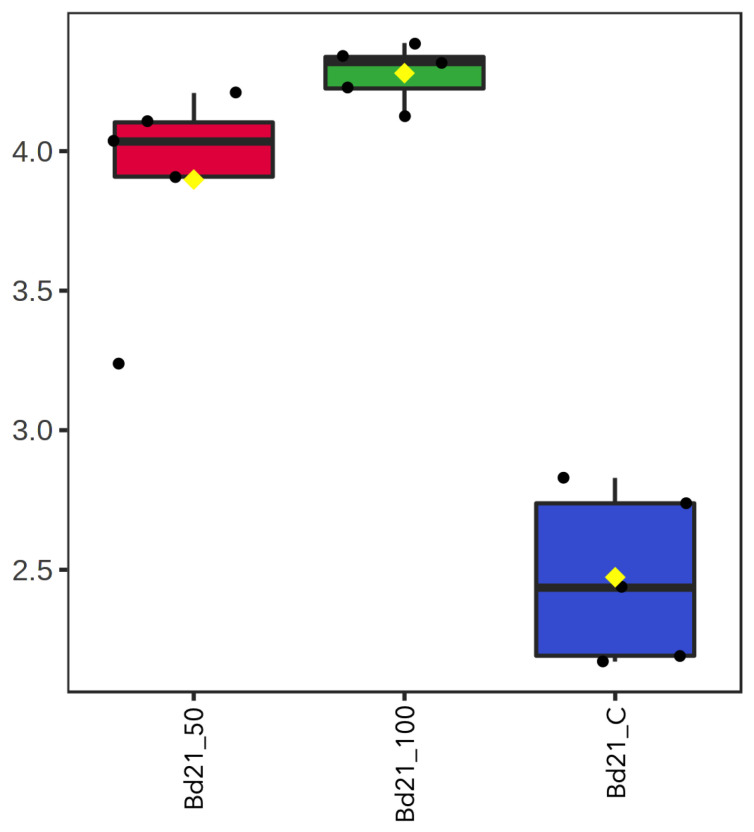
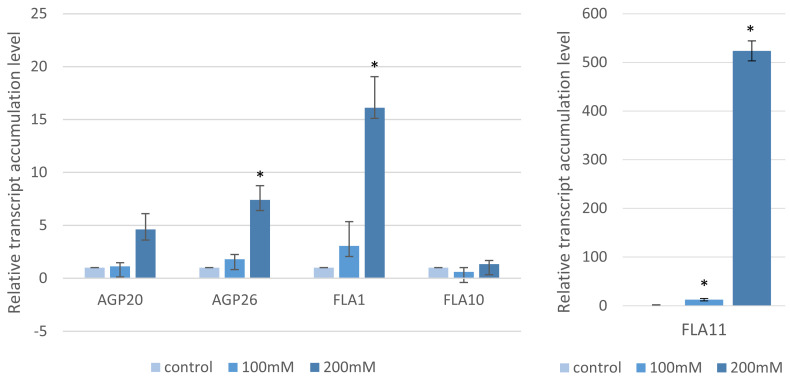
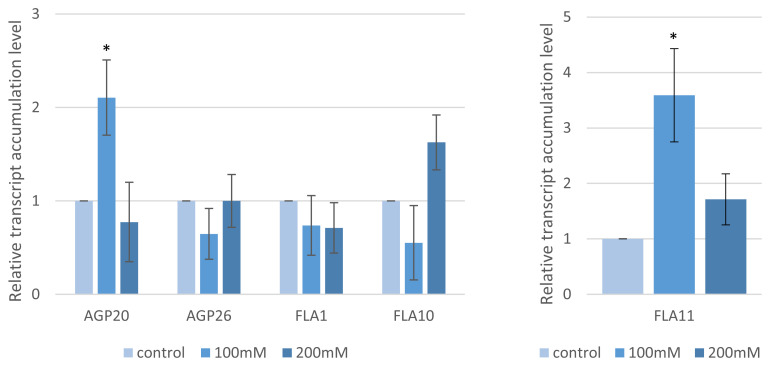
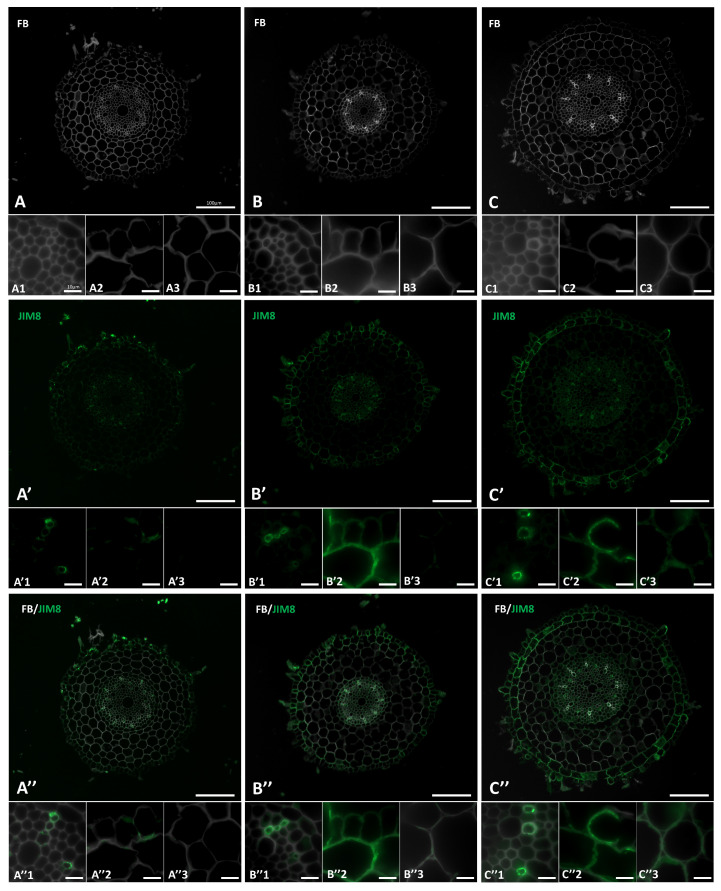
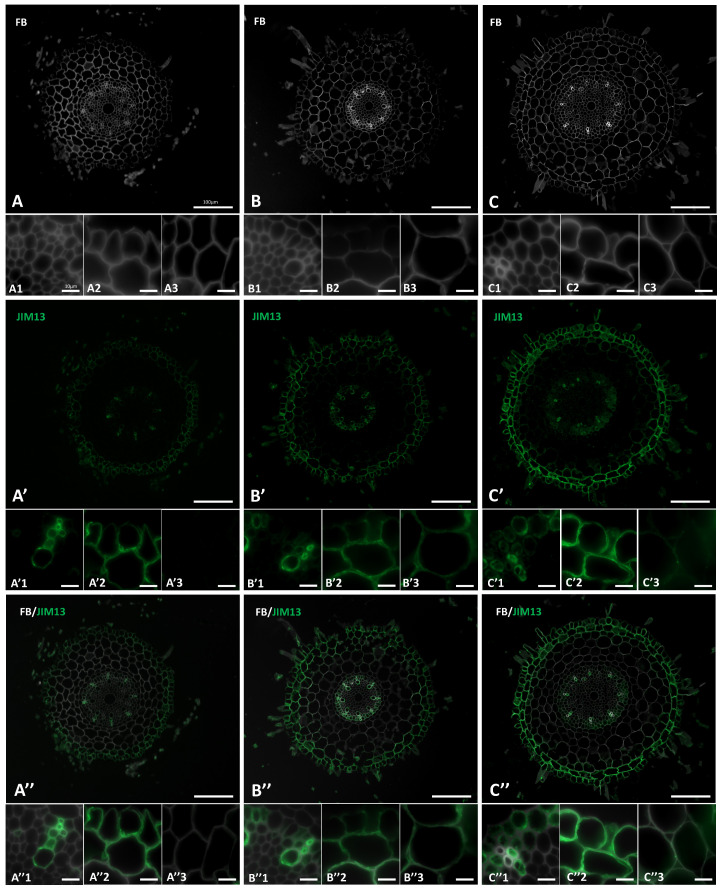
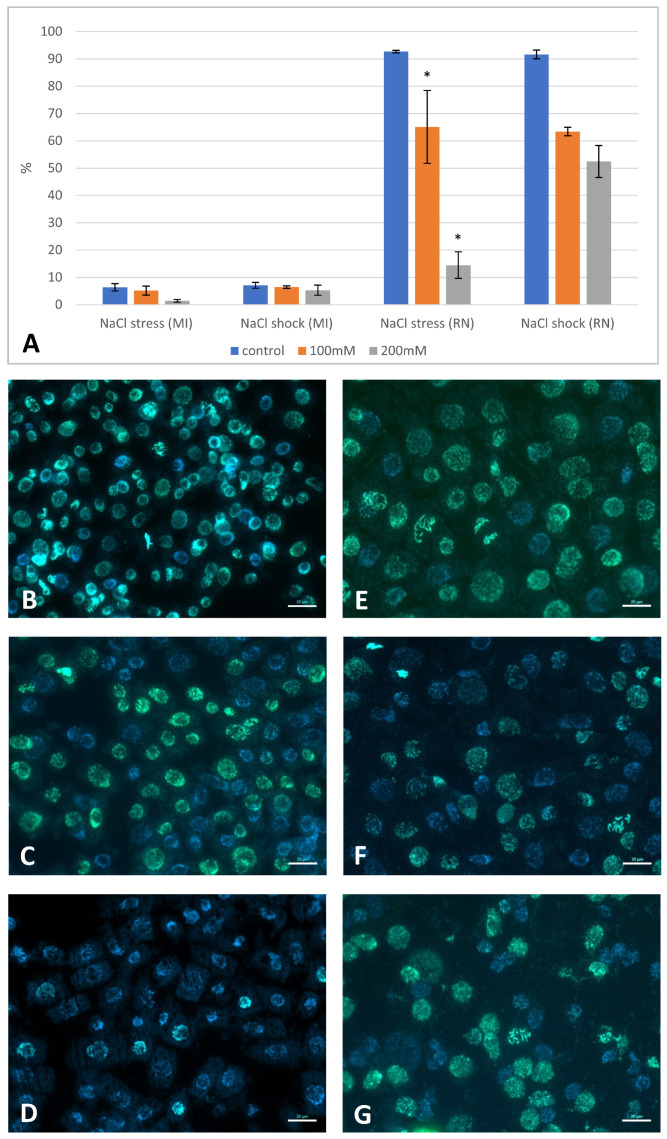
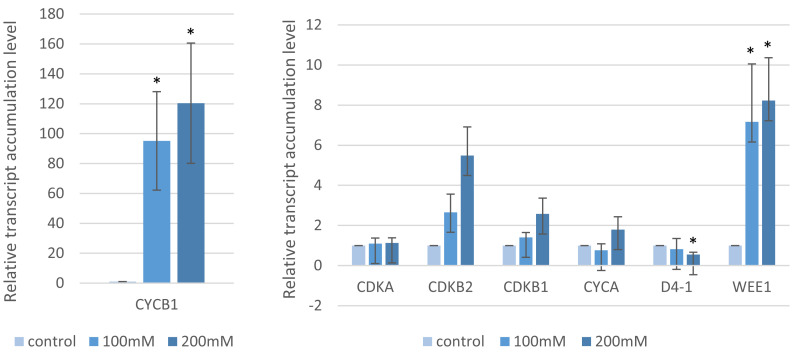
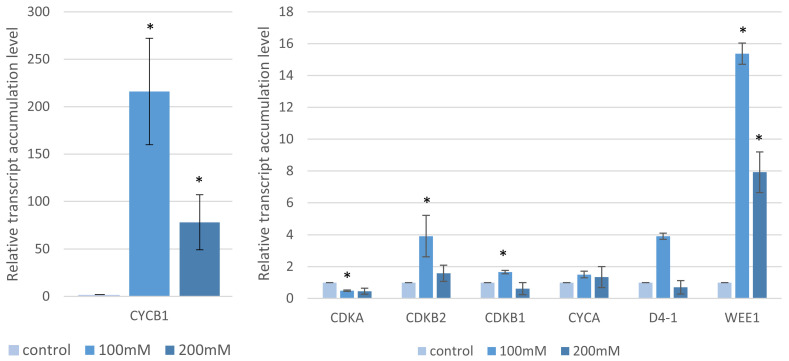
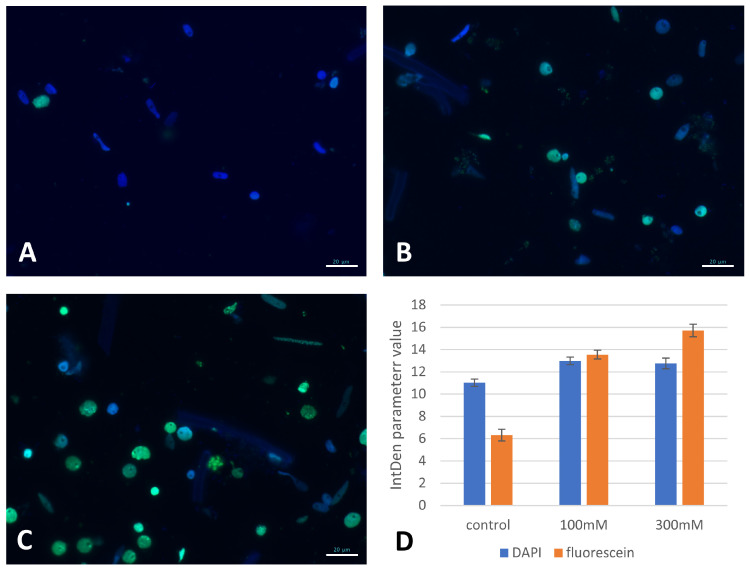
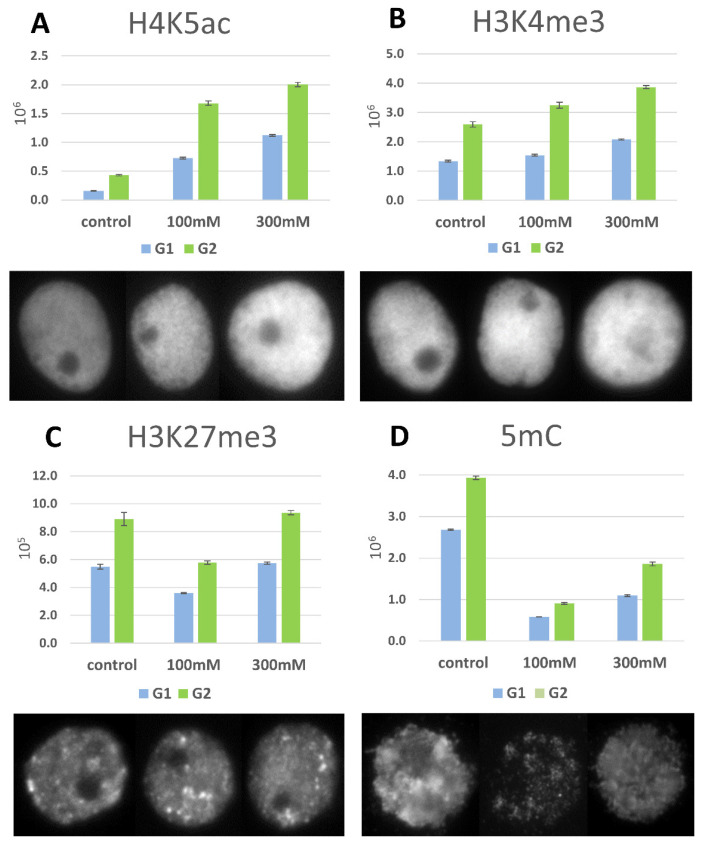
Excess salinity is a major stress that limits crop yields. Here, we used the model grass (Brachypodium) reference line Bd21 in order to define the key molecular events in the responses to salt during germination. Salt was applied either throughout the germination period ("salt stress") or only after root emergence ("salt shock"). Germination was affected at ≥100 mM and root elongation at ≥75 mM NaCl. The expression of arabinogalactan proteins (AGPs), , , , and , which regulate cell wall expansion (especially ), were mostly induced by the "salt stress" but to a lesser extent by "salt shock". Cytological assessment using two AGP epitopes, JIM8 and JIM13 indicated that "salt stress" increases the fluorescence signals in rhizodermal and exodermal cell wall. Cell division was suppressed at >75 mM NaCl. The cell cycle genes () were induced by "salt stress" in a concentration-dependent manner but not , and . Under "salt shock", the cell cycle genes were optimally expressed at 100 mM NaCl. These changes were consistent with the cell cycle arrest, possibly at the G1 phase. The salt-induced genomic damage was linked with the oxidative events via an increased glutathione accumulation. Histone acetylation and methylation and DNA methylation were visualized by immunofluorescence. Histone H4 acetylation at lysine 5 increased strongly whereas DNA methylation decreased with the application of salt. Taken together, we suggest that salt-induced oxidative stress causes genomic damage but that it also has epigenetic effects, which might modulate the cell cycle and AGP expression gene. Based on these landmarks, we aim to encourage functional genomics studies on the responses of Brachypodium to salt.
过量的盐分是限制作物产量的主要胁迫因素。在这里,我们使用模式禾本科植物(Brachypodium)参考系 Bd21 来定义种子萌发过程中对盐响应的关键分子事件。盐处理要么在整个萌发期间进行(“盐胁迫”),要么在根伸出后进行(“盐冲击”)。萌发在≥100mM 盐和根伸长在≥75mM NaCl 时受到影响。阿拉伯半乳糖蛋白(AGP)的表达, , , , ,和 ,调节细胞壁扩张(特别是 ),主要由“盐胁迫”诱导,但由“盐冲击”诱导的程度较小。使用两个 AGP 表位 JIM8 和 JIM13 的细胞学评估表明,“盐胁迫”增加了根表皮和外皮层细胞壁的荧光信号。在>75mM NaCl 时,细胞分裂受到抑制。细胞周期基因()以浓度依赖的方式被“盐胁迫”诱导,但 , ,和 没有被诱导。在“盐冲击”下,细胞周期基因在 100mM NaCl 时最佳表达。这些变化与细胞周期停滞一致,可能在 G1 期。盐诱导的基因组损伤与氧化事件通过增加谷胱甘肽积累相关联。通过免疫荧光观察组蛋白乙酰化和甲基化以及 DNA 甲基化。盐处理后赖氨酸 5 处的组蛋白 H4 乙酰化强烈增加,而 DNA 甲基化减少。总之,我们认为盐诱导的氧化应激导致基因组损伤,但它也具有表观遗传效应,可能调节细胞周期和 AGP 表达基因。基于这些标志,我们旨在鼓励对 Brachypodium 对盐响应的功能基因组学研究。