Pancreatic Cancer Translational Research Group, School of Medical Sciences, Lowy Cancer Research Centre, UNSW Sydney, Sydney, NSW, Australia.
Australian Centre for Nanomedicine, ARC Centre of Excellence in Convergent Bio-Nano Science and Technology, UNSW Sydney, Sydney, NSW, Australia.
Sci Rep. 2021 Jan 21;11(1):1944. doi: 10.1038/s41598-021-81299-0.
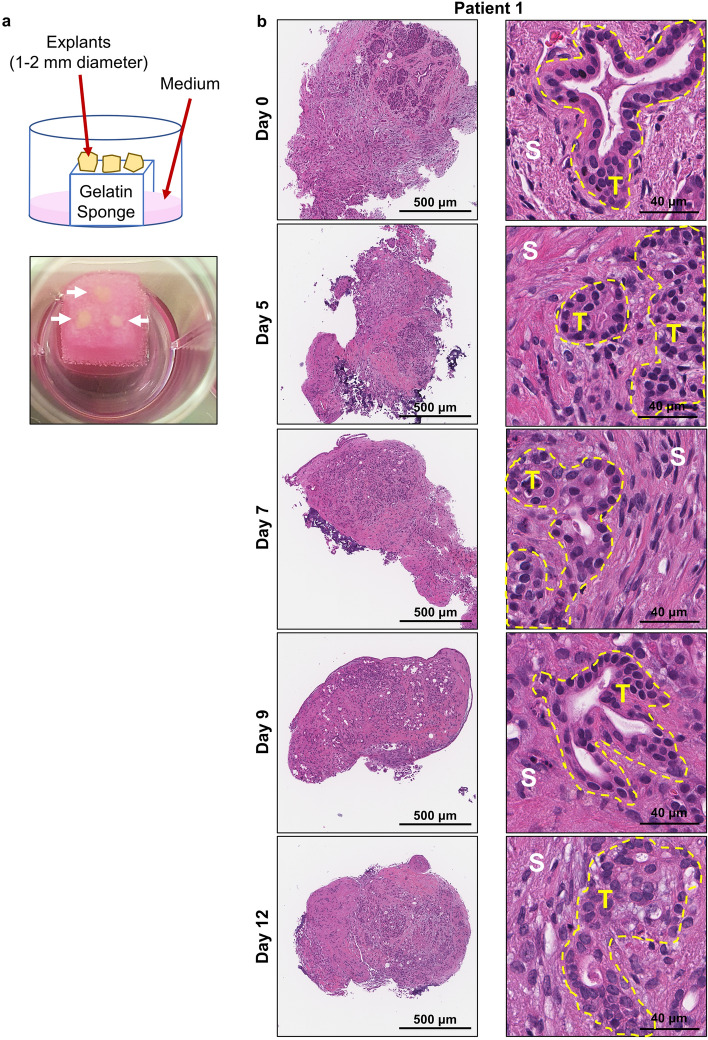
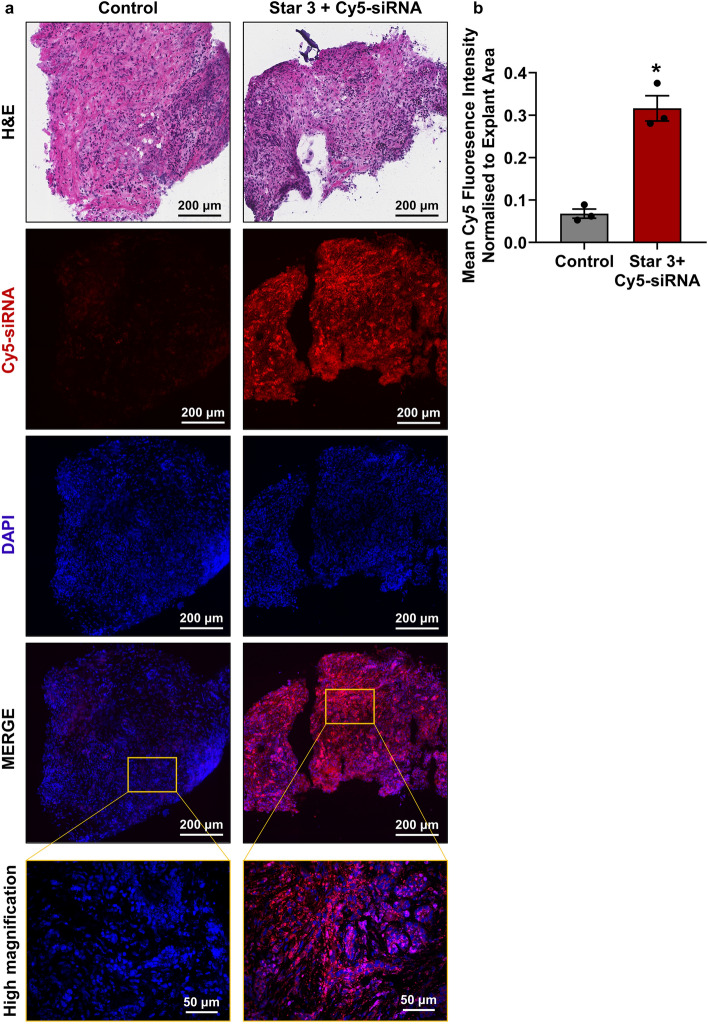
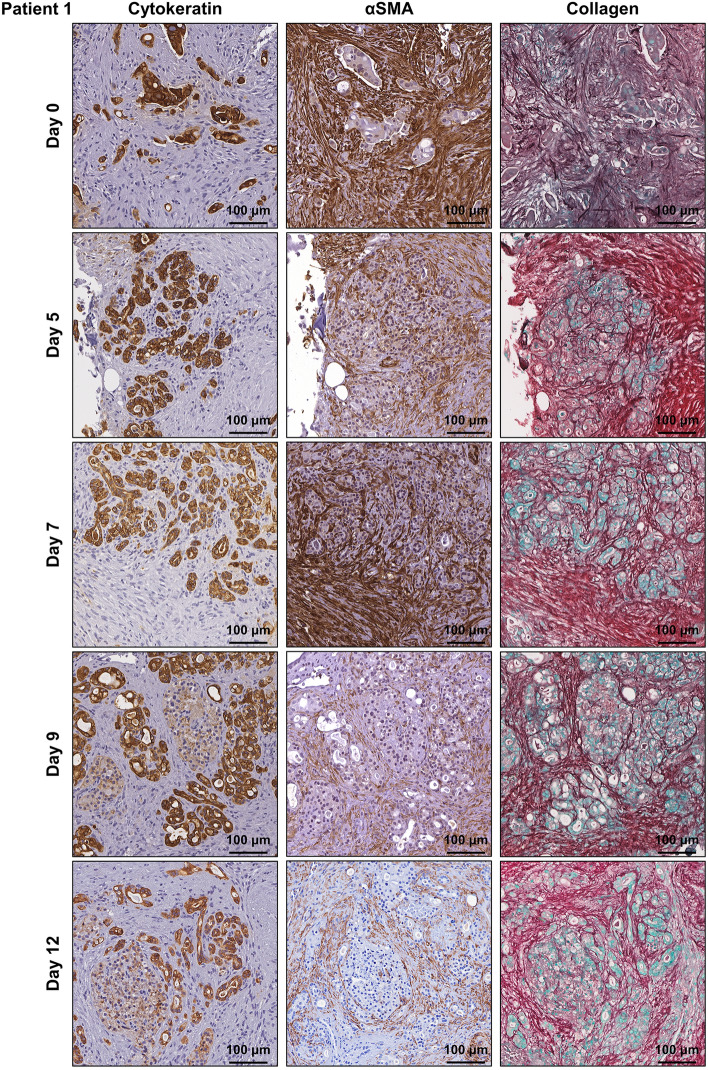
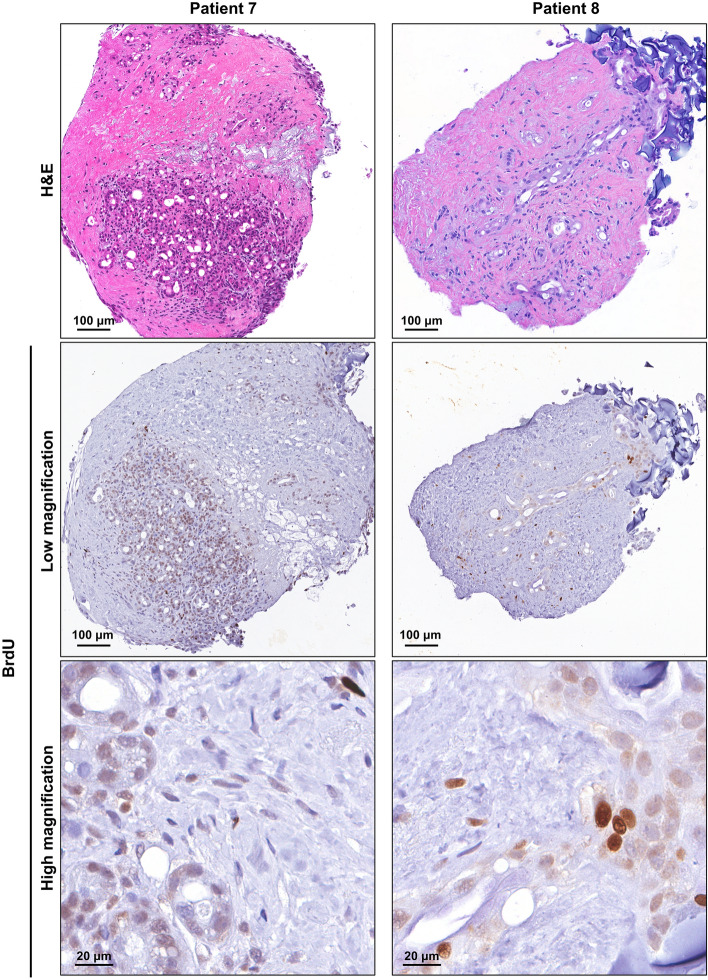
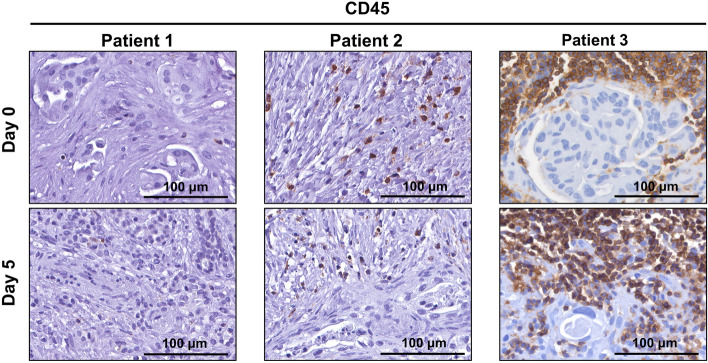
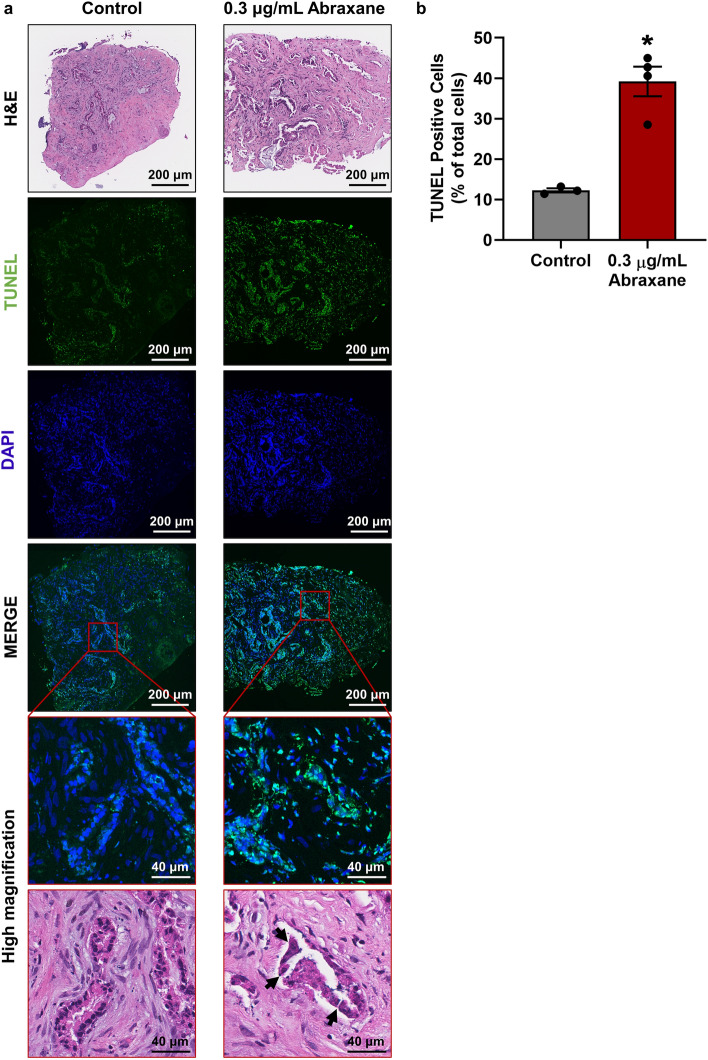
The poor prognosis of pancreatic ductal adenocarcinoma (PDAC) is attributed to the highly fibrotic stroma and complex multi-cellular microenvironment that is difficult to fully recapitulate in pre-clinical models. To fast-track translation of therapies and to inform personalised medicine, we aimed to develop a whole-tissue ex vivo explant model that maintains viability, 3D multicellular architecture, and microenvironmental cues of human pancreatic tumours. Patient-derived surgically-resected PDAC tissue was cut into 1-2 mm explants and cultured on gelatin sponges for 12 days. Immunohistochemistry revealed that human PDAC explants were viable for 12 days and maintained their original tumour, stromal and extracellular matrix architecture. As proof-of-principle, human PDAC explants were treated with Abraxane and we observed different levels of response between patients. PDAC explants were also transfected with polymeric nanoparticles + Cy5-siRNA and we observed abundant cytoplasmic distribution of Cy5-siRNA throughout the PDAC explants. Overall, our novel model retains the 3D architecture of human PDAC and has advantages over standard organoids: presence of functional multi-cellular stroma and fibrosis, and no tissue manipulation, digestion, or artificial propagation of organoids. This provides unprecedented opportunity to study PDAC biology including tumour-stromal interactions and rapidly assess therapeutic response to drive personalised treatment.
胰腺导管腺癌 (PDAC) 的预后较差,这归因于高度纤维化的基质和复杂的多细胞微环境,这在临床前模型中难以完全再现。为了加速治疗方法的转化并为个性化医疗提供信息,我们旨在开发一种全组织离体外植体模型,该模型可保持人类胰腺肿瘤的活力、3D 多细胞结构和微环境线索。从患者手术切除的 PDAC 组织中切下 1-2 毫米的外植体,并在明胶海绵上培养 12 天。免疫组织化学显示,人类 PDAC 外植体在 12 天内保持活力,并保持其原始肿瘤、基质和细胞外基质结构。作为原理验证,我们用 Abraxane 处理人类 PDAC 外植体,观察到不同患者之间存在不同的反应水平。PDAC 外植体还被聚合物纳米颗粒+Cy5-siRNA 转染,我们观察到 Cy5-siRNA 在整个 PDAC 外植体中大量分布在细胞质中。总的来说,我们的新模型保留了人类 PDAC 的 3D 结构,并且优于标准类器官:存在功能性多细胞基质和纤维化,并且没有组织操作、消化或类器官的人工繁殖。这为研究 PDAC 生物学提供了前所未有的机会,包括肿瘤-基质相互作用,并快速评估治疗反应以推动个性化治疗。