Novo Nordisk Foundation Center for Biosustainability, Technical University of Denmark, Kongens Lyngby, Denmark.
Mol Biol Evol. 2021 May 4;38(5):2057-2069. doi: 10.1093/molbev/msab006.
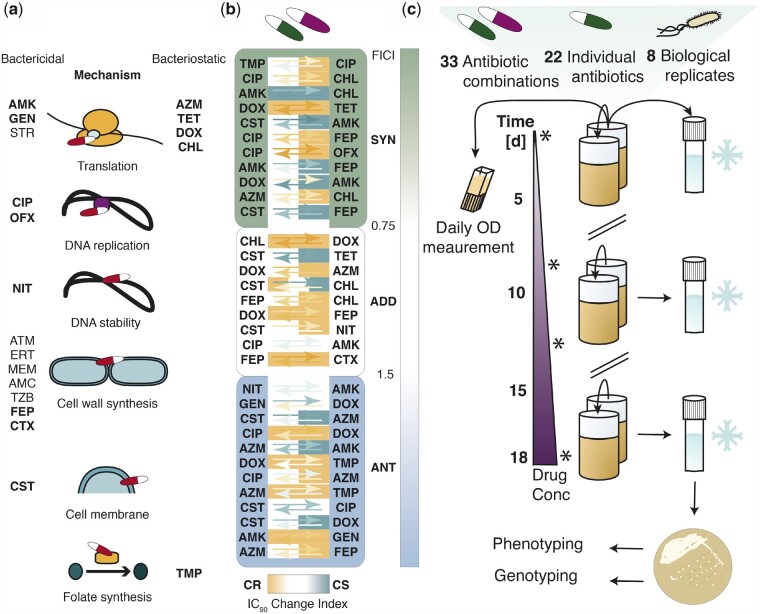
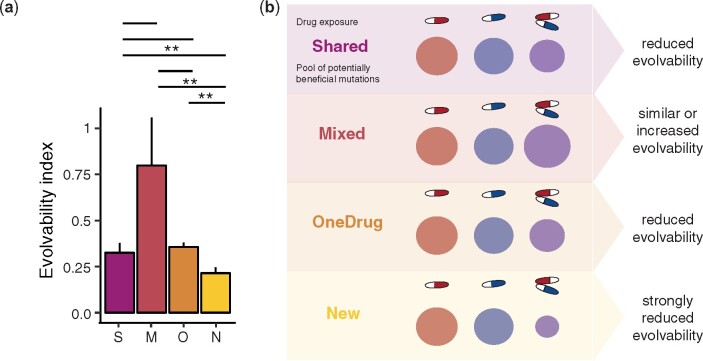
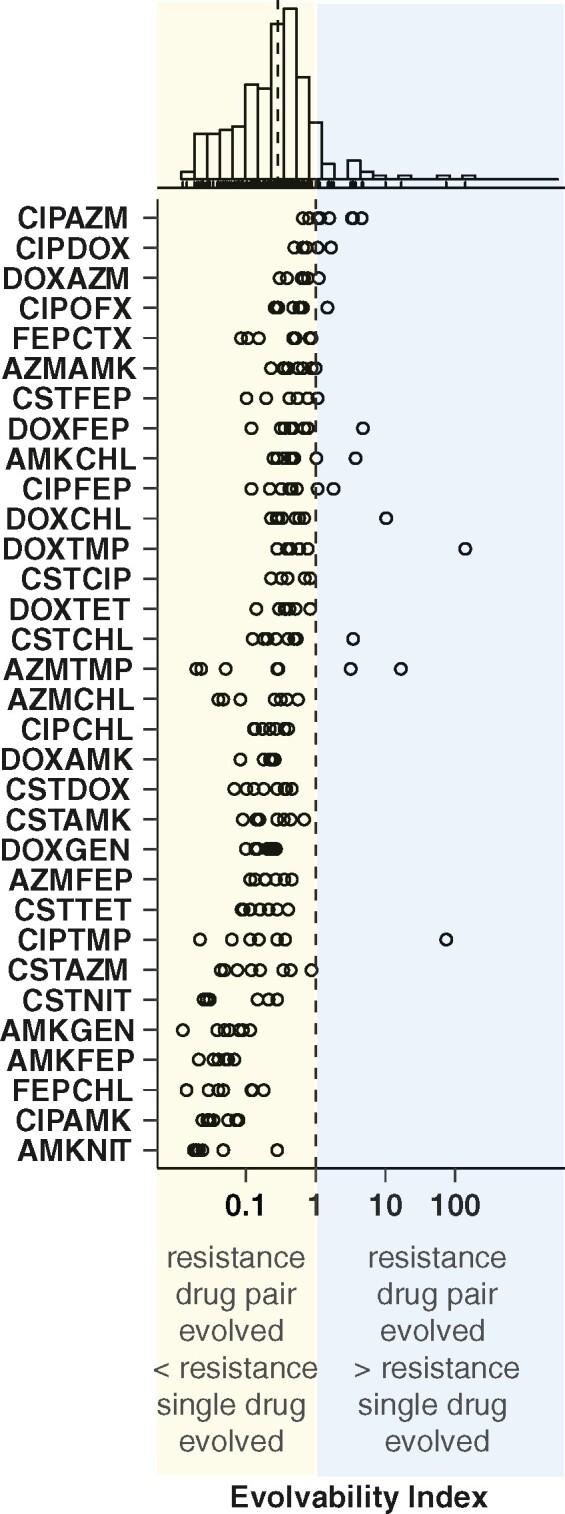
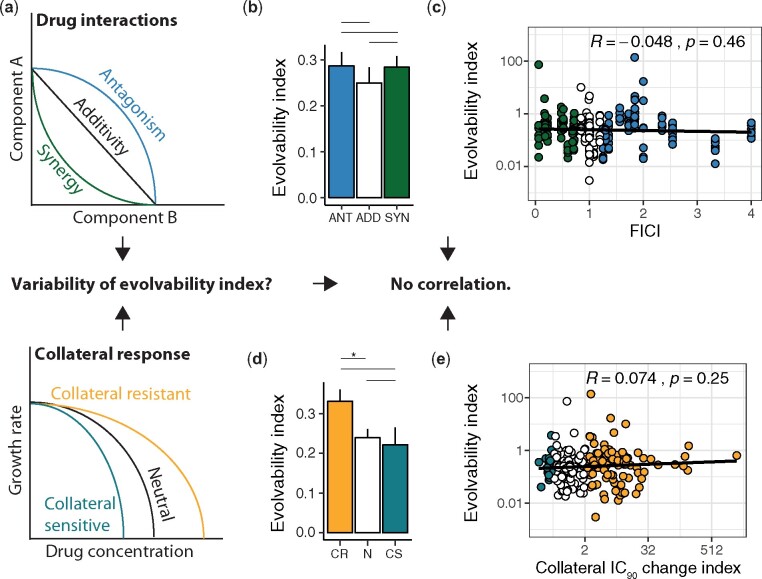
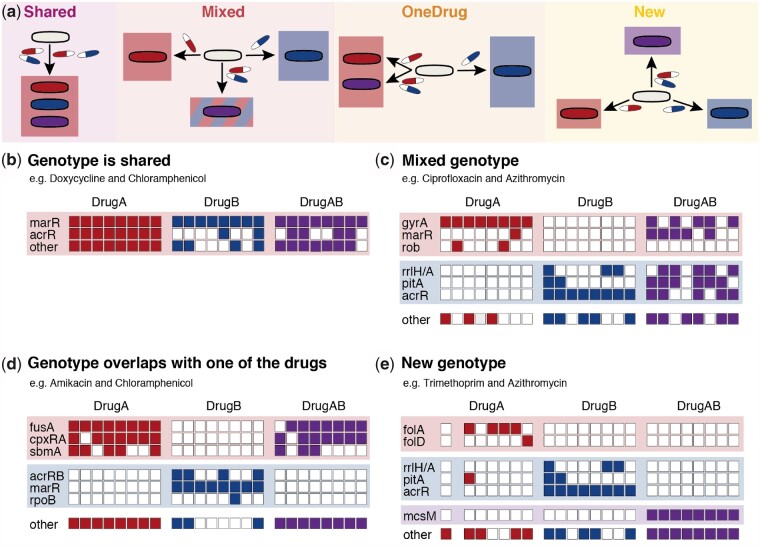
Antibiotic combinations are considered a relevant strategy to tackle the global antibiotic resistance crisis since they are believed to increase treatment efficacy and reduce resistance evolution (WHO treatment guidelines for drug-resistant tuberculosis: 2016 update.). However, studies of the evolution of bacterial resistance to combination therapy have focused on a limited number of drugs and have provided contradictory results (Lipsitch, Levin BR. 1997; Hegreness et al. 2008; Munck et al. 2014). To address this gap in our understanding, we performed a large-scale laboratory evolution experiment, adapting eight replicate lineages of Escherichia coli to a diverse set of 22 different antibiotics and 33 antibiotic pairs. We found that combination therapy significantly limits the evolution of de novode novo resistance in E. coli, yet different drug combinations vary substantially in their propensity to select for resistance. In contrast to current theories, the phenotypic features of drug pairs are weak predictors of resistance evolution. Instead, the resistance evolution is driven by the relationship between the evolutionary trajectories that lead to resistance to a drug combination and those that lead to resistance to the component drugs. Drug combinations requiring a novel genetic response from target bacteria compared with the individual component drugs significantly reduce resistance evolution. These data support combination therapy as a treatment option to decelerate resistance evolution and provide a novel framework for selecting optimized drug combinations based on bacterial evolutionary responses.
抗生素联合治疗被认为是应对全球抗生素耐药性危机的一种重要策略,因为它被认为可以提高治疗效果并减少耐药性的进化(世界卫生组织耐药结核病治疗指南:2016 年更新)。然而,关于联合治疗细菌耐药性进化的研究集中在有限数量的药物上,得出的结果相互矛盾(Lipsitch, Levin BR. 1997; Hegreness et al. 2008; Munck et al. 2014)。为了解决我们在这方面理解上的差距,我们进行了一项大规模的实验室进化实验,使八个复制系的大肠杆菌适应一组 22 种不同的抗生素和 33 种抗生素组合。我们发现,联合治疗显著限制了大肠杆菌中新的耐药性的进化,但不同的药物组合在选择耐药性方面的倾向有很大差异。与当前的理论相反,药物对的表型特征是耐药性进化的弱预测因子。相反,耐药性的进化是由导致对药物组合产生耐药性的进化轨迹与导致对单一药物产生耐药性的进化轨迹之间的关系驱动的。与单独的药物成分相比,需要细菌产生新的遗传反应的药物组合显著降低了耐药性的进化。这些数据支持联合治疗作为一种减缓耐药性进化的治疗选择,并为根据细菌的进化反应选择优化的药物组合提供了一个新的框架。