Baqiyatallah Research Center for Gastroenterology and Liver Diseases (BRCGL), Baqiyatallah University of Medical Sciences, Tehran, Iran.
Environmental Health Research Center, Faculty of Health, Golestan University of Medical Sciences, Gorgan, Iran.
Harm Reduct J. 2021 Jan 22;18(1):12. doi: 10.1186/s12954-020-00441-9.
Prevalence of hepatitis C virus (HCV) infection among people who inject drugs (PWID) in Iran is high. Since 2005, the Iranian government has implemented a harm reduction program to control HCV. We aimed to describe the prevalence of HCV antibody (Ab) in Iranian PWID before and after the implementation of harm reduction with cumulative meta-analysis.
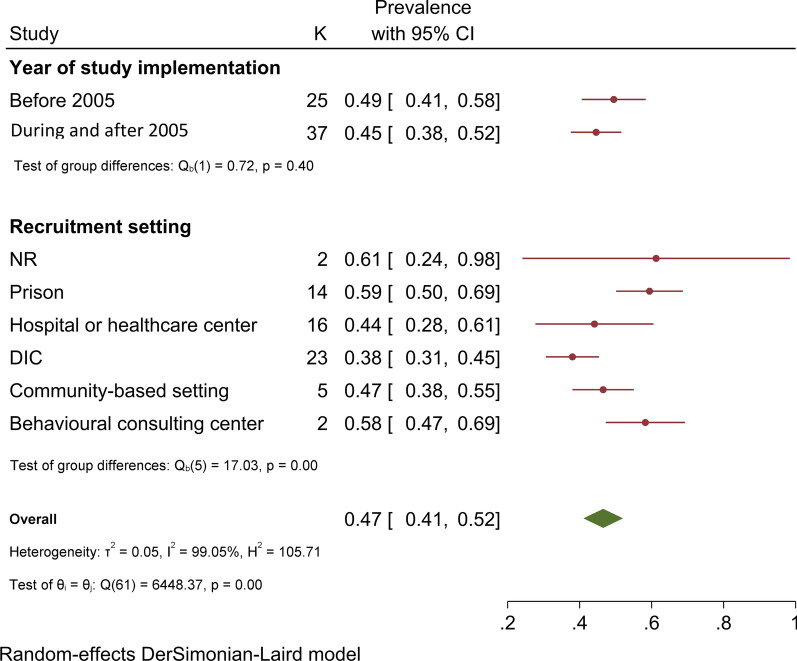
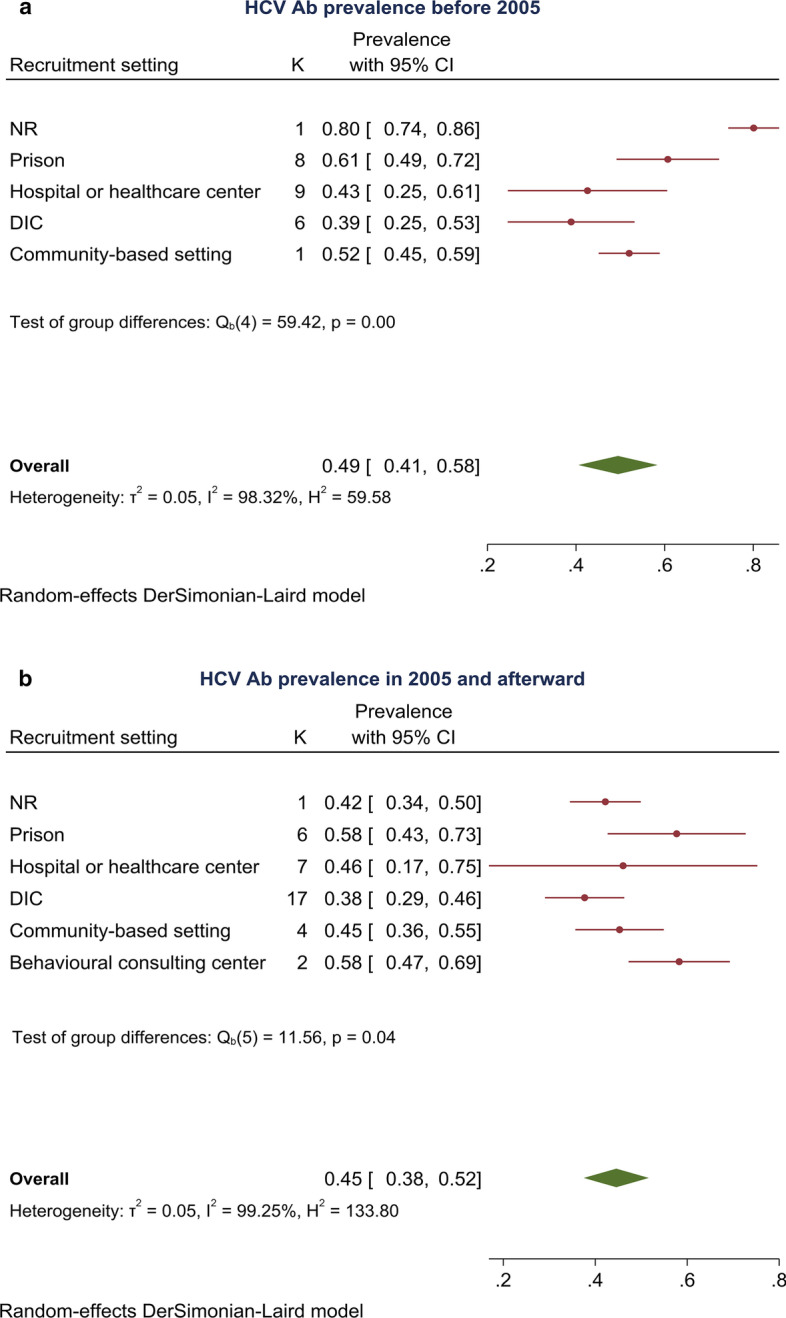
Following PRISMA guidelines, we conducted a systematic review and meta-analysis of studies published on the seroprevalence of HCV among PWID. We systematically reviewed the literature to identify eligible studies up to December 2018 in international and national databases. Pooled prevalence and 95% confidence intervals were calculated using Der Simonian and Laird method, taking into account conceptual heterogeneity. Subgroup analyses were performed by harm reduction implementation and studies' characteristics to assess the sources of heterogeneity. We used Cochran-Armitage test for the linear trend of the prevalence of HCV Ab among PWID.
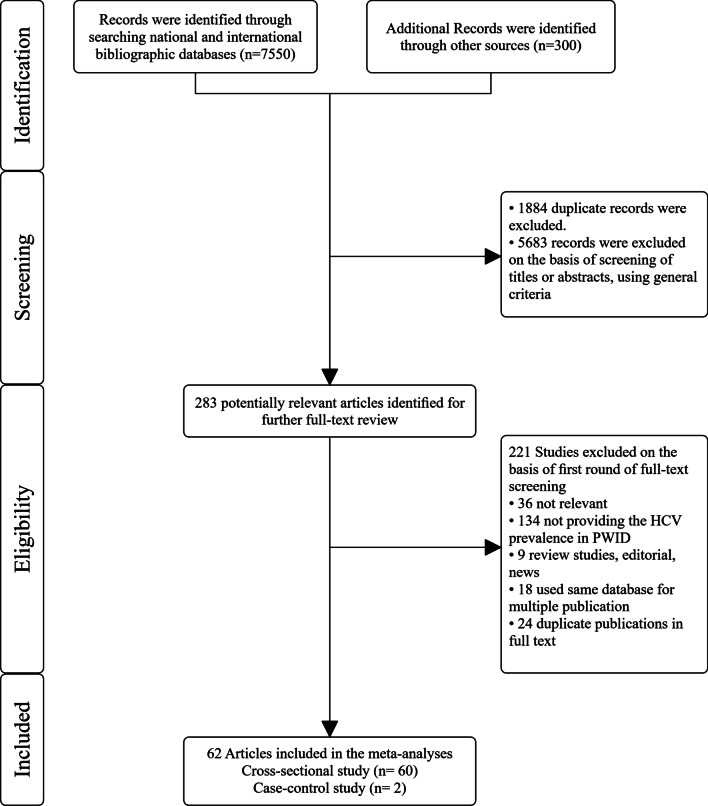
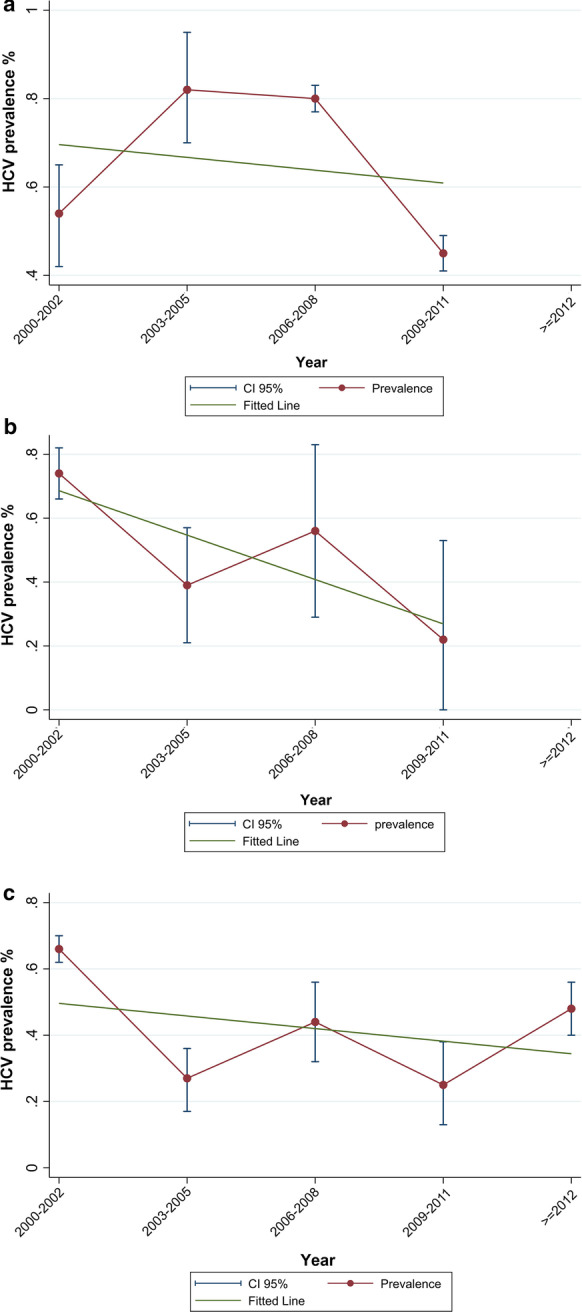
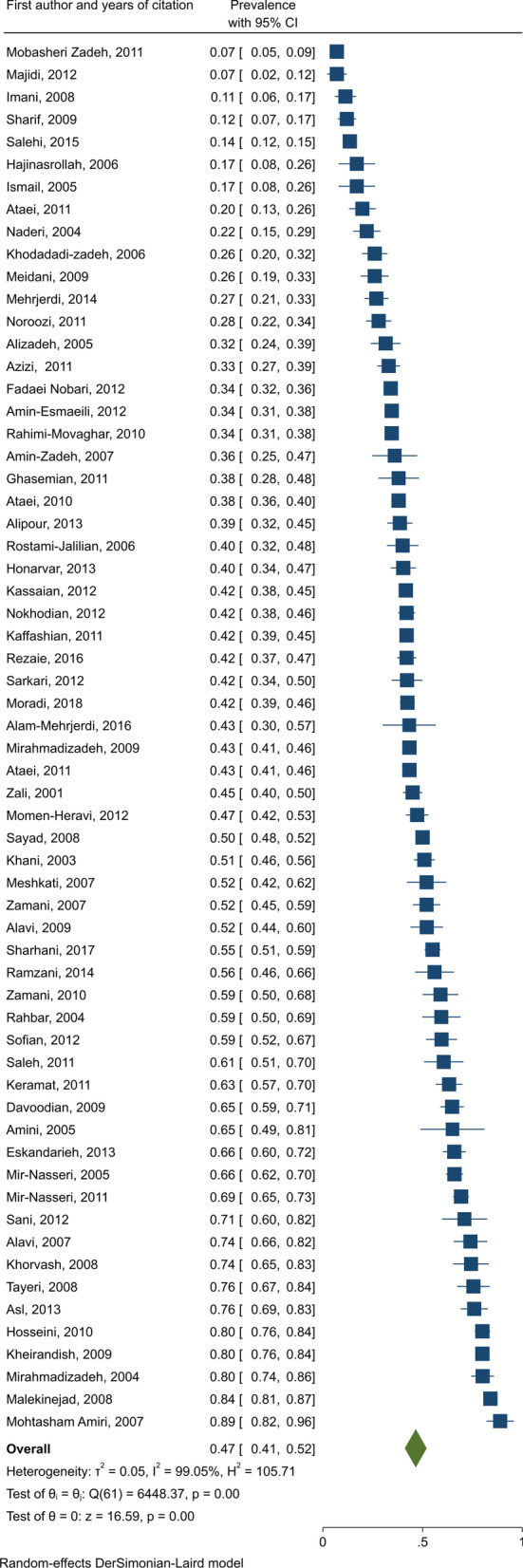
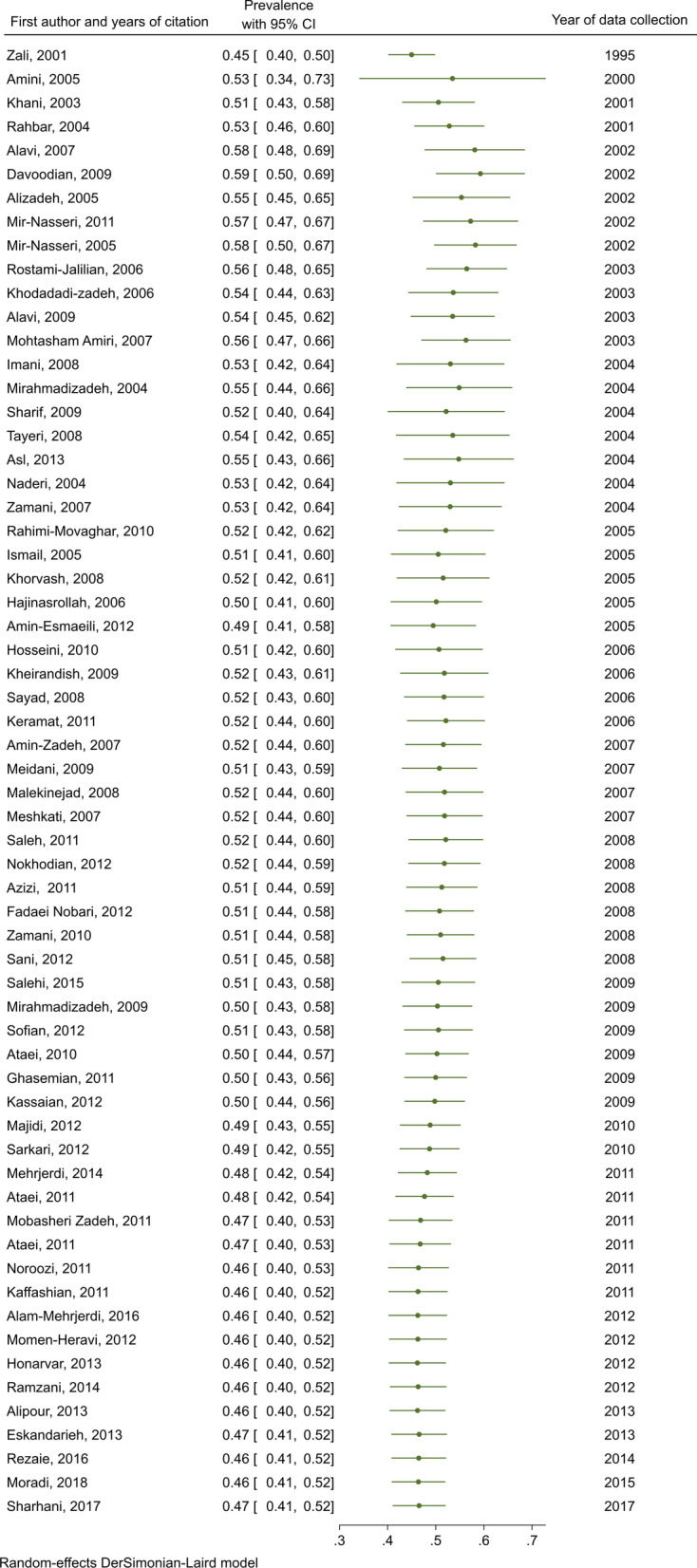
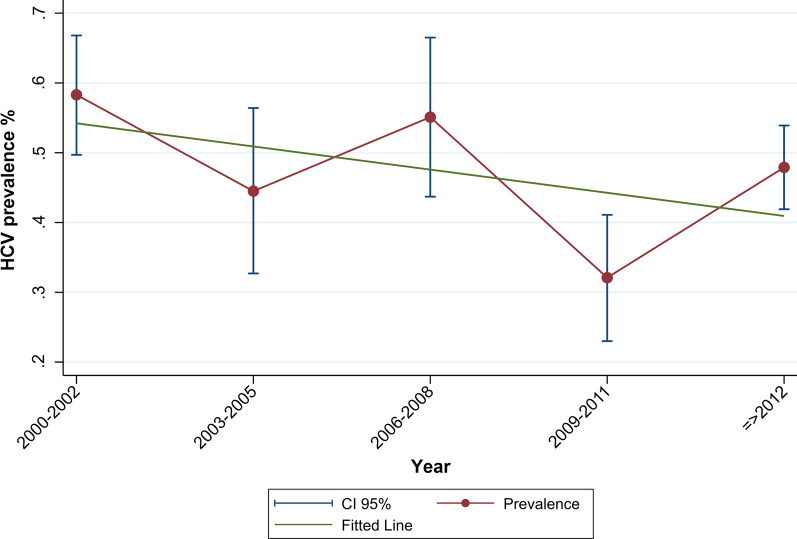
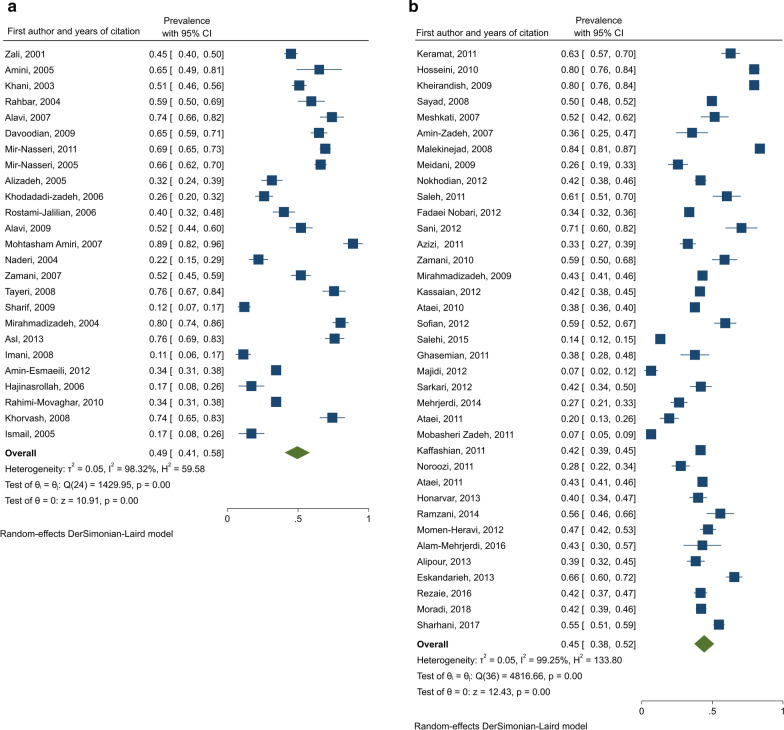
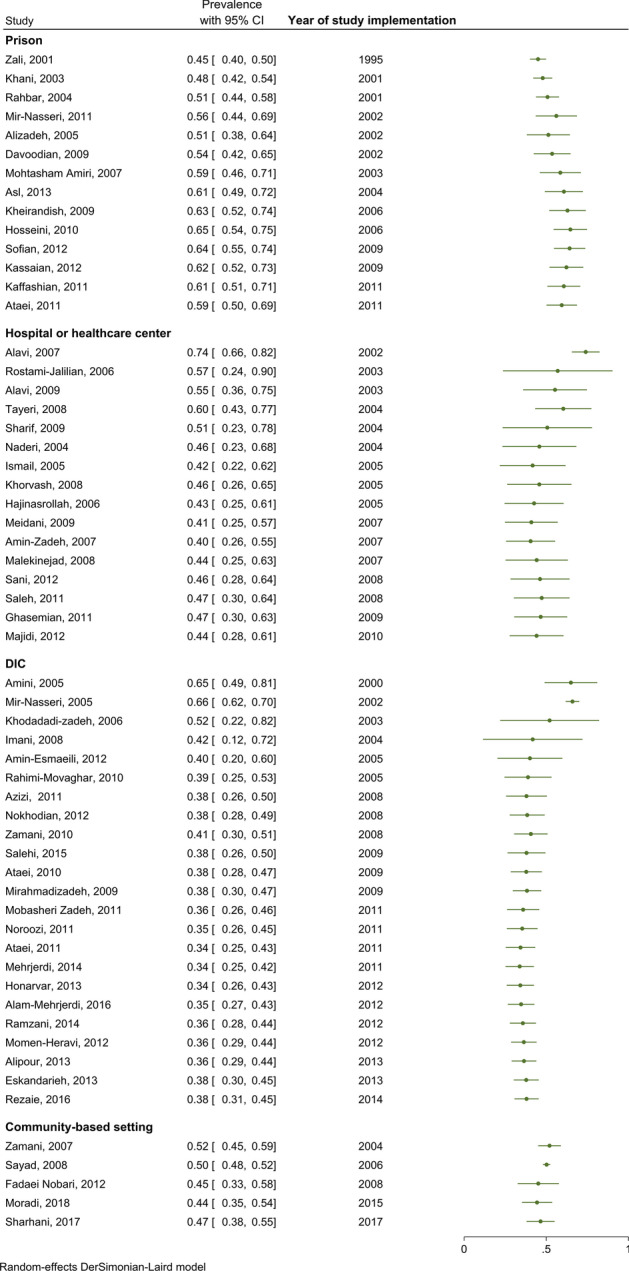
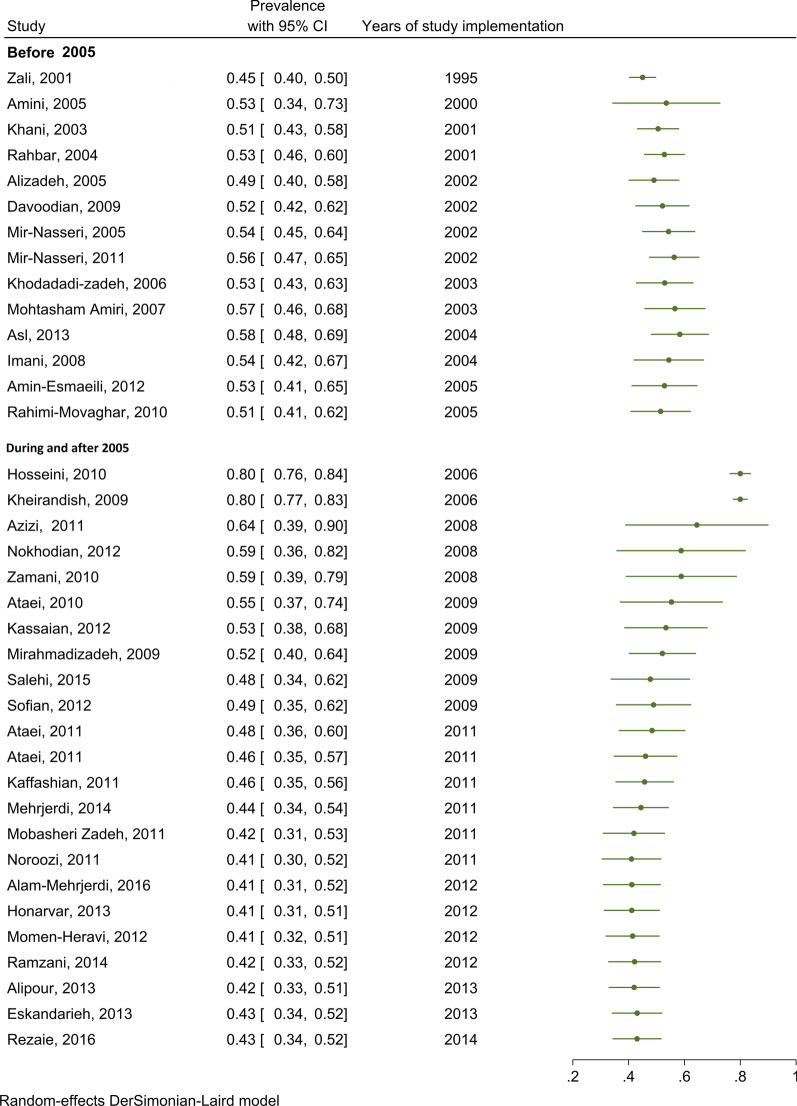
We reviewed 5966 papers and reports and extracted data from 62 eligible records. The pooled HCV Ab prevalence among PWID in Iran was 46.5% (95% confidence interval [95% CI] 41.1-52.0%). Overall, the Cochran-Armitage test for trend indicated a significant decreasing trend of HCV Ab prevalence (P = 0.04). The cumulative meta-analysis showed a slight decline in the prevalence of HCV Ab between the years 2005 and 2018.
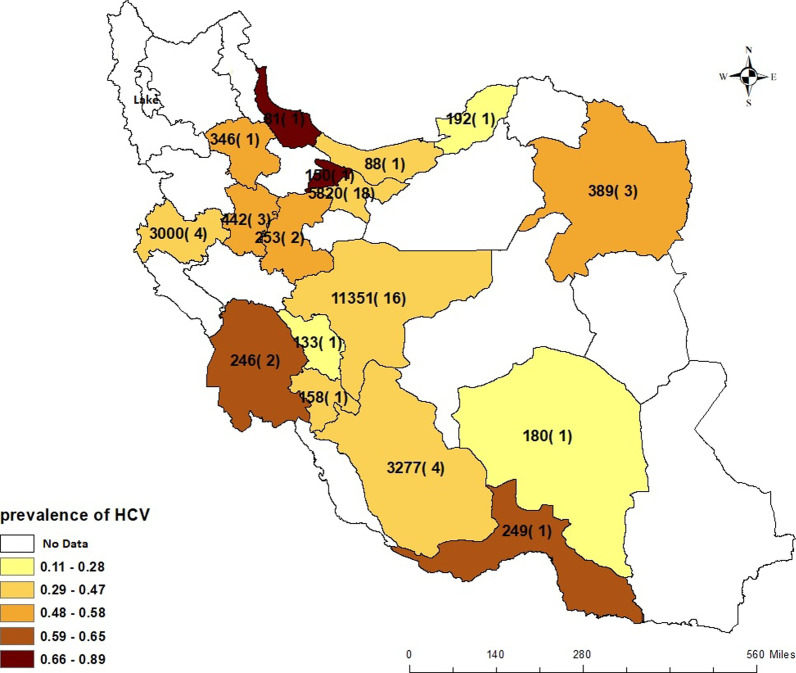
The HCV Ab prevalence among PWID in Iran is high, with a considerable geographical variation. The prevalence of HCV Ab among PWID in Iran slightly decreased after 2005 which could be, at least to some extent, related to the implementation of extensive harm reduction programs in the country.
在伊朗,注射吸毒人群(PWID)中丙型肝炎病毒(HCV)感染的流行率较高。自 2005 年以来,伊朗政府实施了一项减少伤害的计划,以控制 HCV。我们旨在通过累积荟萃分析描述实施减少伤害前后伊朗 PWID 中 HCV 抗体(Ab)的流行率。
根据 PRISMA 指南,我们对发表的关于 PWID 中 HCV 血清流行率的研究进行了系统评价和荟萃分析。我们系统地回顾了文献,以确定截至 2018 年 12 月在国际和国家数据库中符合条件的研究。使用 Der Simonian 和 Laird 方法计算了汇总的流行率和 95%置信区间,并考虑了概念异质性。通过减少伤害的实施和研究特征进行亚组分析,以评估异质性的来源。我们使用 Cochran-Armitage 检验对 PWID 中 HCV Ab 流行率的线性趋势进行了检验。
我们回顾了 5966 篇论文和报告,并从 62 篇合格的记录中提取了数据。伊朗 PWID 中 HCV Ab 的总流行率为 46.5%(95%置信区间[95%CI]41.1-52.0%)。总体而言,Cochran-Armitage 检验趋势表明 HCV Ab 流行率呈显著下降趋势(P=0.04)。累积荟萃分析显示,2005 年至 2018 年期间,HCV Ab 流行率略有下降。
伊朗 PWID 中 HCV Ab 的流行率较高,且具有相当大的地域差异。伊朗 PWID 中 HCV Ab 的流行率在 2005 年后略有下降,这至少在一定程度上与该国广泛实施减少伤害计划有关。