Epidemiology, Health and Welfare Research Unit, Ploufragan-Plouzané-Niort Laboratory, Anses, French Agency for Food, Environmental and Occupational Health & Safety, 22440, Ploufragan, France.
ANSVSA (Autoritatea Națională Sanitară Veterinară și pentru Siguranța Alimentelor), Piaţa Presei Libere nr. 1, Corp D1, Sector 1, 013701, Bucharest, Romania.
Sci Rep. 2021 Jan 22;11(1):2098. doi: 10.1038/s41598-021-81329-x.
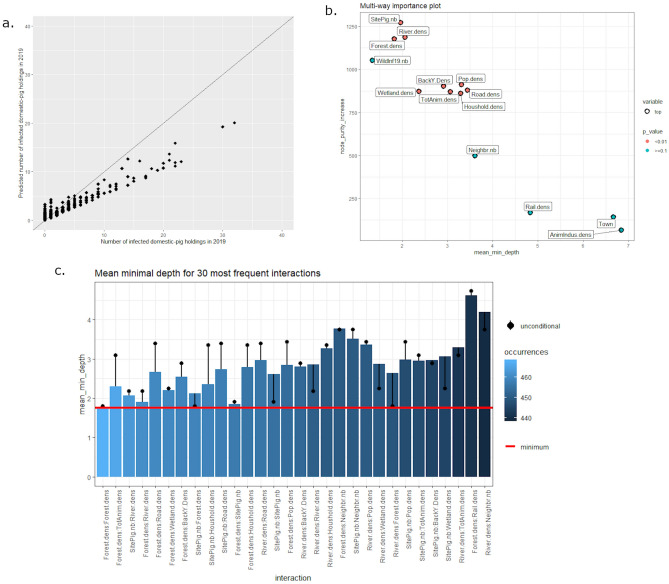
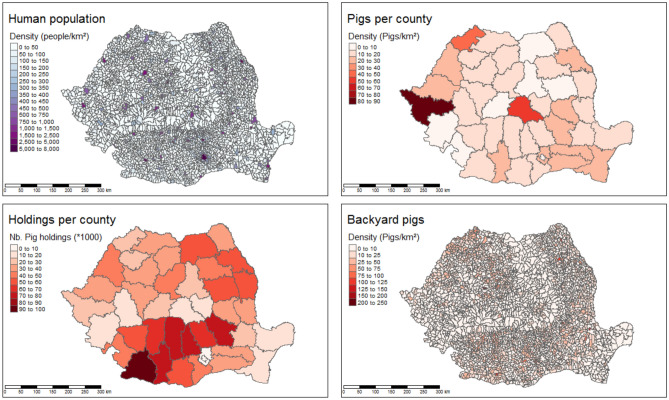
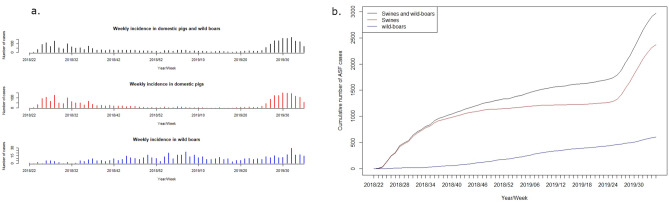
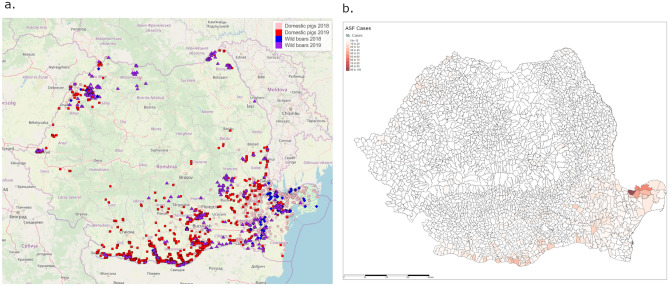
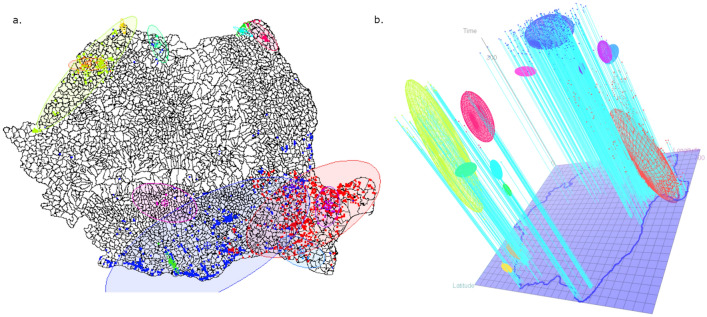
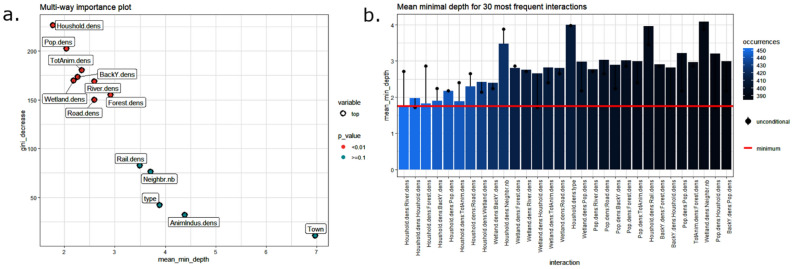
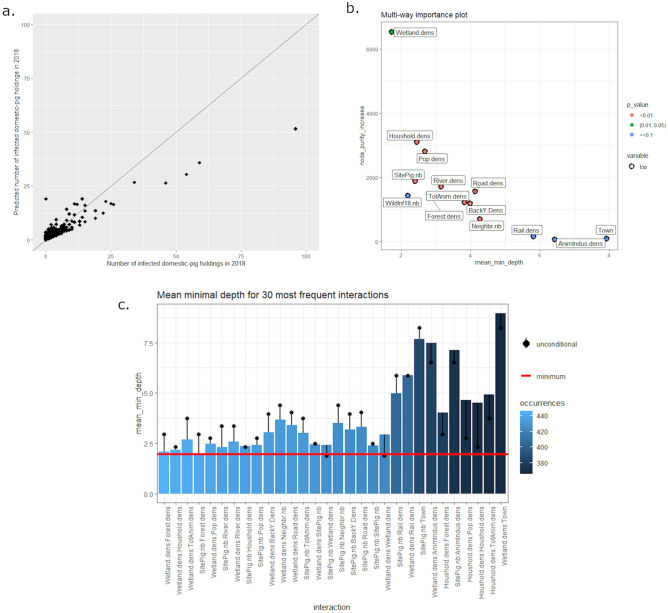
African swine fever (ASF) has affected Romania since July 2017, with considerable economic and social consequences, despite the implementation of control measures mainly based on stamping out of infected pig populations. On the basis of the 2973 cumulative recorded cases up to September 2019 among wild boars and domestic pigs, analysis of the epidemiological characteristics could help to identify the factors favoring the persistence and spread of ASF. A statistical framework, based on a random forest methodology, was therefore developed to assess the spatiotemporal features of the epidemics and their relationships with environmental, human, and agricultural factors. The landscape of Romania was associated with the infection dynamics, particularly concerning forested and wetland areas. Waterways were also identified as a pivotal factor, raising questions about possible waterborne transmission since these waterways are often used as a water supply for backyard holdings. However, human activity was clearly identified as the main risk factor for the spread of ASF. Although the situation in Romania cannot be directly transposed to intensive pig farming countries, the findings of this study highlight the need for strict biosecurity measures on farms, and during transportation, to avoid ASF transmission at large geographic and temporal scales.
非洲猪瘟(ASF)自 2017 年 7 月以来一直影响罗马尼亚,尽管采取了主要基于扑杀感染猪群的控制措施,但仍造成了相当大的经济和社会后果。根据截至 2019 年 9 月在野猪和家猪中记录的 2973 例累计病例,对流行病学特征的分析有助于确定有利于 ASF 持续和传播的因素。因此,开发了一种基于随机森林方法的统计框架,以评估疫情的时空特征及其与环境、人类和农业因素的关系。罗马尼亚的景观与感染动态相关,特别是与森林和湿地地区有关。河道也被确定为一个关键因素,这引发了对可能通过水传播的问题的关注,因为这些河道经常被用作后院养殖场的供水源。然而,人类活动显然被确定为 ASF 传播的主要风险因素。尽管罗马尼亚的情况不能直接转用于集约化养猪国家,但本研究的结果强调了在农场和运输过程中需要采取严格的生物安全措施,以避免在大地理和时间范围内传播 ASF。