Department of Endocrinology, Beijing Jishuitan Hospital, The 4th Clinical Medical College of Peking University, Beijing, China.
Institute of Microcirculation, Chinese Academy of Medical Sciences & Peking Union Medical College, Beijing, China.
Cancer Sci. 2021 Mar;112(3):1289-1299. doi: 10.1111/cas.14820. Epub 2021 Feb 12.
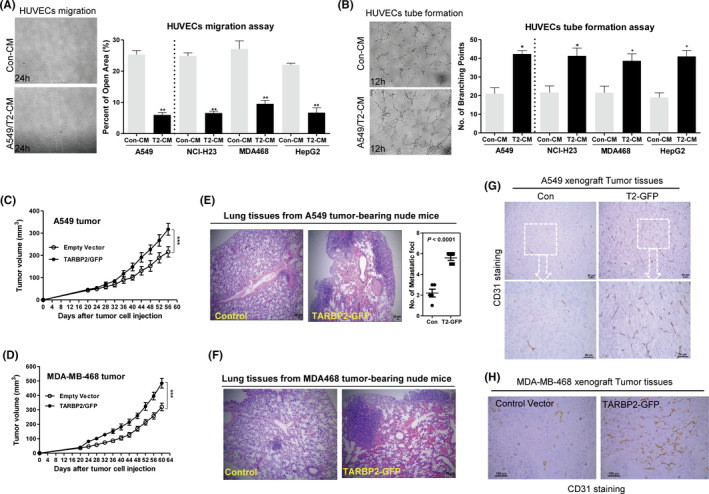
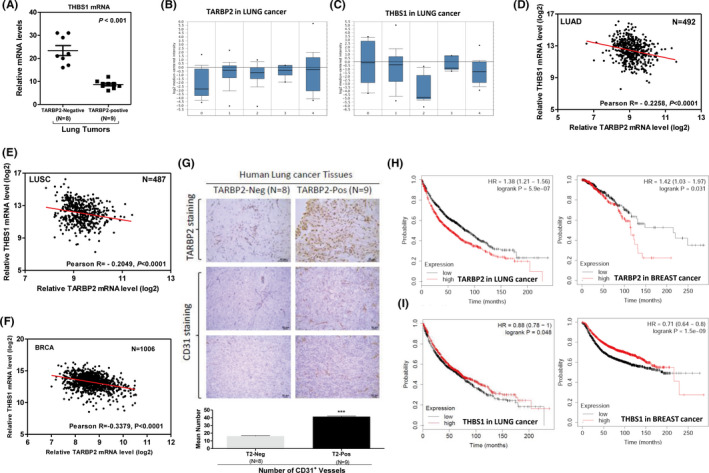
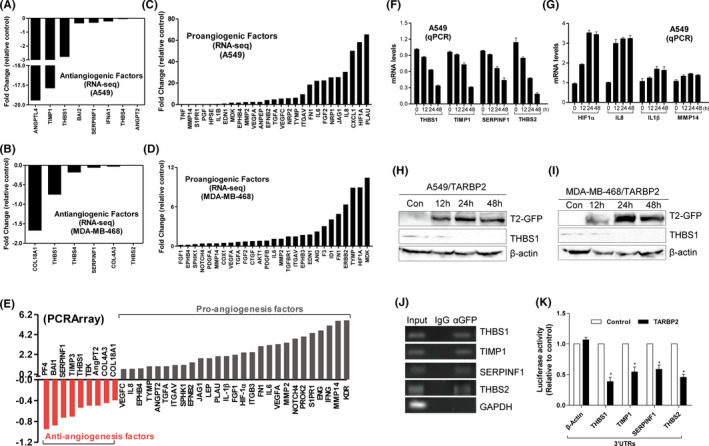
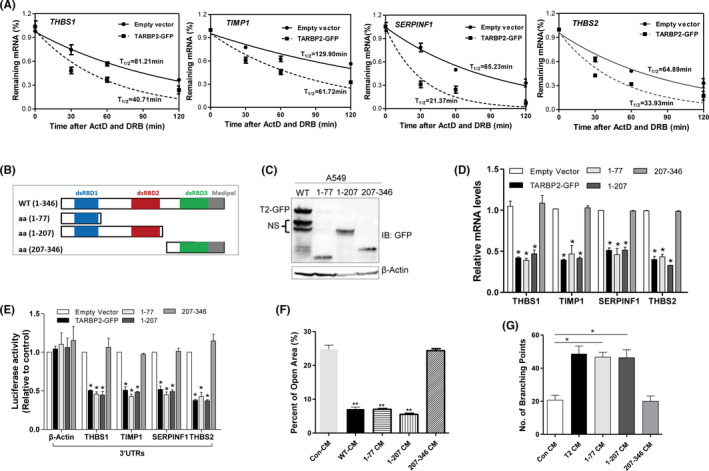
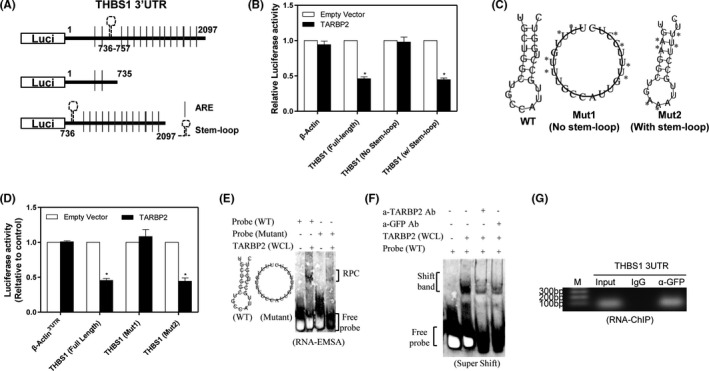
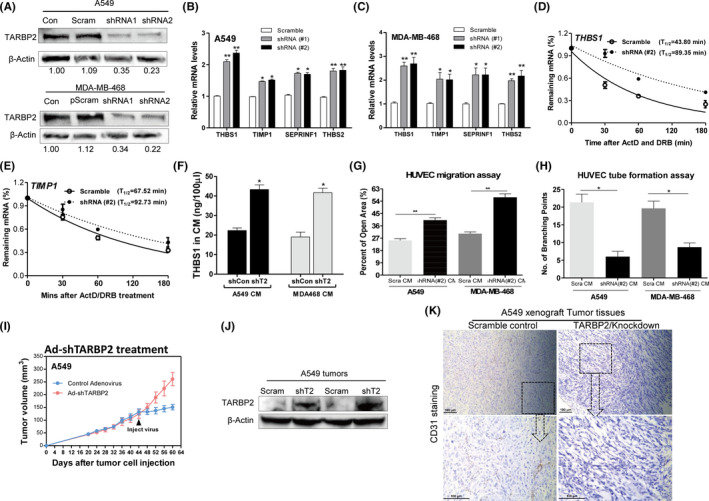
Tumor angiogenesis is a crucial step in the further growth and metastasis of solid tumors. However, its regulatory mechanism remains unclear. Here, we showed that TARBP2, an RNA-binding protein, played a role in promoting tumor-induced angiogenesis both in vitro and in vivo through degrading the mRNAs of antiangiogenic factors, including thrombospondin1/2 (THBS1/2), tissue inhibitor of metalloproteinases 1 (TIMP1), and serpin family F member 1 (SERPINF1), by targeting their 3'untranslated regions (3'UTRs). Overexpression of TARBP2 promotes tumor cell-induced angiogenesis, while its knockdown inhibits tumor angiogenesis. Clinical cohort analysis revealed that high expression level of TARBP2 was associated with poor survival of lung cancer and breast cancer patients. Mechanistically, TARBP2 physically interacts with the stem-loop structure located in the 3'UTR of antiangiogenic transcripts, leading to mRNA destabilization by the dsRNA-binding domains 1/2 (dsRBDs1/2). Notably, the expression level of TARBP2 in human tumor tissue is negatively correlated with the expression of antiangiogenic factors, including THBS1/2, and brain-specific angiogenesis inhibitor 1 (BAI1). Moreover, TARBP2 expression is strongly associated with tumor angiogenesis in a group of human lung cancer samples. Collectively, our results highlight that TARBP2 is a novel tumor angiogenesis regulator that could promote tumor angiogenesis by selectively downregulating antiangiogenic gene expression.
肿瘤血管生成是实体瘤进一步生长和转移的关键步骤。然而,其调控机制尚不清楚。在这里,我们通过靶向抗血管生成因子 mRNAs 的 3'非翻译区(3'UTR),证明了 RNA 结合蛋白 TARBP2 在体外和体内均通过降解抗血管生成因子(包括血栓素 1/2(THBS1/2)、金属蛋白酶组织抑制剂 1(TIMP1)和丝氨酸蛋白酶家族 F 成员 1(SERPINF1)),在促进肿瘤诱导的血管生成中发挥作用。TARBP2 的过表达促进肿瘤细胞诱导的血管生成,而其敲低则抑制肿瘤血管生成。临床队列分析显示,TARBP2 高表达与肺癌和乳腺癌患者的不良生存相关。机制上,TARBP2 与抗血管生成转录物 3'UTR 中的茎环结构相互作用,导致 dsRBDs1/2 通过 dsRBDs1/2 导致 mRNA 不稳定性。值得注意的是,TARBP2 在人肿瘤组织中的表达水平与抗血管生成因子(包括 THBS1/2 和脑特异性血管生成抑制剂 1(BAI1))的表达呈负相关。此外,TARBP2 的表达与一组人肺癌样本中的肿瘤血管生成密切相关。总之,我们的研究结果表明,TARBP2 是一种新的肿瘤血管生成调节剂,可通过选择性地下调抗血管生成基因的表达促进肿瘤血管生成。