Yuan Yuan, Chen Jia-Jia, Korhonen Kari, Martin Francis, Dai Yu-Cheng
Institute of Microbiology, School of Ecology and Nature Conservation, Beijing Forestry University, Beijing, China.
Beijing Advanced Innovation Center for Tree Breeding by Molecular Design, Beijing Forestry University, Beijing, China.
Front Microbiol. 2021 Jan 7;11:596393. doi: 10.3389/fmicb.2020.596393. eCollection 2020.
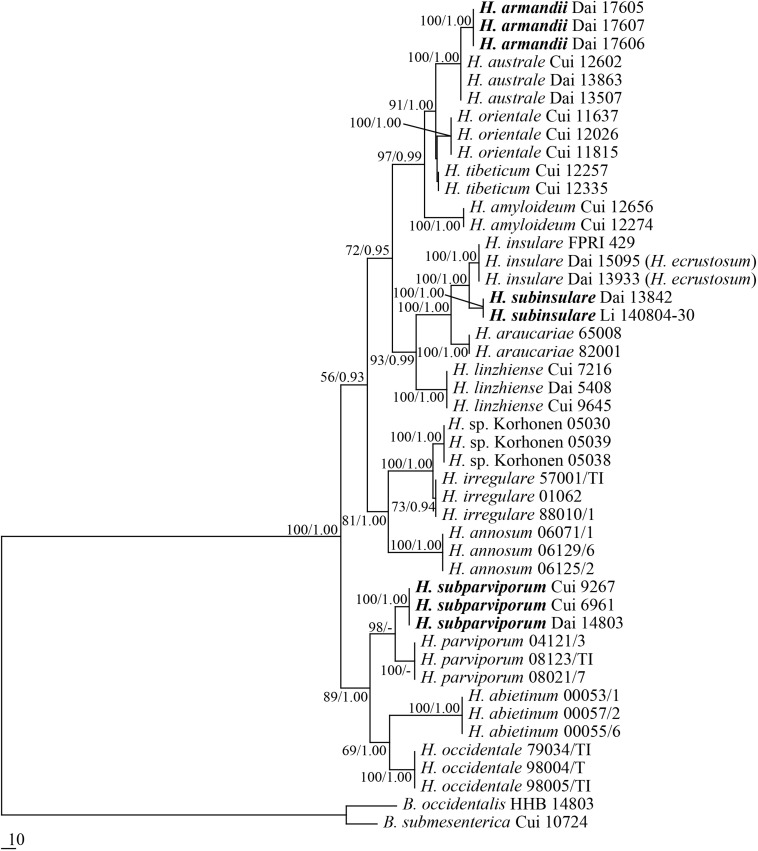
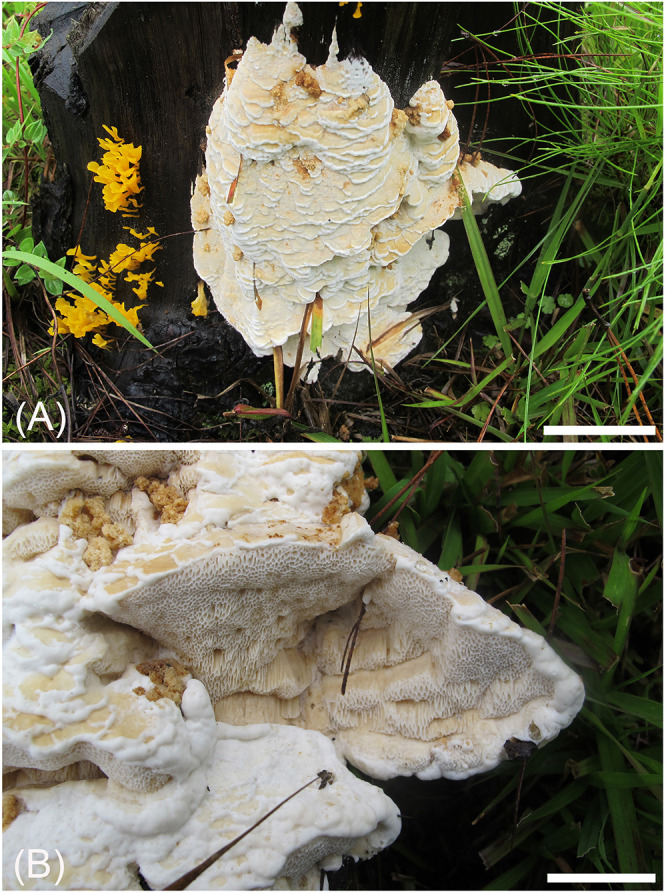
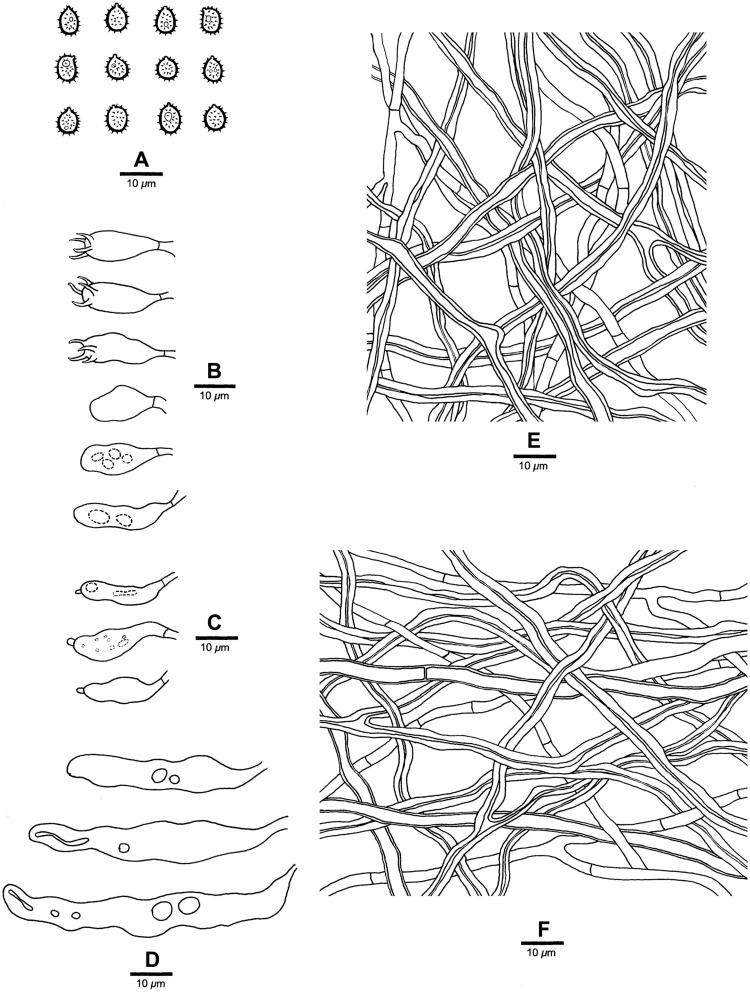
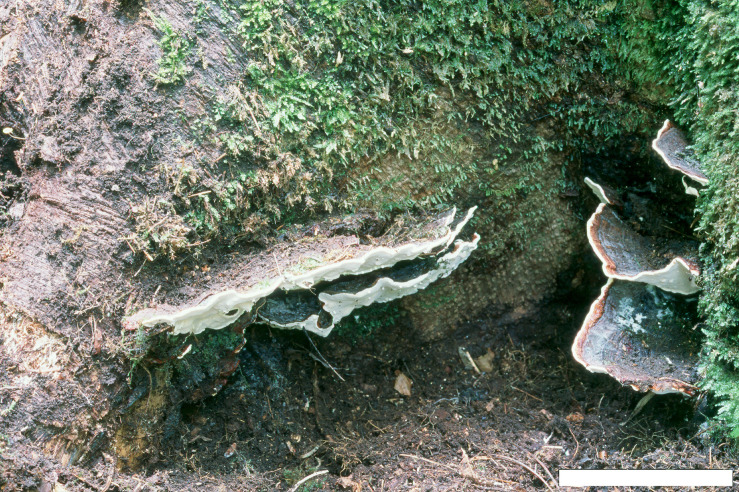
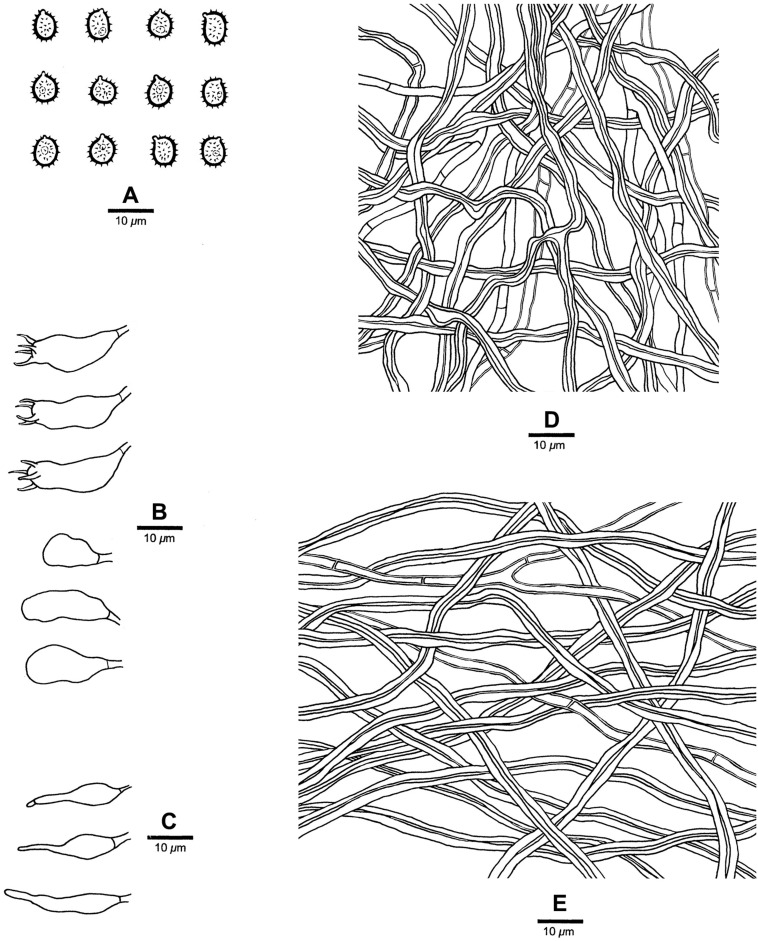
species are amongst the most intensively studied polypores because several species are aggressive white rot pathogens of managed coniferous forests mainly in Europe and North America. In the present study, both morphological and multilocus phylogenetic analyses were carried out on samples from Asia, Oceania, Europe and North America. Three new taxa were found, i.e., , , and are from Asia and are described as new species. is treated as a synonym of . So far, six taxa in the species complex are recognized. , , and occur in Europe, , and in North America, and in East Asia. The North American was introduced to Italy during the Second World War. Species in the complex are pathogens of coniferous trees, except that seems to be a saprotroph. Ten species are found in the species complex, all of them are saprotrophs. The pathogenic species are distributed in Europe and North America; the Asian countries should consider the European and North American species as entry plant quarantine fungi. Parallelly, European countries should consider the American and as entry plant quarantine fungi although the latter species is already in Italy, while North America should treat , s.s., and as entry plant quarantine fungi. Eight species found in the Himalayas suggest that the ancestral species may have occurred in Asia.
该类物种是研究最为深入的多孔菌之一,因为有几个物种是主要分布在欧洲和北美的人工针叶林的侵袭性白腐病菌。在本研究中,对来自亚洲、大洋洲、欧洲和北美的样本进行了形态学和多位点系统发育分析。发现了三个新分类单元,即,,和来自亚洲,被描述为新物种。被视为的异名。到目前为止,该物种复合体中有六个分类单元被认可。,,分布在欧洲,,分布在北美,分布在东亚。北美在第二次世界大战期间被引入意大利。该复合体中的物种是针叶树的病原菌,除了似乎是腐生菌。在该物种复合体中发现了十个物种,它们都是腐生菌。致病物种分布在欧洲和北美;亚洲国家应将欧洲和北美的物种视为入境植物检疫真菌。同时,欧洲国家应将美国的和视为入境植物检疫真菌,尽管后一个物种已经在意大利存在,而北美应将,,视为入境植物检疫真菌。在喜马拉雅山脉发现的八个物种表明,该物种的祖先可能出现在亚洲。