University Medical Center Hamburg-Eppendorf, 1st Department of Medicine, Division of Infectious Diseases, Hamburg, Germany.
Department for Clinical Immunology of Infectious Diseases, Bernhard Nocht Institute for Tropical Medicine, Hamburg, Germany.
Front Immunol. 2021 Jan 8;11:601170. doi: 10.3389/fimmu.2020.601170. eCollection 2020.
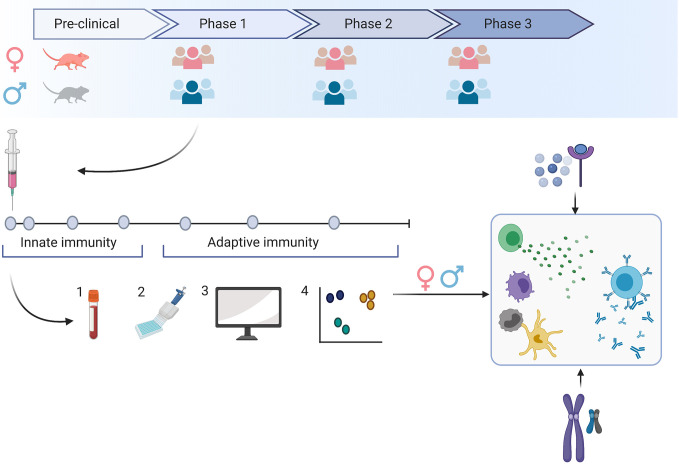
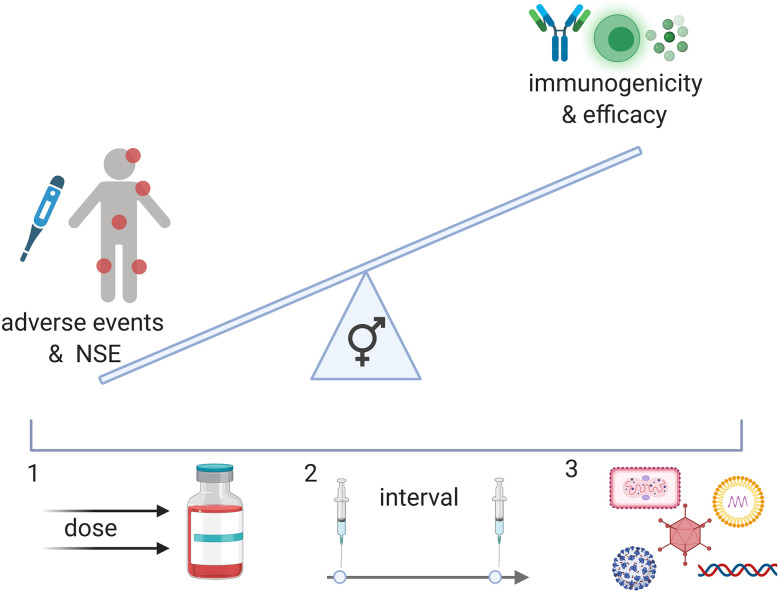
Vaccines are one of the greatest public health achievements and have saved millions of lives. They represent a key countermeasure to limit epidemics caused by emerging infectious diseases. The Ebola virus disease crisis in West Africa dramatically revealed the need for a rapid and strategic development of vaccines to effectively control outbreaks. Seven years later, in light of the SARS-CoV-2 pandemic, this need has never been as urgent as it is today. Vaccine development and implementation of clinical trials have been greatly accelerated, but still lack strategic design and evaluation. Responses to vaccination can vary widely across individuals based on factors like age, microbiome, co-morbidities and sex. The latter aspect has received more and more attention in recent years and a growing body of data provide evidence that sex-specific effects may lead to different outcomes of vaccine safety and efficacy. As these differences might have a significant impact on the resulting optimal vaccine regimen, sex-based differences should already be considered and investigated in pre-clinical and clinical trials. In this Review, we will highlight the clinical observations of sex-specific differences in response to vaccination, delineate sex differences in immune mechanisms, and will discuss the possible resulting implications for development of vaccine candidates against emerging infections. As multiple vaccine candidates against COVID-19 that target the same antigen are tested, vaccine development may undergo a decisive change, since we now have the opportunity to better understand mechanisms that influence vaccine-induced reactogenicity and effectiveness of different vaccines.
疫苗是公共卫生领域最伟大的成就之一,挽救了数百万人的生命。它们是限制新发传染病流行的关键对策。西非的埃博拉病毒病危机凸显了快速制定战略开发疫苗以有效控制疫情爆发的必要性。七年后,鉴于 SARS-CoV-2 大流行,这种需求从未像今天这样迫切。疫苗的开发和临床试验的实施大大加快,但仍然缺乏战略设计和评估。接种疫苗的反应因年龄、微生物组、合并症和性别等因素在个体之间存在很大差异。近年来,后者越来越受到关注,越来越多的数据提供了证据表明,性别特异性效应可能导致疫苗安全性和有效性的不同结果。由于这些差异可能对最终最佳疫苗方案产生重大影响,因此在临床前和临床试验中应考虑并研究基于性别的差异。在这篇综述中,我们将重点介绍疫苗接种反应中性别特异性差异的临床观察,阐述免疫机制中的性别差异,并讨论其对开发针对新发感染的疫苗候选物的可能影响。由于针对同一抗原的多种 COVID-19 疫苗候选物正在进行测试,疫苗的开发可能会发生决定性的变化,因为我们现在有机会更好地了解影响疫苗引起的不良反应和不同疫苗有效性的机制。