Bhattacharjee Ananya, Kulkarni Venkatrao H, Chakraborty Manodeep, Habbu Prasanna V, Ray Animikh
Pharmacology Department, Srinivas College of Pharmacy, Valachil, Mangalore, Karnataka 574143, India.
Pharmacology Department, Soniya Education Trust's College of Pharmacy S.R. Nagar, Dharwad, Karnataka 580002, India.
Heliyon. 2021 Jan 8;7(1):e05921. doi: 10.1016/j.heliyon.2021.e05921. eCollection 2021 Jan.
long-term environmental and occupational exposure to lead, which is a ubiquitous industrial pollutant, causes significant damage to tissues of kidney. This report aims to address this debilitating issue. A natural polyphenolic compound, Ellagic acid (EA) is having numerous potential medicinal properties. In this present study nephroprotective effects of EA has been evaluated in a rodent model with lead-induced toxicity.
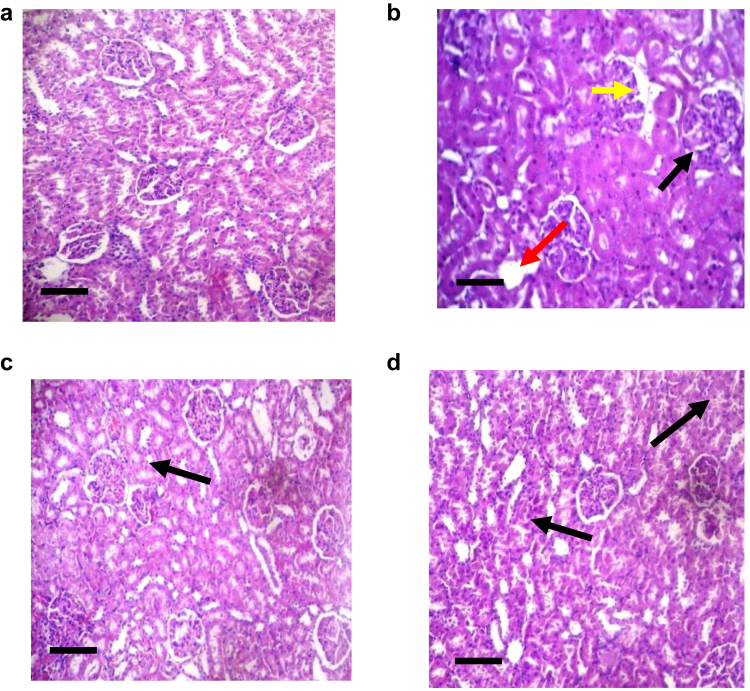
Rats were treated with EA doses of 50 mg/kg and 25 mg/kg and simultaneously co-administered with lead acetate (60 mg/kg) for 2 months through oral route. The extent to which EA treatment provides nephroprotective effect was estimated by measurement of serum biomarkers, tissue antioxidants, inflammatory mediators, apoptosis, autophagy pathway and histological examination.
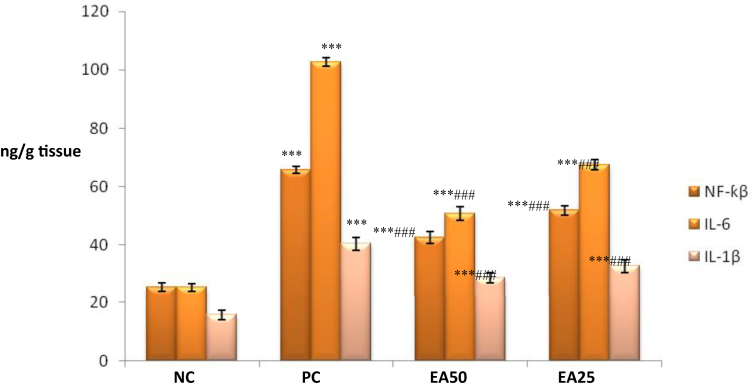
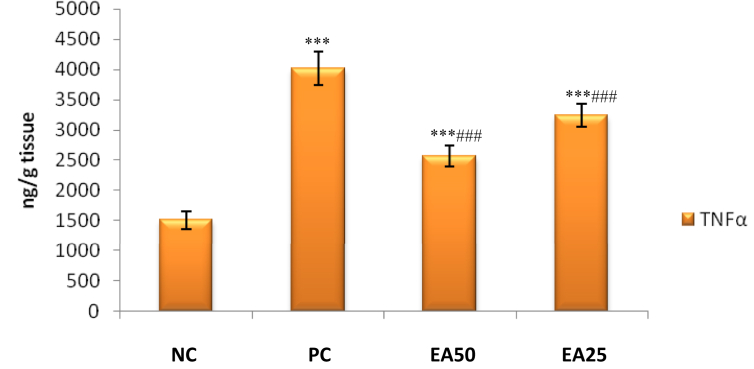
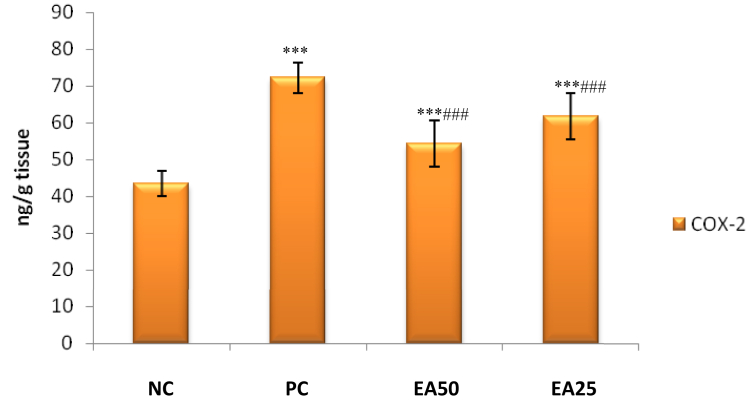
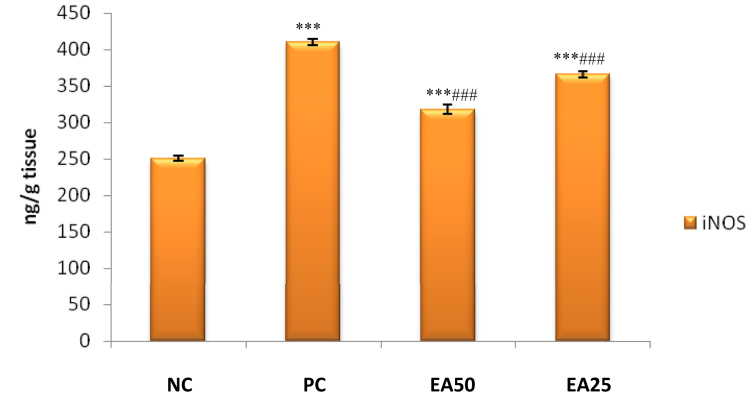
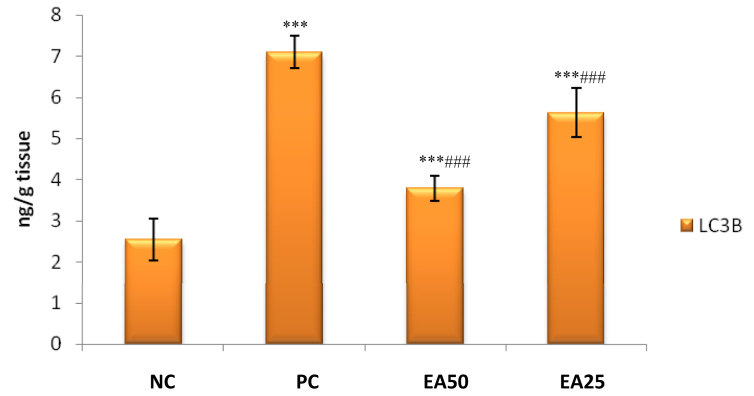
EA treatment caused significant restoration in the level of serum biomarkers, tissue antioxidants and histological architecture of renal tissue. Treatment with either of the doses of EA causes restoration of pro-inflammatory mediators to approximately pre-exposure concentration. This phenomena is caused by suppression of expression levels of inflammatory molecules like tumour necrosis factor-α (TNF-α), nuclear factor kappa B (NF-κB), interleukin-6 (IL-6), and interleukin-1β (IL-1β), as well as functional expression of inducible nitric oxide synthase (iNOS) and cyclooxygenase-2 (COX-2). Moreover, it was also observed that EA suppressed apoptotic and autophagic pathway by reduction of expression of light chain 3B (LC3B) level which are the oxidative DNA damage markers of renal tissue.
It can be safely concluded that EA provides protection against lead-induced nephrotoxicity to a significant degree.
长期环境和职业性接触铅这种普遍存在的工业污染物会对肾脏组织造成严重损害。本报告旨在解决这一令人衰弱的问题。天然多酚化合物鞣花酸(EA)具有多种潜在药用特性。在本研究中,已在铅诱导毒性的啮齿动物模型中评估了EA的肾保护作用。
大鼠分别接受50mg/kg和25mg/kg剂量的EA治疗,并同时通过口服途径与醋酸铅(60mg/kg)共同给药2个月。通过测量血清生物标志物、组织抗氧化剂、炎症介质、细胞凋亡、自噬途径和组织学检查来评估EA治疗提供肾保护作用的程度。
EA治疗使血清生物标志物水平、组织抗氧化剂和肾组织的组织结构得到显著恢复。两种剂量的EA治疗均可使促炎介质恢复到接近暴露前的浓度。这种现象是由肿瘤坏死因子-α(TNF-α)、核因子κB(NF-κB)、白细胞介素-6(IL-6)和白细胞介素-1β(IL-1β)等炎症分子表达水平的抑制以及诱导型一氧化氮合酶(iNOS)和环氧化酶-2(COX-2)的功能表达引起的。此外,还观察到EA通过降低轻链3B(LC3B)水平的表达来抑制细胞凋亡和自噬途径,LC3B是肾组织的氧化DNA损伤标志物。
可以安全地得出结论,EA在很大程度上提供了针对铅诱导的肾毒性的保护作用。