Leifels Mats, Cheng Dan, Sozzi Emanuele, Shoults David C, Wuertz Stefan, Mongkolsuk Skorn, Sirikanchana Kwanrawee
Singapore Centre for Environmental Life Sciences Engineering, Nanyang Technological University, Singapore.
Gilling's School of Global Public Health, Department of Environmental Science and Engineering, University of North Carolina at Chapel Hill, NC, USA.
Water Res X. 2020 Dec 9;11:100080. doi: 10.1016/j.wroa.2020.100080. eCollection 2021 May 1.
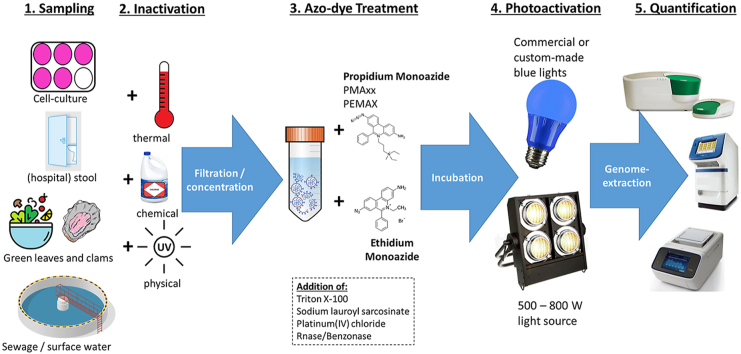
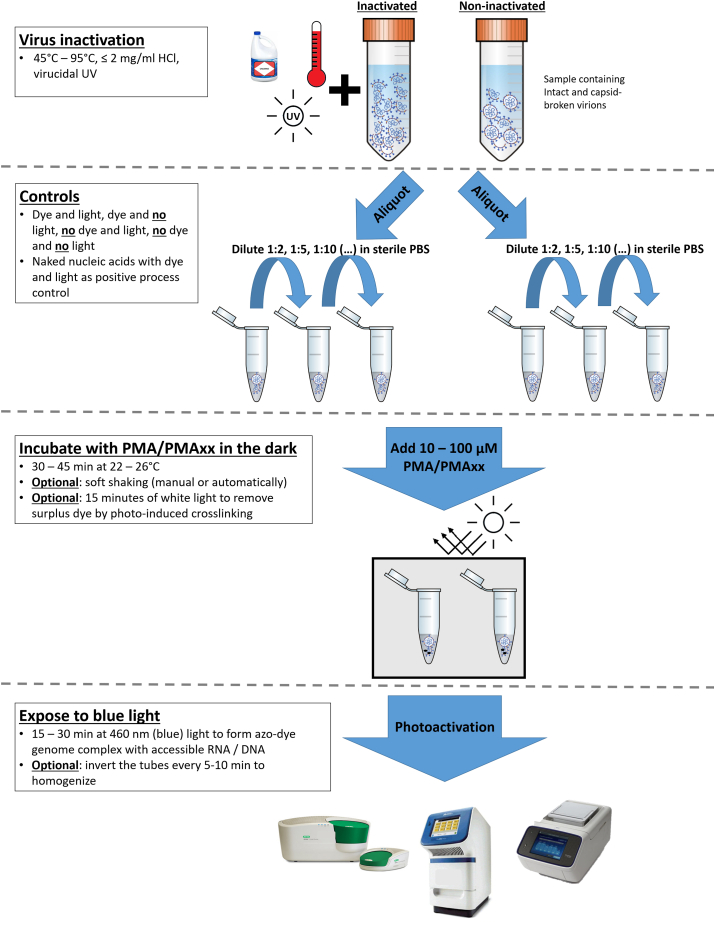
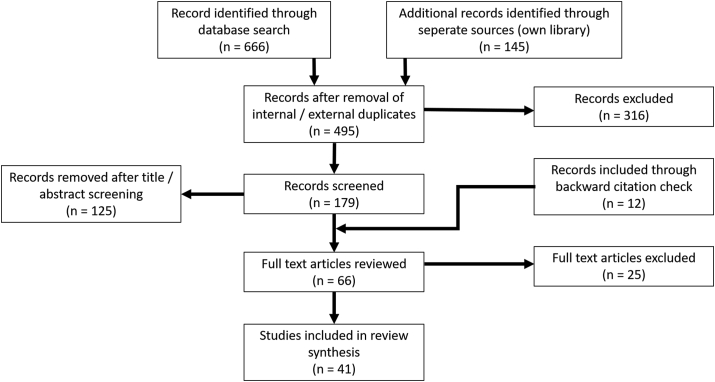
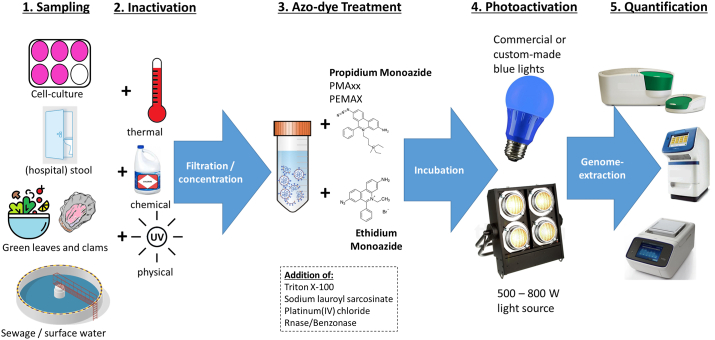
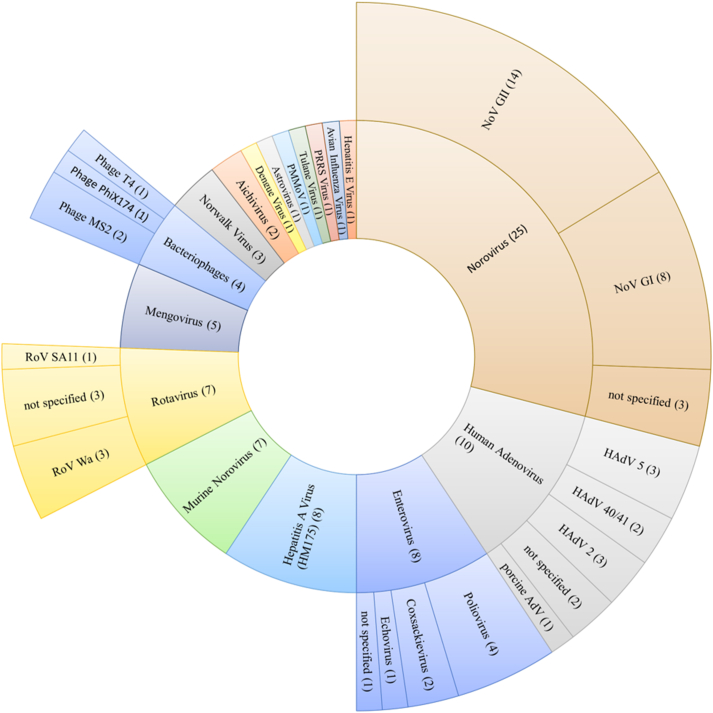
Capsid integrity quantitative PCR (qPCR), a molecular detection method for infectious viruses combining azo dye pretreatment with qPCR, has been widely used in recent years; however, variations in pretreatment conditions for various virus types can limit the efficacy of specific protocols. By identifying and critically synthesizing forty-one recent peer-reviewed studies employing capsid integrity qPCR for viruses in the last decade (2009-2019) in the fields of food safety and environmental virology, we aimed to establish recommendations for the detection of infectious viruses. Intercalating dyes are effective measures of viability in PCR assays provided the viral capsid is damaged; viruses that have been inactivated by other causes, such as loss of attachment or genomic damage, are less well detected using this approach. Although optimizing specific protocols for each virus is recommended, we identify a framework for general assay conditions. These include concentrations of ethidium monoazide, propidium monoazide or its derivates between 10 and 200 μM; incubation on ice or at room temperature (20 - 25 °C) for 5-120 min; and dye activation using LED or high light (500-800 Watts) exposure for periods ranging from 5 to 20 min. These simple steps can benefit the investigation of infectious virus transmission in routine (water) monitoring settings and during viral outbreaks such as the current COVID-19 pandemic or endemic diseases like dengue fever.
衣壳完整性定量聚合酶链反应(qPCR)是一种将偶氮染料预处理与qPCR相结合的传染性病毒分子检测方法,近年来已被广泛应用;然而,不同病毒类型预处理条件的差异可能会限制特定检测方案的效果。通过识别和批判性地综合过去十年(2009 - 2019年)在食品安全和环境病毒学领域中41项最近的同行评审研究,这些研究采用衣壳完整性qPCR检测病毒,我们旨在为传染性病毒的检测制定建议。倘若病毒衣壳受损,嵌入染料是PCR检测中有效的活力检测方法;对于因其他原因(如失去附着性或基因组损伤)而失活的病毒,使用这种方法检测效果较差。虽然建议针对每种病毒优化特定的检测方案,但我们确定了一般检测条件的框架。这些条件包括单叠氮溴化乙锭、单叠氮碘化丙锭或其衍生物的浓度在10至200μM之间;在冰上或室温(20 - 25°C)下孵育5 - 120分钟;以及使用LED或强光(500 - 800瓦)照射5至20分钟进行染料激活。这些简单步骤有助于在常规(水)监测环境以及病毒爆发期间(如当前的COVID - 19大流行或登革热等地方病)调查传染性病毒的传播。