School of Clinical Medicine, Ningxia Medical University, Yinchuan, China.
Department of Surgical Oncology, Gansu Provincial Hospital, Lanzhou, China.
Pathol Oncol Res. 2021 Sep 10;27:1609852. doi: 10.3389/pore.2021.1609852. eCollection 2021.
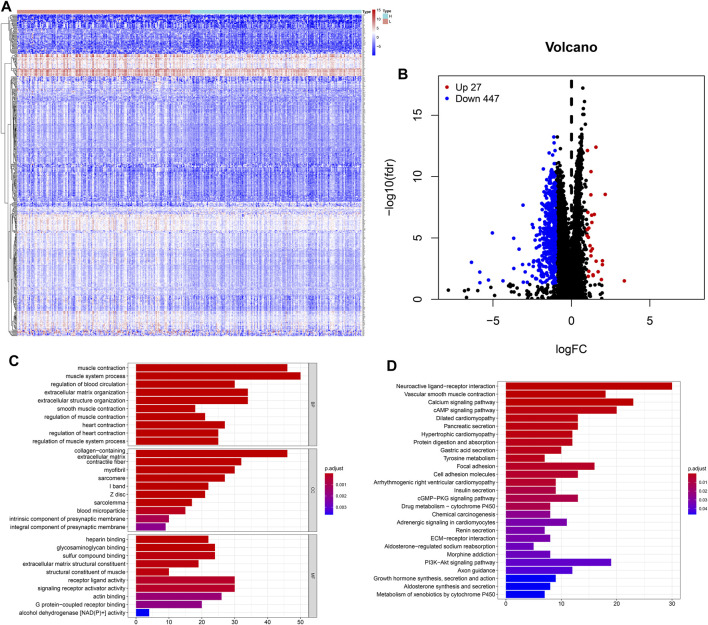
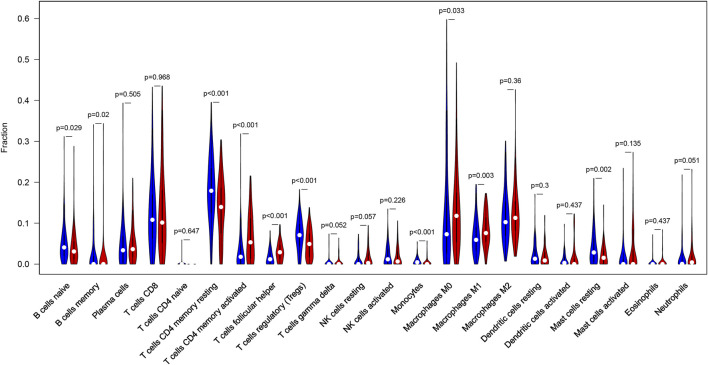
Gastric cancer is one of the most common cancers. Although some progress has been made in the treatment of gastric cancer with the improvement of surgical methods and the application of immunotherapy, the prognosis of gastric cancer patients is still unsatisfactory. In recent years, there has been increasing evidence that tumor mutational load (TMB) is strongly associated with survival outcomes and response to immunotherapy. Given the variable response of patients to immunotherapy, it is important to investigate clinical significance of TMB and explore appropriate biomarkers of prognosis in patients with gastric cancer (GC). All data of patients with gastric cancer were obtained from the database of The Cancer Genome Atlas (TCGA). Samples were divided into two groups based on median TMB. Differently expressed genes (DEGs) between the high- and low-TMB groups were identified and further analyzed. We identified TMB-related genes using Lasso, univariate and multivariate Cox regression analysis and validated the survival result of 11 hub genes using Kaplan-Meier Plotter. In addition, "CIBERSORT" package was utilized to estimate the immune infiltration. Single nucleotide polymorphism (SNP), C > T transition were the most common variant type and single nucleotide variant (SNV), respectively. Patients in the high-TMB group had better survival outcomes than those in the low-TMB group. Besides, eleven TMB-related DEGs were utilized to construct a prognostic model that could be an independent risk factor to predict the prognosis of patients with GC. What's more, the infiltration levels of CD4 memory-activated T cells, M0 and M1 macrophages were significantly increased in the high-TMB group compared with the low-TMB group. Herein, we found that patients with high TMB had better survival outcomes in GC. In addition, higher TMB might promote immune infiltration, which could provide new ideas for immunotherapy.
胃癌是最常见的癌症之一。尽管随着手术方法的改进和免疫疗法的应用,胃癌的治疗取得了一些进展,但胃癌患者的预后仍然不尽如人意。近年来,越来越多的证据表明肿瘤突变负荷(TMB)与生存结果和免疫治疗反应密切相关。鉴于患者对免疫治疗的反应各不相同,因此研究 TMB 的临床意义并探索胃癌患者(GC)预后的合适生物标志物非常重要。所有胃癌患者的数据均来自癌症基因组图谱(TCGA)数据库。根据 TMB 的中位数将样本分为两组。鉴定高 TMB 和低 TMB 组之间的差异表达基因(DEGs),并进一步分析。我们使用 Lasso、单因素和多因素 Cox 回归分析鉴定了与 TMB 相关的基因,并使用 Kaplan-Meier Plotter 验证了 11 个关键基因的生存结果。此外,还利用“CIBERSORT”程序包来估计免疫浸润。单核苷酸多态性(SNP),C>T 转换是最常见的变异类型和单核苷酸变异(SNV),分别为。高 TMB 组患者的生存结果优于低 TMB 组患者。此外,利用 11 个与 TMB 相关的 DEGs 构建了一个预后模型,该模型可以作为预测 GC 患者预后的独立危险因素。更重要的是,与低 TMB 组相比,高 TMB 组中 CD4 记忆激活 T 细胞、M0 和 M1 巨噬细胞的浸润水平显著增加。本研究发现,GC 患者中 TMB 较高者生存结果较好。此外,较高的 TMB 可能促进免疫浸润,这为免疫治疗提供了新的思路。