Imad Hisham A, Phadungsombat Juthamas, Nakayama Emi E, Kludkleeb Sajikapon, Matsee Wasin, Ponam Thitiya, Suzuki Keita, Leaungwutiwong Pornsawan, Piyaphanee Watcharapong, Phumratanaprapin Weerapong, Shioda Tatsuo
Mahidol-Osaka Center for Infectious Diseases, Faculty of Tropical Medicine, Mahidol University,Bankok, 10400, Thailand.
Department of Viral Infections, Research Institute for Microbial Diseases, Osaka University,Suita, Osaka 565-0871, Japan.
Trop Med Infect Dis. 2021 Jan 21;6(1):12. doi: 10.3390/tropicalmed6010012.
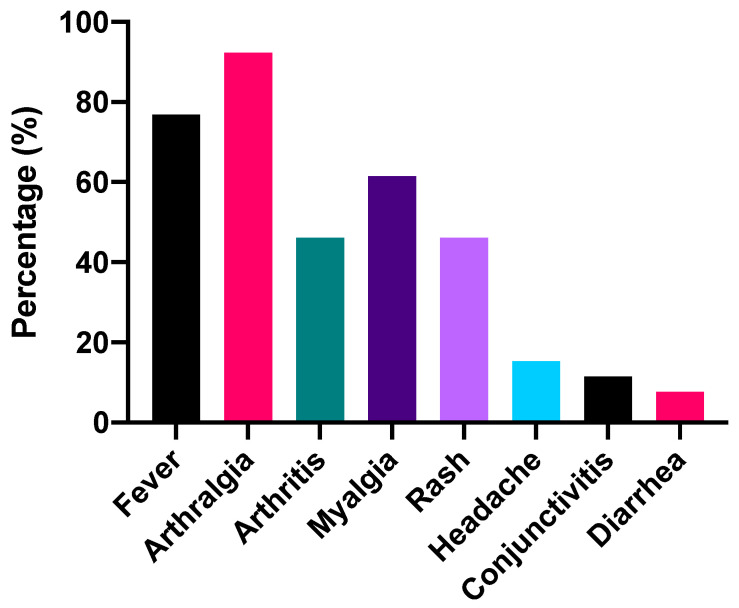
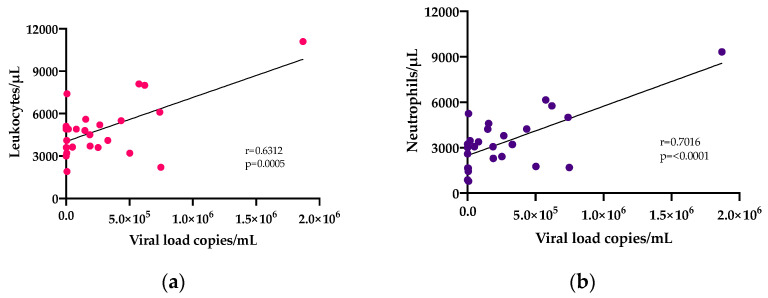
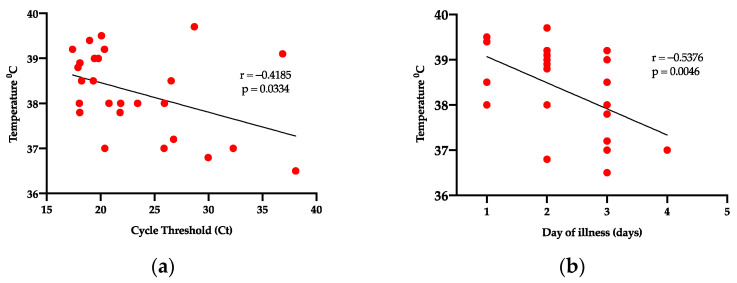
Chikungunya virus is an belonging to the family that is transmitted to humans by an infected mosquito. Patients develop fever, inflammatory arthritis, and rash during the acute stage of infection. Although the illness is self-limiting, atypical and severe cases are not uncommon, and 60% may develop chronic symptoms that persist for months or even for longer durations. Having a distinct periodical epidemiologic outbreak pattern, chikungunya virus reappeared in Thailand in December 2018. Here, we describe a cohort of acute chikungunya patients who had presented to the Bangkok Hospital for Tropical Diseases during October 2019. Infection was detected by a novel antigen kit and subsequently confirmed by real-time RT-PCR using serum collected at presentation to the Fever Clinic. Other possible acute febrile illnesses such as influenza, dengue, and malaria were excluded. We explored the sequence of clinical manifestations at presentation during the acute phase and associated the viral load with the clinical findings. Most of the patients were healthy individuals in their forties. Fever and arthralgia were the predominant clinical manifestations found in this patient cohort, with a small proportion of patients with systemic symptoms. Higher viral loads were associated with arthralgia, and arthralgia with the involvement of the large joints was more common in female patients.
基孔肯雅病毒是一种属于 科的病毒,通过受感染的 蚊子传播给人类。患者在感染急性期会出现发热、炎症性关节炎和皮疹。尽管这种疾病是自限性的,但非典型和严重病例并不罕见,60%的患者可能会出现持续数月甚至更长时间的慢性症状。基孔肯雅病毒具有独特的周期性流行病学暴发模式,于2018年12月在泰国再次出现。在此,我们描述了一组2019年10月期间到曼谷热带病医院就诊的急性基孔肯雅热患者。通过一种新型抗原试剂盒检测到感染,随后使用患者到发热门诊就诊时采集的血清进行实时逆转录聚合酶链反应(RT-PCR)予以确诊。排除了其他可能的急性发热性疾病,如流感、登革热和疟疾。我们探讨了急性期就诊时的临床表现顺序,并将病毒载量与临床发现相关联。大多数患者是四十多岁的健康个体。发热和关节痛是该患者队列中主要的临床表现,一小部分患者有全身症状。较高的病毒载量与关节痛相关,且累及大关节的关节痛在女性患者中更为常见。