Akillioglu Kübra, Karadepe Mustafa
Division of Neurophysiology, Department of Physiology, Medical Faculty, University of Cukurova, Turkey.
Department of Internal Medicine, Medical Faculty of Cukurova, Adana, Turkey.
Clin Psychopharmacol Neurosci. 2021 Feb 28;19(1):93-103. doi: 10.9758/cpn.2021.19.1.93.
In this study, we evaluated the effect of neonatal ketamine exposure on anxiety-like and exploratory behaviours in adult the Balb/c and C57BL/6 strains of mice which anxiety responses are different.
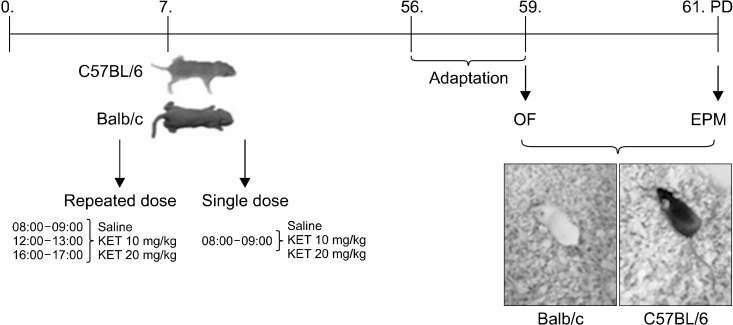
Ketamine was administered at two different doses single dose (10, 20 mg/kg, 0.1 ml/10 g body weight, intraperitoneally) and repeated doses (10, 20 mg/kg every 240 minutes; thrice times) on the 7th postnatal day to male Balb/c and C57BL/6 mice. In adulthood, open-field (OF) and elevated plus maze (EPM) apparatuses were used to evaluate exploratory and anxiety-like behaviour.
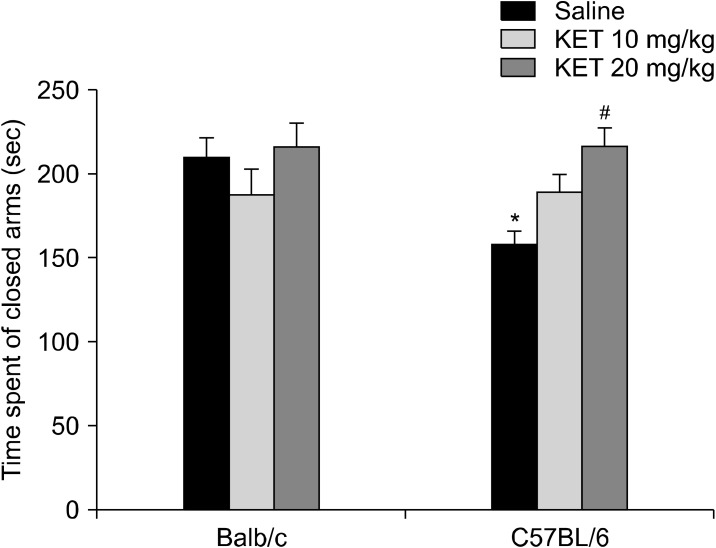
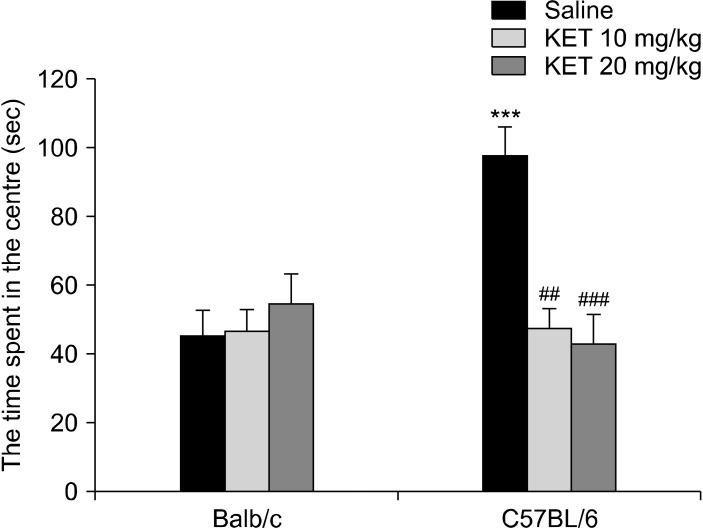
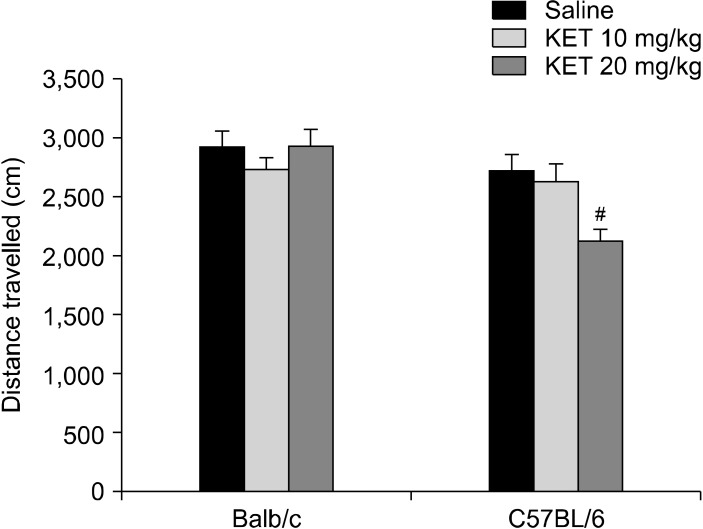
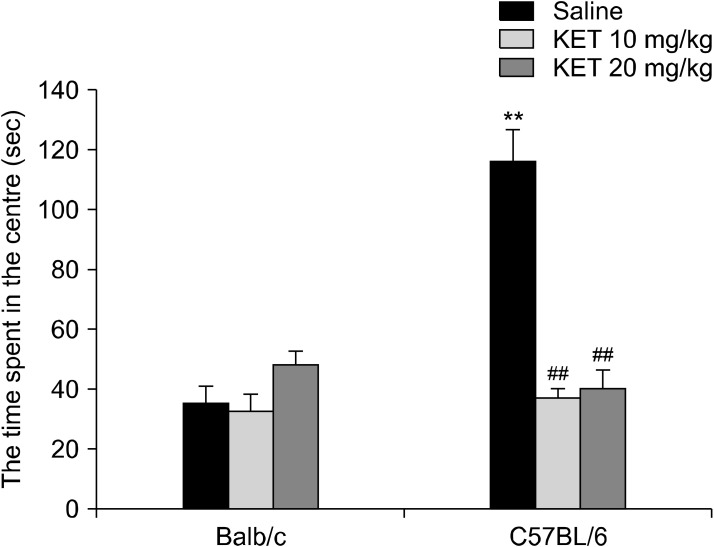
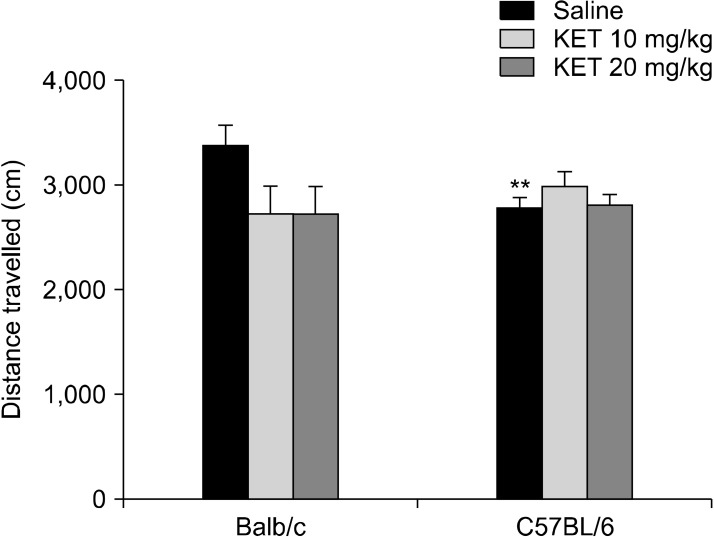
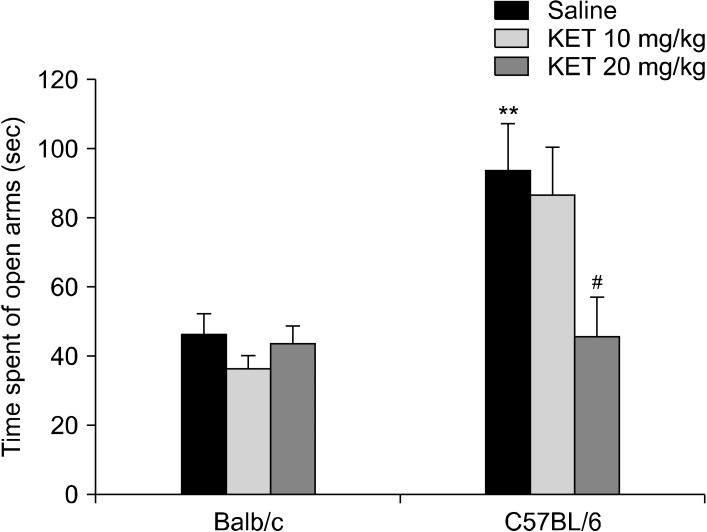
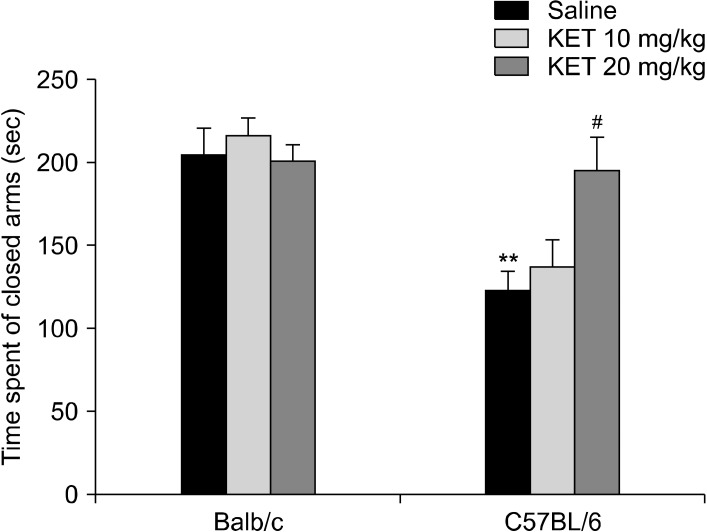
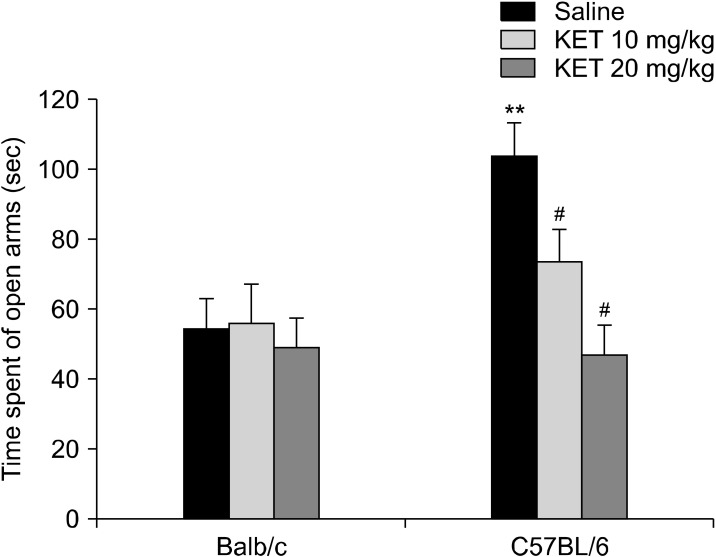
In the C57BL/6 mice, the 20 mg/kg single dose decreased open-arm time and total-arm entries in EPM and increased time of central latency and decreased distance travelled in OF. Both the 10 and 20 mg/kg repetitive doses increased time of central latency and decreased time spent in the centre, frequency of rearing and centre crossing in OF and decreased open-arm time, total-arm entries, number of open-arm entries in EPM. The 20 mg/kg repetitive dose decreased number of head dipping behaviours in EPM. In the Balb/c mice, both the single and repetitive 10-20 mg/kg doses had no significant effect on anxiety-like and exploratory behaviours.
There were no significant differences in anxiety-like and exploratory behaviour in different strains by the single 10 mg/kg dose. However, in the C57BL/6 mice, both the single and repetitive 20 mg/kg doses and the 10 mg/kg repetitive dose increased anxiety-like behaviour and decreased exploratory behaviour in EPM and OF. In conclusion, hereditary factors may be effective on the effect of neonatal ketamine treatment on anxiety-like and exploratory behaviour.
在本研究中,我们评估了新生期氯胺酮暴露对成年Balb/c和C57BL/6品系小鼠(其焦虑反应不同)的焦虑样行为和探索行为的影响。
在出生后第7天,对雄性Balb/c和C57BL/6小鼠分别以两种不同剂量给予氯胺酮,单次剂量(10、20mg/kg,0.1ml/10g体重,腹腔注射)和重复剂量(每240分钟10、20mg/kg;共三次)。成年后,使用旷场(OF)和高架十字迷宫(EPM)装置评估探索行为和焦虑样行为。
在C57BL/6小鼠中,20mg/kg单次剂量降低了EPM中的开臂时间和总臂进入次数,增加了旷场试验中的中央潜伏期时间,并减少了移动距离。10mg/kg和20mg/kg重复剂量均增加了旷场试验中的中央潜伏期时间,减少了在中央区域停留的时间、竖毛频率和穿越中央区域的次数,以及EPM中的开臂时间、总臂进入次数、开臂进入次数。20mg/kg重复剂量减少了EPM中的探头次数。在Balb/c小鼠中,10 - 20mg/kg的单次和重复剂量对焦虑样行为和探索行为均无显著影响。
10mg/kg单次剂量对不同品系的焦虑样行为和探索行为无显著差异。然而,在C57BL/6小鼠中,20mg/kg单次和重复剂量以及10mg/kg重复剂量均增加了EPM和旷场试验中的焦虑样行为并减少了探索行为。总之,遗传因素可能对新生期氯胺酮治疗对焦虑样行为和探索行为的影响起作用。