Department of Pathology and Laboratory Medicine, University of British Columbia, Vancouver, British Columbia, Canada
Division of Medical Microbiology, BC Children's Hospital & BC Women's Hospital & Health Centre, Vancouver, British Columbia, Canada.
J Clin Microbiol. 2021 Mar 19;59(4). doi: 10.1128/JCM.02427-20.
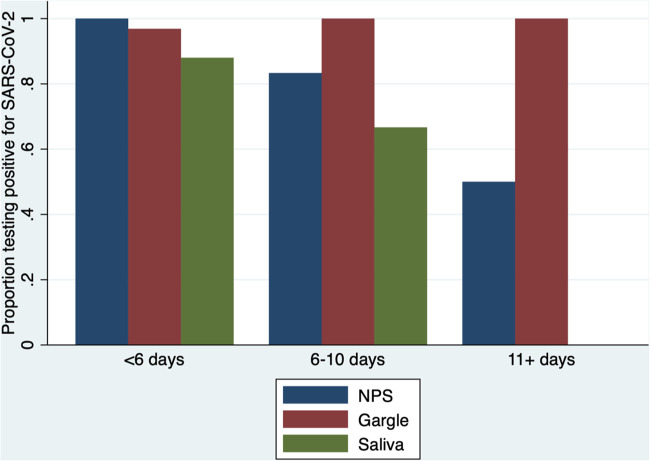
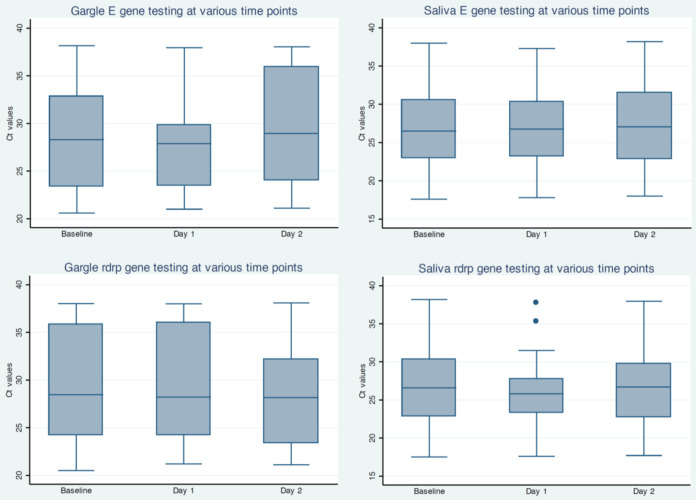
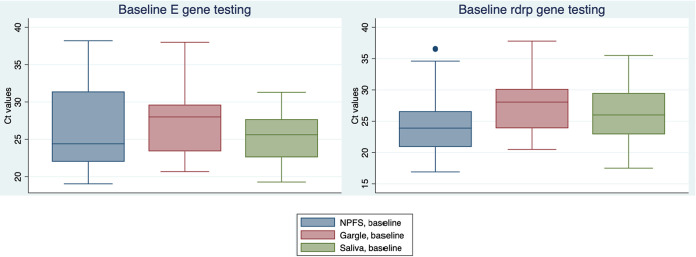
We assessed the performance, stability, and user acceptability of swab-independent self-collected saliva and saline mouth rinse/gargle sample types for the molecular detection of severe acute respiratory syndrome coronavirus 2 (SARS-CoV-2) in adults and school-aged children. Outpatients who had recently been diagnosed with COVID-19 or were presenting with suspected COVID-19 were asked to have a nasopharyngeal (NP) swab collected and provide at least one self-collected sample type. Participants were also asked about sample acceptability using a five-point Likert scale. For those previously diagnosed with COVID-19, all samples underwent real-time PCR testing using a lab-developed assay, and the majority were also tested using an FDA-authorized assay. For those presenting with suspected COVID-19, only those with a positive nasopharyngeal swab sample went on to have other samples tested. Saline mouth rinse/gargle and saliva samples were tested daily at time zero, day 1, and day 2 to assess nucleic acid stability at room temperature. Fifty participants (aged 4 to 71 years) were included; of these, 40 had at least one positive sample and were included in the primary sample yield analysis. Saline mouth rinse/gargle samples had a sensitivity of 98% (39/40), while saliva samples had a sensitivity of 79% (26/33). Both saline mouth rinse/gargle and saliva samples showed stable viral RNA detection after 2 days of room temperature storage. Mouth rinse/gargle samples had the highest (mean, 4.9) and health care worker (HCW)-collected NP swabs had the lowest acceptability scores (mean, 3.1). In conclusion, saline mouth rinse/gargle samples demonstrated higher combined user acceptability ratings and analytical performance than saliva and HCW-collected NP swabs. This sample type is a promising swab-independent option, particularly for outpatient self-collection in adults and school-aged children.
我们评估了拭子独立的自我采集唾液和盐水漱口/含漱样本类型在成人和学龄儿童中用于分子检测严重急性呼吸综合征冠状病毒 2(SARS-CoV-2)的性能、稳定性和用户接受度。最近被诊断患有 COVID-19 或出现疑似 COVID-19 症状的门诊患者被要求采集鼻咽(NP)拭子,并提供至少一种自我采集的样本类型。参与者还使用五点 Likert 量表评估了样本的可接受性。对于那些先前被诊断患有 COVID-19 的患者,所有样本均使用实验室开发的检测方法进行实时 PCR 检测,大多数样本还使用 FDA 授权的检测方法进行检测。对于那些出现疑似 COVID-19 症状的患者,只有那些鼻咽拭子样本呈阳性的患者才会进行其他样本检测。盐水漱口/含漱和唾液样本在零时间、第 1 天和第 2 天每天进行测试,以评估室温下核酸的稳定性。共纳入 50 名(年龄 4 至 71 岁)参与者;其中 40 名至少有一份阳性样本,被纳入主要样本产量分析。盐水漱口/含漱样本的敏感性为 98%(39/40),而唾液样本的敏感性为 79%(26/33)。室温储存 2 天后,盐水漱口/含漱和唾液样本均显示出稳定的病毒 RNA 检测。漱口/含漱样本的可接受性评分最高(平均 4.9),而卫生保健工作者(HCW)采集的 NP 拭子的可接受性评分最低(平均 3.1)。总之,盐水漱口/含漱样本的综合用户接受度评分和分析性能均高于唾液和 HCW 采集的 NP 拭子。这种样本类型是一种很有前途的拭子独立选择,特别是在成人和学龄儿童的门诊自我采集。