Animal Nutrition Institute, Key Laboratory of Animal Disease-Resistance Nutrition, Ministry of Agriculture and Rural Affairs, Key Laboratory of Sichuan Province, Sichuan Agricultural University, Chengdu, 611130, China.
Research Center of Tea and Tea Culture, College of Agronomy, Jiangxi Agricultural, University, Nanchang, 330045, P.R. China.
Poult Sci. 2021 Feb;100(2):1109-1119. doi: 10.1016/j.psj.2020.10.024. Epub 2020 Oct 31.
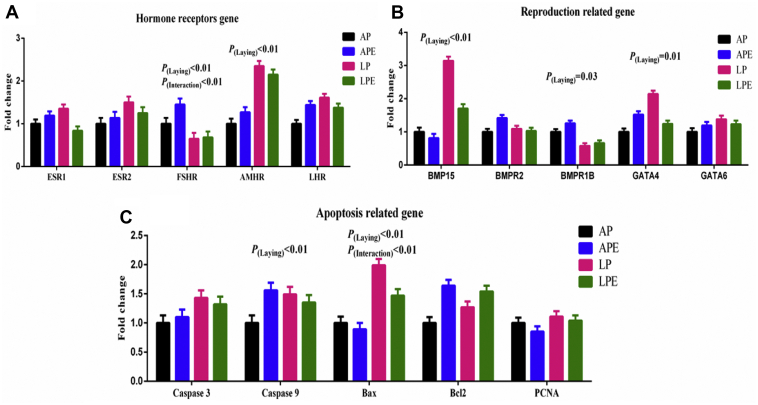
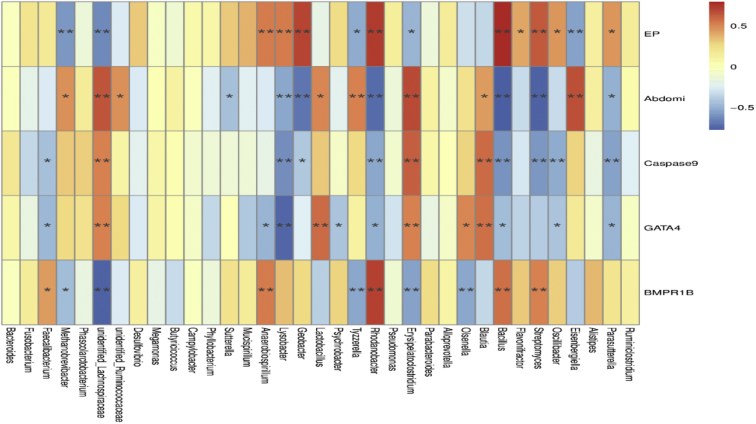
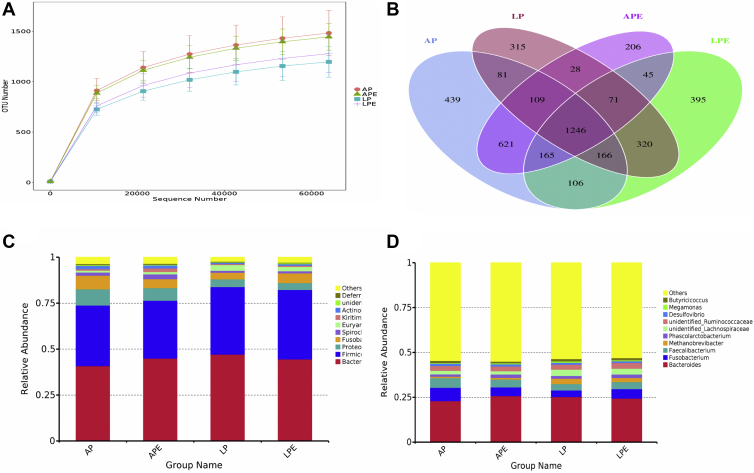
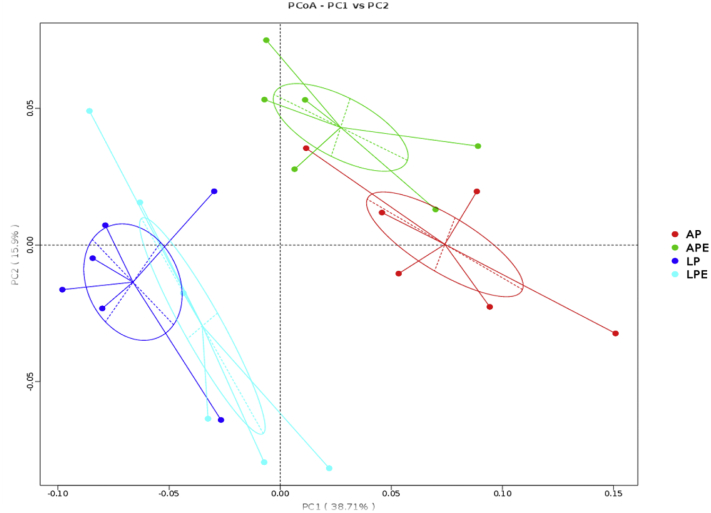
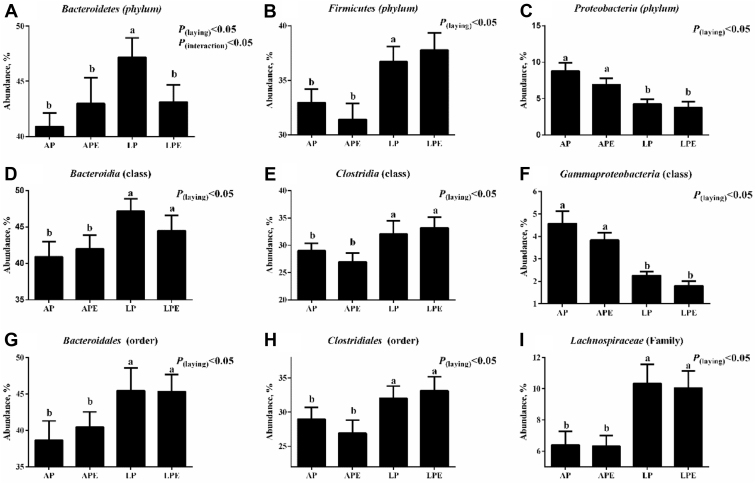
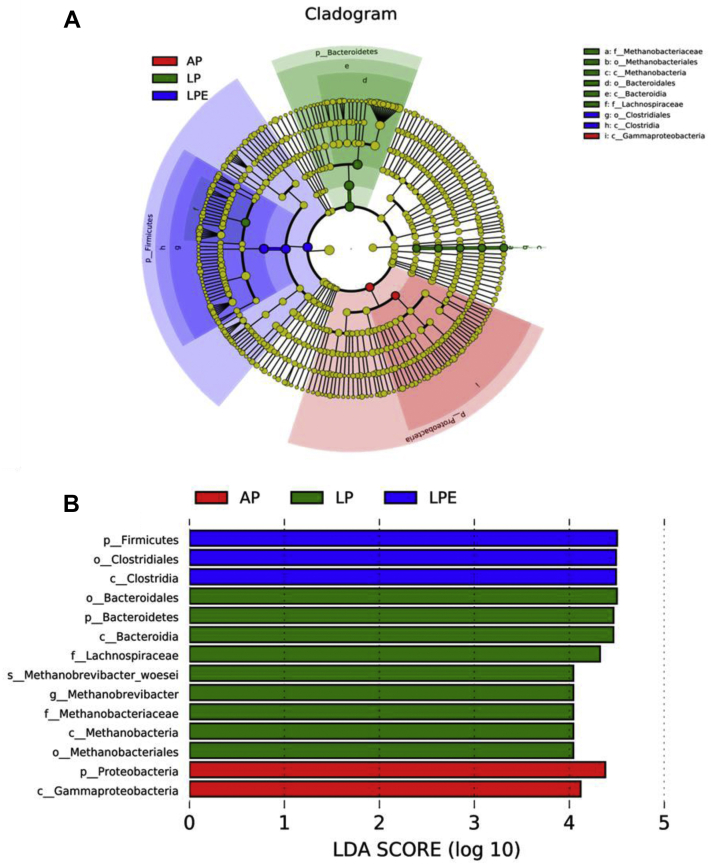
The difference in microbiota was examined for breeders with different egg-laying rates, and the impact of dietary Enterococcus faecium (EF) was also determined in the present study. A total of 256 Arbor Acres broiler breeders (48-wk-old) were used in a 2 × 2 factorial design, which encompassed 2 egg-laying rate levels [average (average egg laying: AP, 80.45 ± 0.91%) and low (lower egg laying: LP, 70.61 ± 1.16%)] and 2 different dietary groups [control (no additive), 6 × 10 cfu/kg EF]. The results showed that the AP breeders presented a lower egg weight, feed conversion ratio, abdominal fat rate, and serum leptin level (P ≤ 0.05) as well as a higher egg-laying rate (P < 0.01) than the LP breeders. Dietary supplementation with EF improved the egg weight (P = 0.03) and had a higher concentration of follicle-stimulating hormone (FSH) in the serum (P = 0.04). The relative expression of Caspase 9, Bax, AMHR, BMP15, and GATA4 in the ovary of AP breeders was lower, whereas the FSHR and BMPR1B expression was higher than that measured in LP breeders (P ≤ 0.05). LP increased the abundance of Bacteroidetes (phylum), Firmicutes (phylum), Bacteroidia (class), Clostridia (class), Bacteroidales (order), Clostridiales (order), and Lachnospiraceae (family), whereas the AP promoted the enrichment of Proteobacteria (phylum) and Gammaproteobacteria (class) (P < 0.05). The genera Bacillus, Rhodanobacter, and Streptomyces were positively correlated with the egg-laying rate and BMPR1B expression (P < 0.05) but negatively correlated with the abdominal fat rate (P < 0.05) and Caspase 9 (P < 0.05). These findings indicate that the low reproductive performance breeders had lower microbiota diversity and higher Firmicutes, which triggers the energy storage that led to higher fat deposition. Besides, increases in the abdominal fat rate, leptin level, and apoptosis (Caspase 9, Bax) and reproduction-related gene (BMP15, AMHR, BMPR1B, and GATA4) expression would possibly be the potential mechanisms under which breeders have different reproductive performance. Dietary EF increased the egg weight and serum FSH level and decreased the Bacteroidetes (phylum) in low reproductive breeders.
本研究旨在探讨不同产蛋率的种鸡之间的微生物群落差异,并确定日粮中添加屎肠球菌(EF)的影响。采用 2×2 析因设计,选用 256 只 48 周龄的爱拔益加(Arbor Acres)种鸡,包含 2 个产蛋率水平[平均(产蛋率高:AP,80.45±0.91%)和低(产蛋率低:LP,70.61±1.16%)]和 2 个不同的日粮组[对照组(无添加物),6×10cfu/kg EF]。结果表明,AP 组种鸡的蛋重、料蛋比、腹脂率和血清瘦素水平较低(P≤0.05),产蛋率较高(P<0.01)。日粮添加 EF 可提高蛋重(P=0.03),并增加血清中促卵泡激素(FSH)的浓度(P=0.04)。AP 组种鸡卵巢中 Caspase 9、Bax、AMHR、BMP15 和 GATA4 的相对表达量较低,而 FSHR 和 BMPR1B 的表达量较高(P≤0.05)。LP 增加了厚壁菌门(门)、Firmicutes(门)、Bacteroidia(纲)、Clostridia(纲)、Bacteroidales(目)、Clostridiales(目)和 Lachnospiraceae(科)的丰度,而 AP 促进了变形菌门(门)和 Gamma-proteobacteria(纲)的富集(P<0.05)。芽孢杆菌属、罗得丹菌属和链霉菌属与产蛋率和 BMPR1B 表达呈正相关(P<0.05),但与腹脂率(P<0.05)和 Caspase 9(P<0.05)呈负相关。这些发现表明,低繁殖性能的种鸡具有较低的微生物多样性和较高的Firmicutes,这引发了能量储存,导致更高的脂肪沉积。此外,腹脂率、瘦素水平和凋亡(Caspase 9、Bax)以及与繁殖相关的基因(BMP15、AMHR、BMPR1B 和 GATA4)表达的增加可能是种鸡具有不同繁殖性能的潜在机制。日粮 EF 增加了蛋重和血清 FSH 水平,并降低了低繁殖性能种鸡中的厚壁菌门(门)。