Department of Poultry Science, Faculty of Agriculture, Tarbiat Modares University, 1411713116 Tehran, Iran.
Prestage Department of Poultry Science, Faculty of Agriculture and Life Sciences, North Carolina State University, Raleigh, NC 27695-7608.
Poult Sci. 2021 Feb;100(2):1221-1238. doi: 10.1016/j.psj.2020.10.076. Epub 2020 Nov 22.
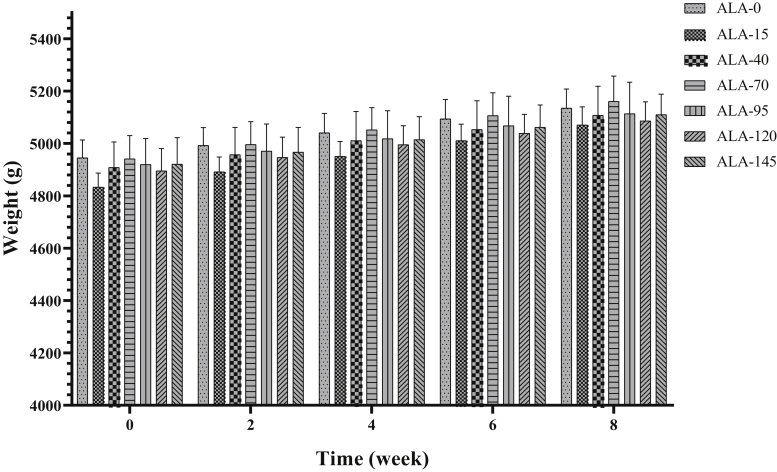
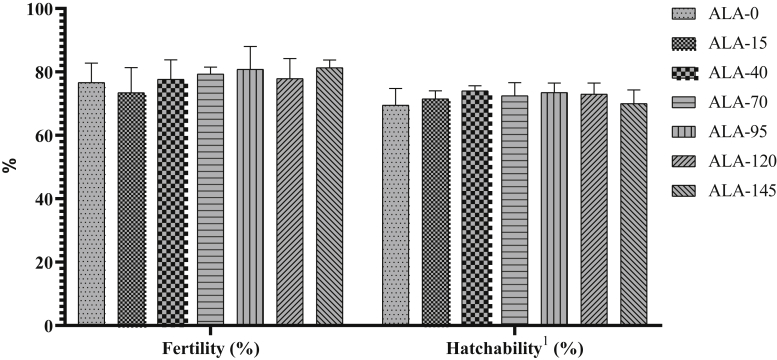
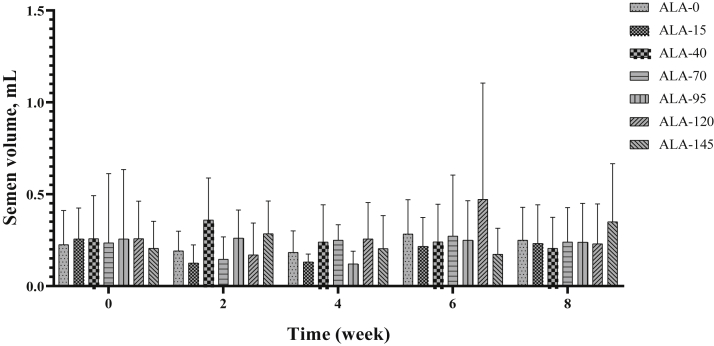
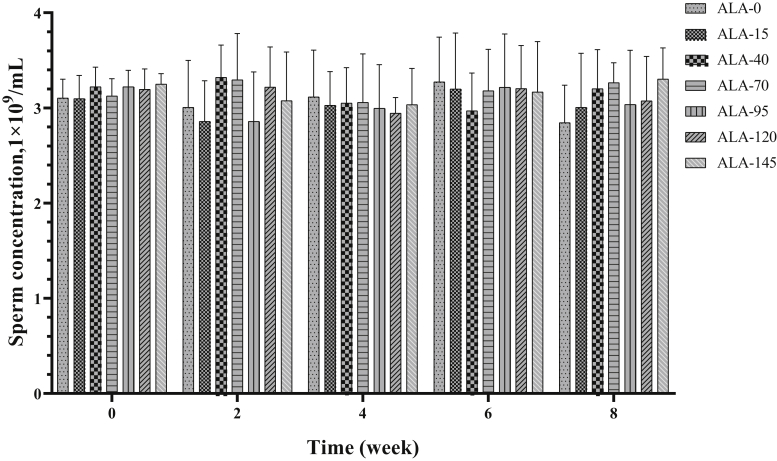
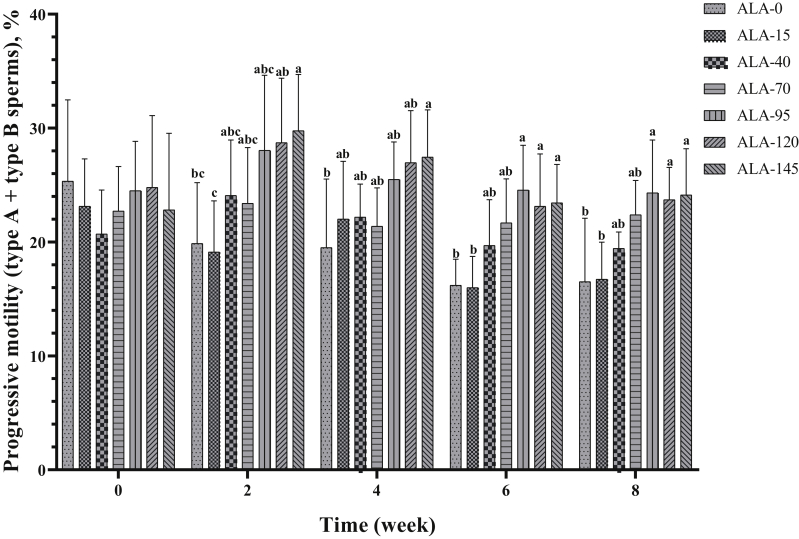
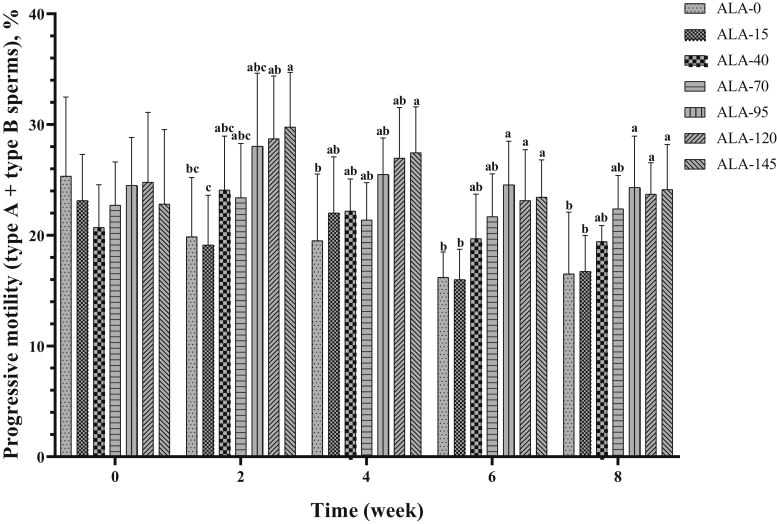
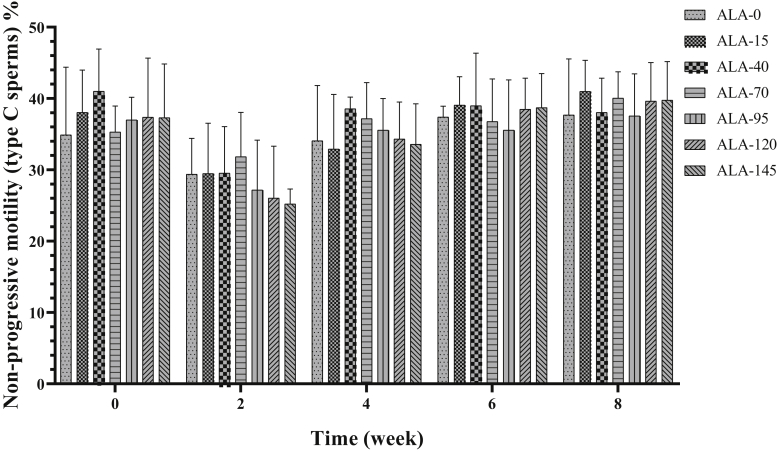
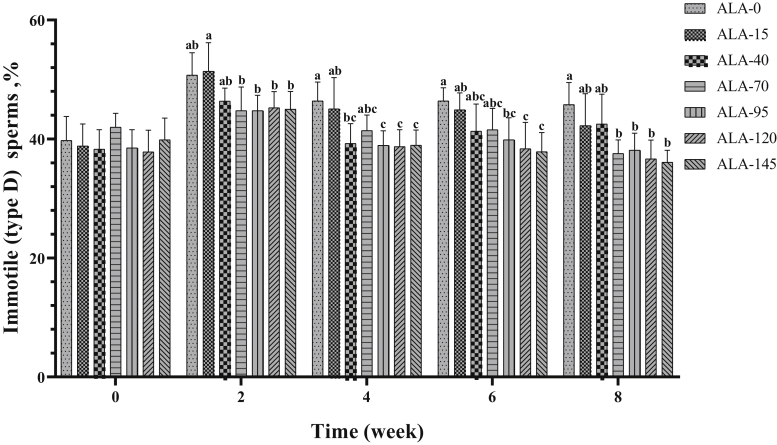
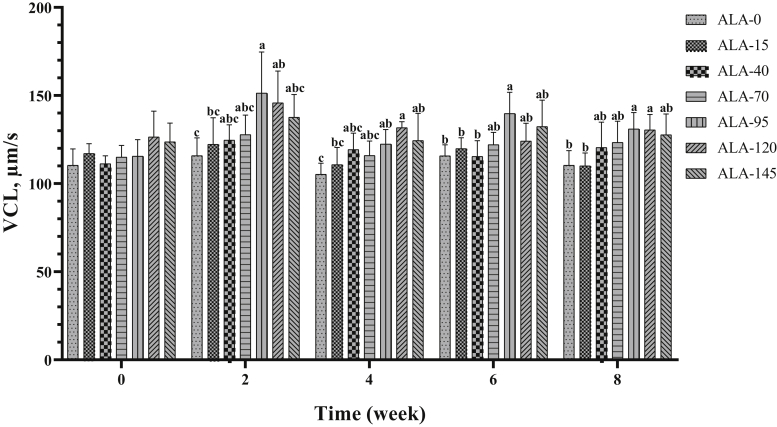
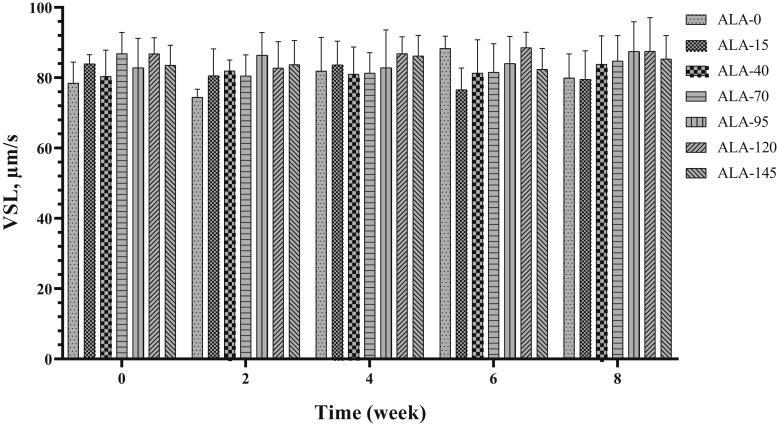
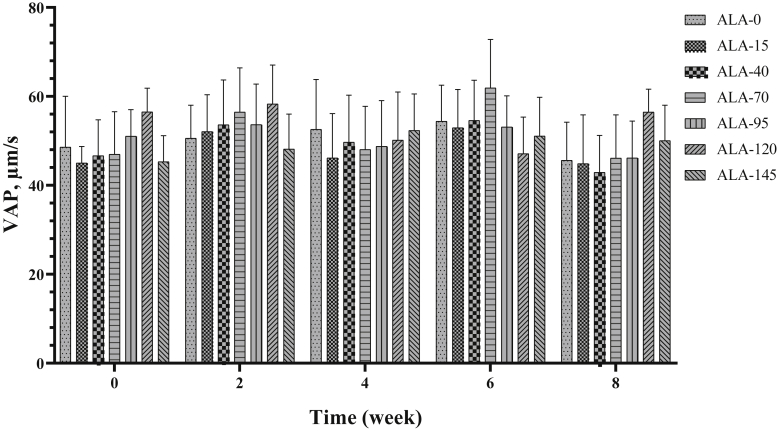
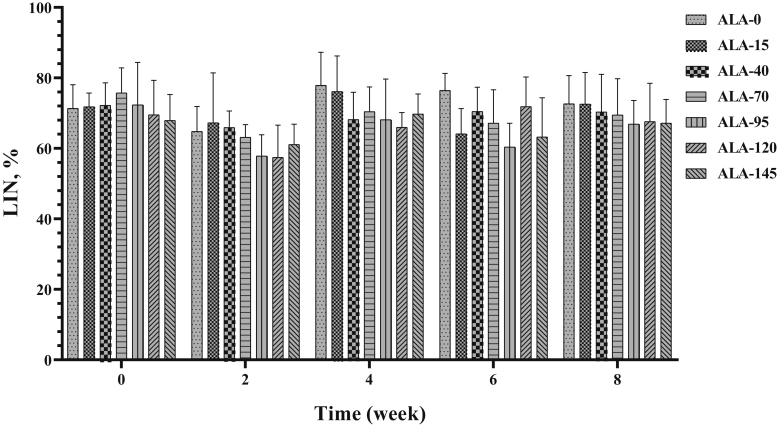
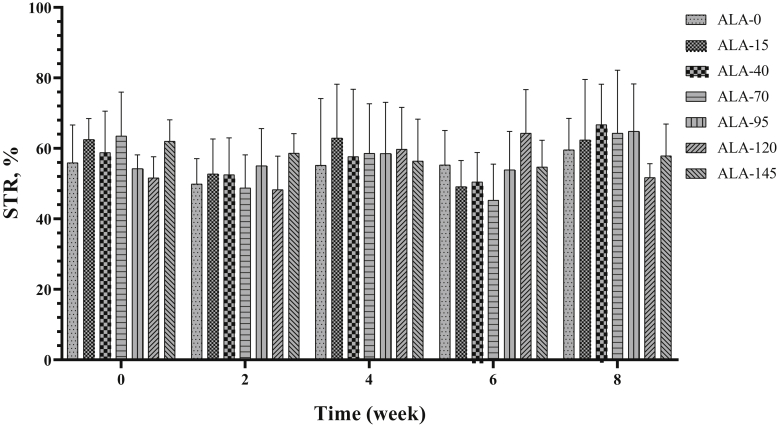
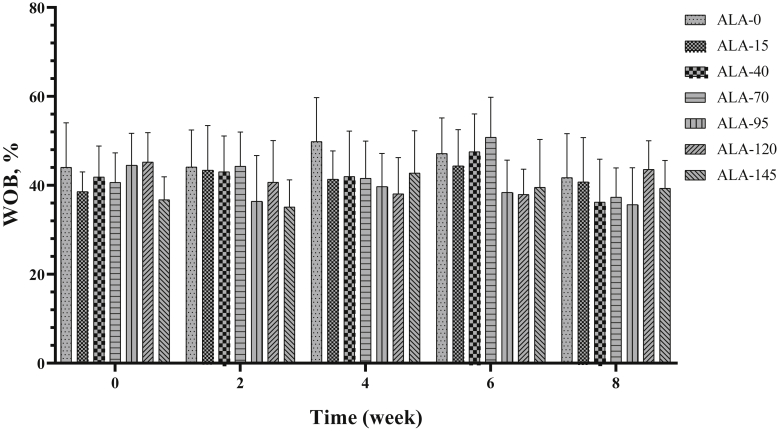
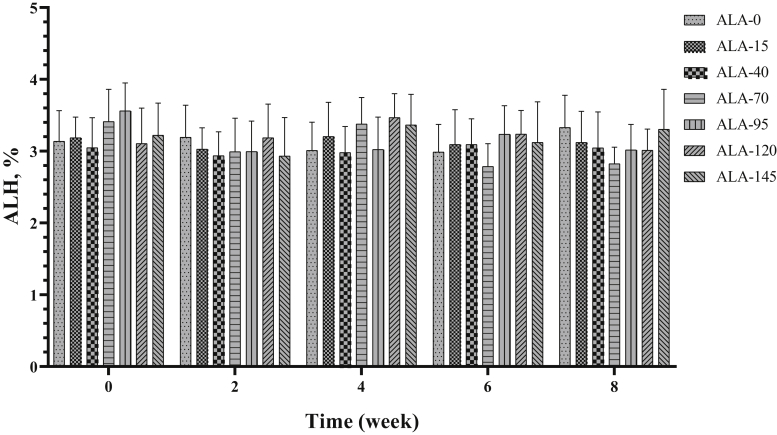
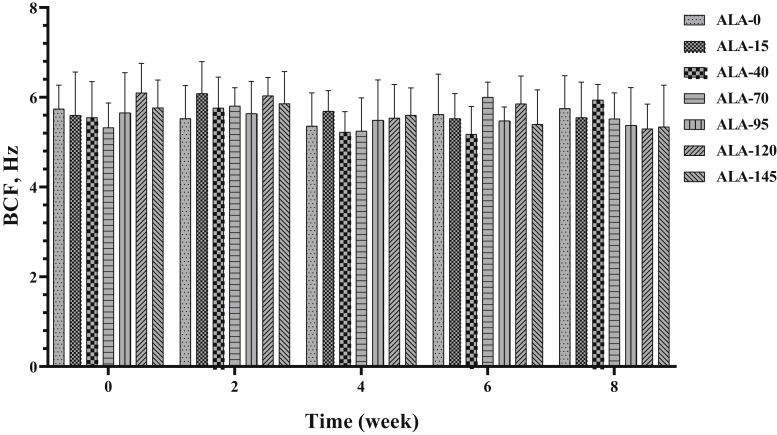
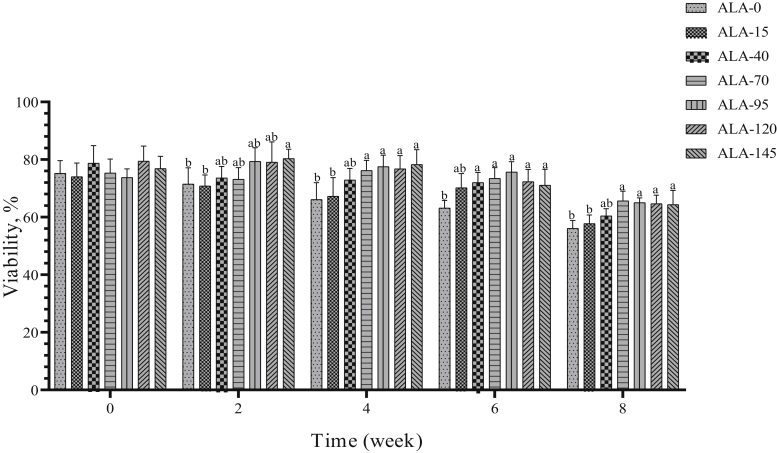
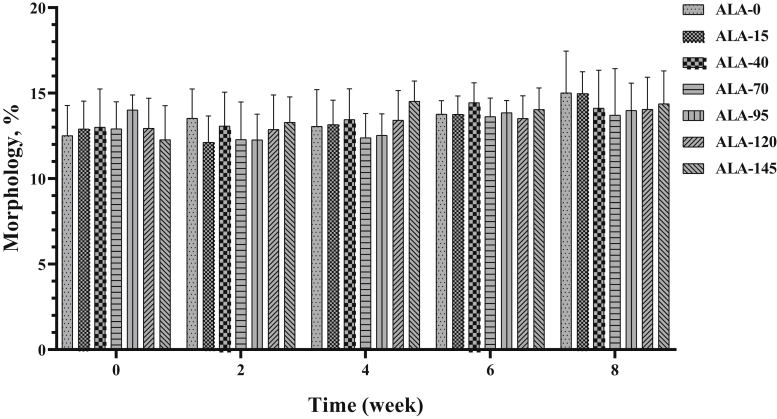
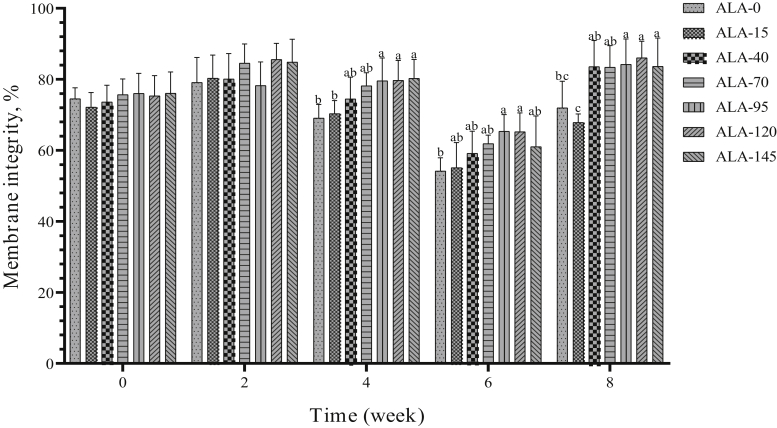
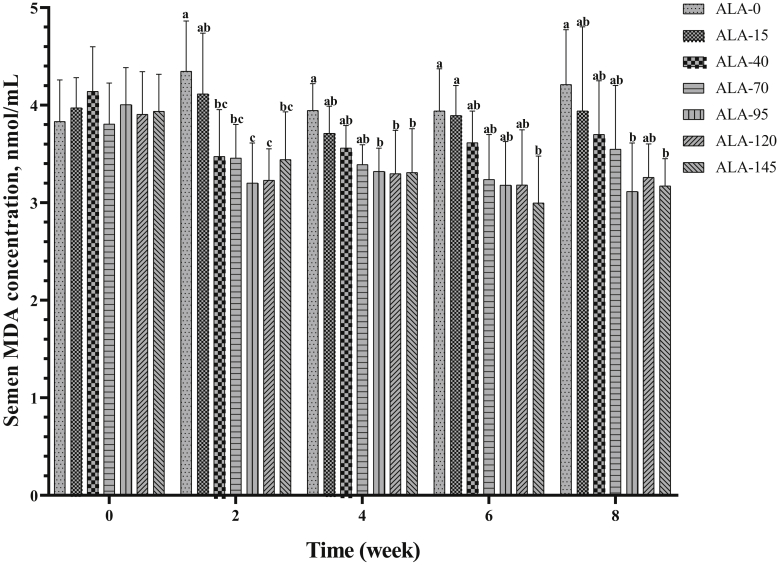
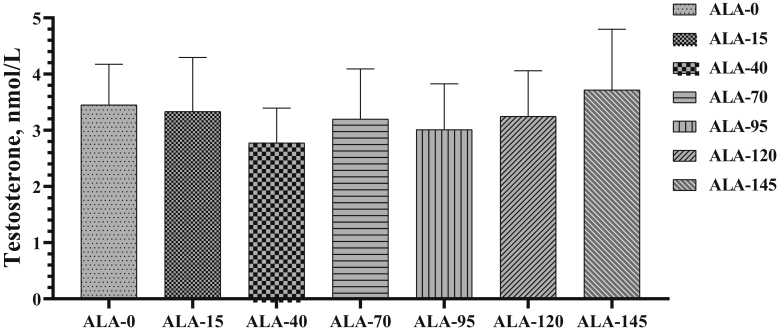
High levels of polyunsaturated fatty acids in avian sperm cause more susceptibility to lipid peroxidation. Aging in roosters reduces the antioxidant capacity of sperm and thus fertility. The purpose of this study was to investigate the effects of different levels of alpha-lipoic acid (ALA) as a feed supplement to improve the semen quality and fertility parameters of aged broiler breeder roosters and identification of its most effective level. A total of forty-two roosters at 45 wk of age were randomly assigned to 7 treatments (0, 15, 40, 70, 95, 120, and 145 mg ALA/bird per day) for 8 wk. Semen parameters and body weight were assessed biweekly, and testosterone plasma levels were determined in the 8th wk of the experimental period. Artificial insemination was performed at the end of the experiment to evaluate the fertility potential. The dietary administration of ALA had no significant effects on body weight, semen volume, average path velocity, linearity, straightness, wobble, the amplitude of lateral head displacement, beat-cross frequency, sperm concentration, morphology, plasma testosterone level, fertility, or hatchability (P > 0.05). Alpha-lipoic acid supplementations resulted in a significant decrease in seminal malondialdehyde concentration and immotile (type D) sperms (P < 0.05). The total motility, progressive motility (types A + type B sperms), curvilinear velocity, straight-line velocity, viability, and membrane integrity of sperm improved with ALA dietary supplementations (P < 0.05). With increasing ALA levels, improvement in semen parameters had an incremental trend until the level of 95 mg ALA. Thus, 95 mg dietary ALA as an antioxidant supplement can improve semen quality of aging breeder roosters while higher doses resulted in no further improvement.
高水平的多不饱和脂肪酸在禽类精子中会导致更容易发生脂质过氧化。公鸡老化会降低精子的抗氧化能力,从而降低其生育能力。本研究旨在探讨不同水平的α-硫辛酸(ALA)作为饲料补充剂对改善老龄肉鸡种公鸡精液质量和生育参数的影响,并确定其最有效的水平。42 只 45 周龄的公鸡被随机分配到 7 个处理组(0、15、40、70、95、120 和 145mg ALA/只/天),为期 8 周。每两周评估一次精液参数和体重,在实验的第 8 周测定血浆睾酮水平。实验结束时进行人工授精,以评估生育潜力。日粮中添加 ALA 对体重、精液量、平均路径速度、直线性、直线性、摆动性、头部侧向位移幅度、鞭打频率、精子浓度、形态、血浆睾酮水平、受精率或孵化率均无显著影响(P>0.05)。ALA 补充剂显著降低了精子的丙二醛浓度和不动精子(D 型)(P<0.05)。总活力、前向运动精子活力(A 型+B 型精子)、曲线速度、直线速度、活力和膜完整性随着 ALA 日粮补充而提高(P<0.05)。随着 ALA 水平的增加,精液参数的改善呈递增趋势,直到 95mg ALA 水平。因此,95mg 日粮 ALA 作为抗氧化剂补充剂可以改善老龄种公鸡的精液质量,而更高的剂量则不能进一步提高。