Department of Animal Production, College of Food and Agriculture Sciences, King Saud University, Riyadh, 1145, Kingdom of Saudi Arabia; Veterinary Department, Faculty of Agriculture and Veterinary Medicine, Thamar University, Dhamar, Yemen.
Department of Animal Production, College of Food and Agriculture Sciences, King Saud University, Riyadh, 1145, Kingdom of Saudi Arabia.
Poult Sci. 2021 Mar;100(3):100902. doi: 10.1016/j.psj.2020.11.071. Epub 2020 Dec 9.
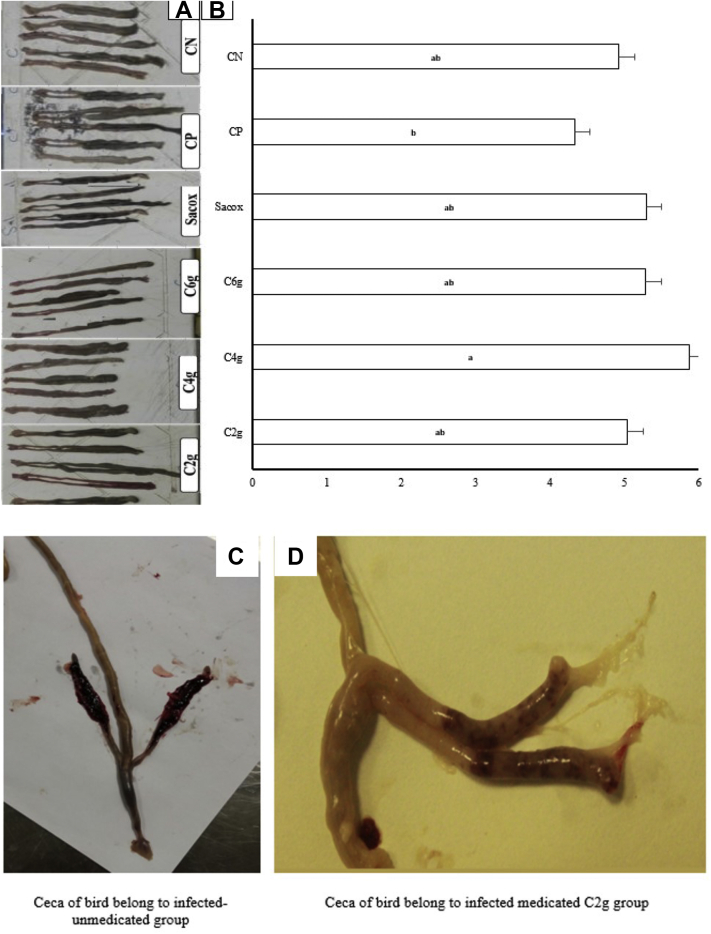
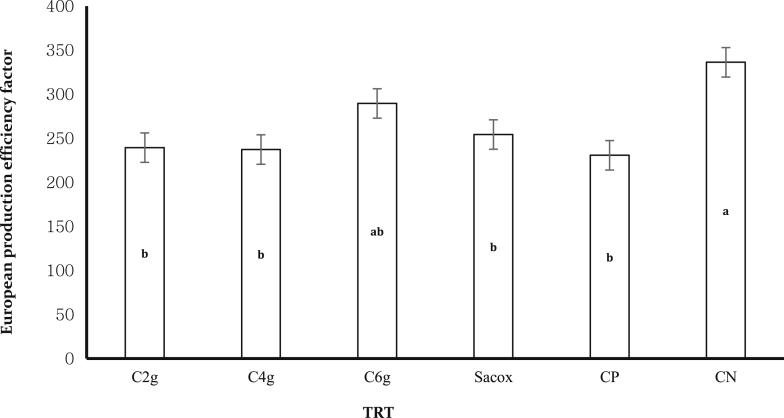
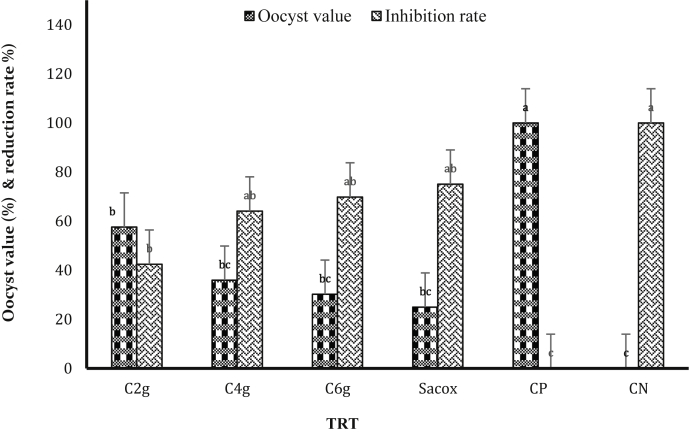
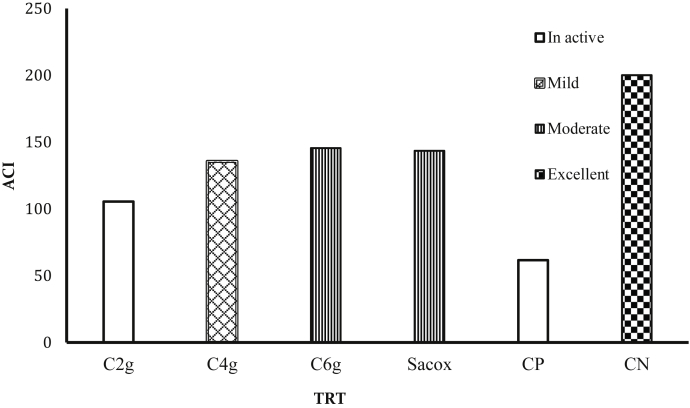
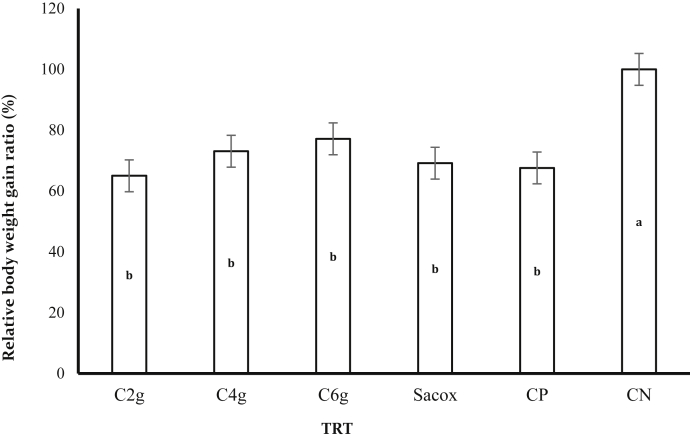
The anticoccidial influences of various amounts of Cinnamomum verum powder were compared with that of salinomycin as standard synthetic anticoccidial drug on the anticoccidial indicators and production performance in broilers experimentally exposed to coccidiosis. Broiler chicks at 1 d of age (n = 150) were arbitrarily distributed into 6 groups. Birds from groups 1-3 were received the starter and finisher diets plus 2, 4, and 6 g of cinnamon/kg of the diet, respectively. Birds from group 4 were fed the starter and finisher diets plus 66 mg of salinomycin, group 5 constituted the positive control (PC), with the coccidial challenge, and group 6 constituted the negative control (NC), without the coccidial infection, which were both maintained on diets without any cinnamon. The results showed that BW gain, feed conversion ratio, and production efficiency factor declined considerably (P < 0.05) in the PC compared with the NC. At seventh day postinfection (DPI), the lesion score was significantly (P < 0.05) lower in the ceca of salinomycin-treated birds than the PC. The anticoccidial index was moderate in the chickens treated with salinomycin and 6 g cinnamon at 7 DPI compared with those in the PC group. In addition, cinnamon- or salinomycin-treated birds exhibited lower oocyst values and higher oocyst reduction rate than those in the PC. We concluded that C. verum at level 6 g cinnamon/kg diet moderately reduced coccidiosis and attempted to improved BW, feed conversion ratio, and production efficiency at 7 DPI compared with the infected groups.
将不同剂量的肉桂粉与作为标准合成抗球虫药的盐霉素进行比较,观察它们对实验性感染球虫的肉鸡的抗球虫指标和生产性能的影响。1 日龄肉鸡(n=150)被任意分为 6 组。第 1-3 组的鸡分别接受基础日粮和育成日粮,同时添加 2、4 和 6 g 肉桂/千克日粮。第 4 组的鸡接受基础日粮和育成日粮,同时添加 66 mg 盐霉素,第 5 组为阳性对照组(PC),进行球虫攻毒,第 6 组为阴性对照组(NC),不进行球虫感染,两组均使用不含肉桂的日粮。结果表明,与 NC 相比,PC 组的 BW 增重、饲料转化率和生产效率系数显著降低(P<0.05)。感染后第 7 天(DPI),盐霉素处理组的盲肠病变评分显著低于 PC 组(P<0.05)。在 7 DPI 时,与 PC 组相比,盐霉素和 6 g 肉桂处理组的抗球虫指数适中。此外,肉桂或盐霉素处理组的卵囊值低于 PC 组,卵囊减少率高于 PC 组。我们得出结论,日粮中添加 6 g 肉桂/千克可适度减轻球虫病,与感染组相比,在 7 DPI 时可提高 BW、饲料转化率和生产效率。