Guelph Research and Development Centre, Agriculture and Agri-Food Canada, 93 Stone Road West, Guelph, Ontario, Canada N1G 5C9; Department of Animal Science, University of Manitoba, Winnipeg, Manitoba, Canada R3T 2N2.
Centre de recherche en sciences animales de Deschambault, Deschambault, 120-A, chemin du Roy, Canada QC G0A 1S0.
Poult Sci. 2020 Feb;99(2):936-948. doi: 10.1016/j.psj.2019.10.036. Epub 2019 Dec 4.
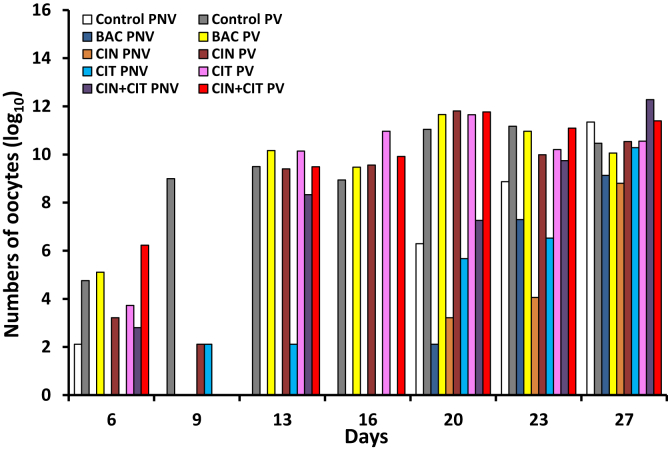
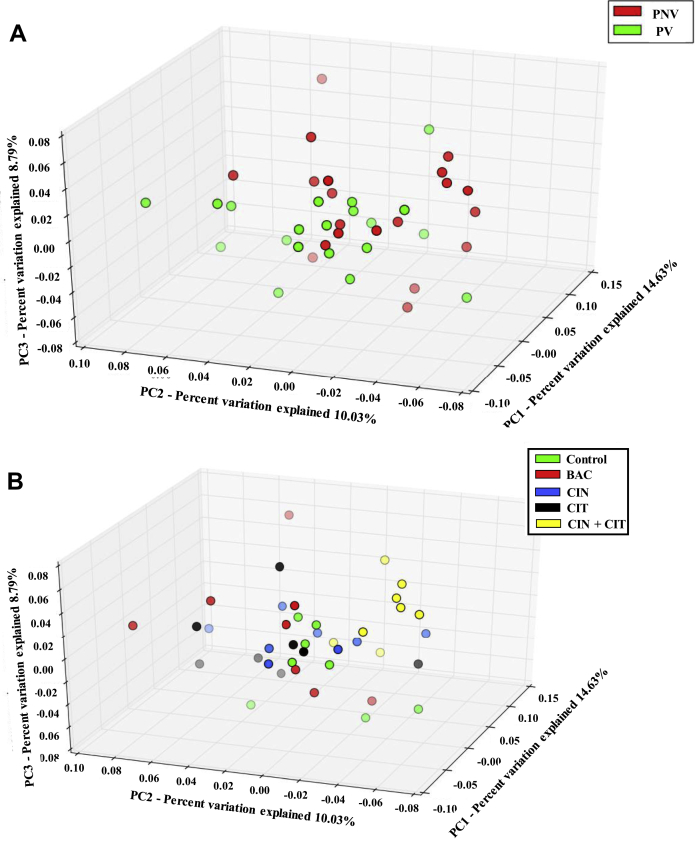
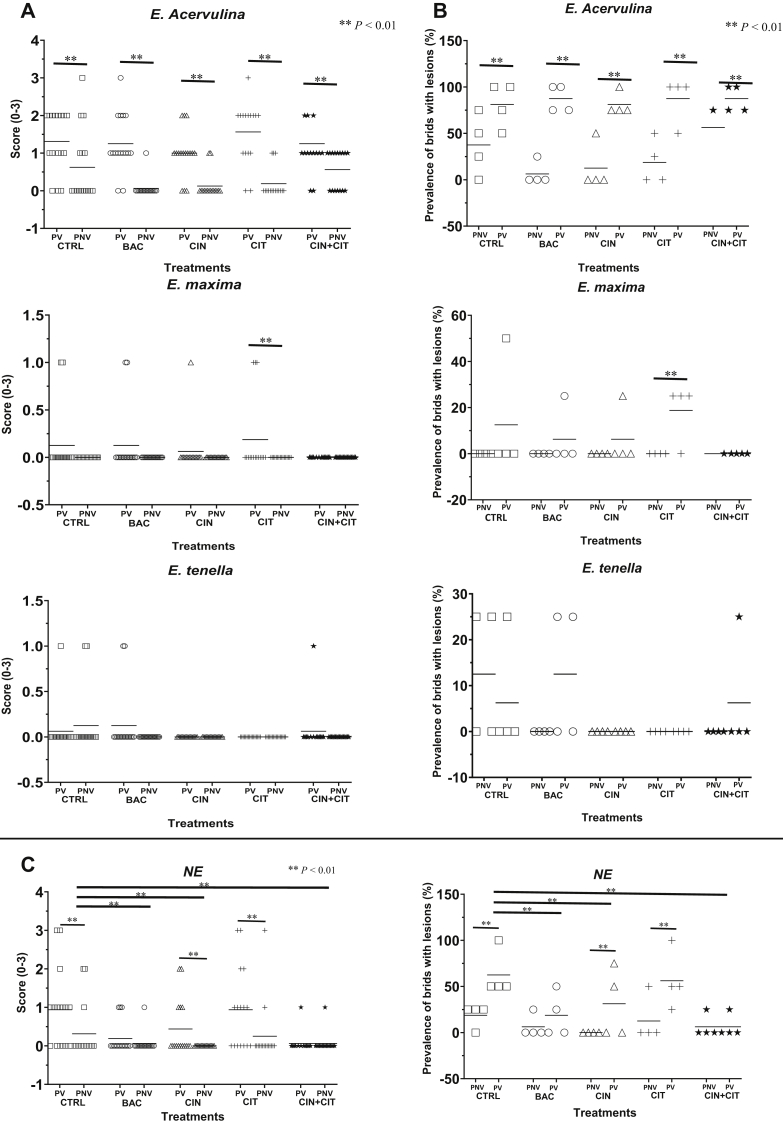
This study investigated the effects of encapsulated cinnamaldehyde (CIN) and citral (CIT) alone or in combination (CIN + CIT) on the growth performance and cecal microbiota of nonvaccinated broilers and broilers vaccinated against coccidiosis. Vaccinated (1,600) and nonvaccinated (1,600) 0-day-old male Cobb500 broilers were randomly allocated to 5 treatments: basal diet (control) and basal diet supplemented with bacitracin (BAC, 55 ppm), CIN (100 ppm), CIT (100 ppm), and CIN (100 ppm) + CIT (100 ppm). In general, body weight (BW) and feed conversion ratio were significantly improved in birds treated with BAC, CIN, CIT, and CIN + CIT (P < 0.05) but were all decreased in vaccinated birds compared with nonvaccinated birds (P < 0.05). Significant interactions (P < 0.05) between vaccination and treatments for average daily gain during the periods of starter (day 0-9) and BW on day 10 were noted. Broilers receiving vaccines (P < 0.01) or feed supplemented with BAC, CIN, CIT, or CIN + CIT (P < 0.01) showed reductions in mortality rate from day 0 to 28. The incidences of minor coccidiosis were higher (P < 0.05) in vaccinated birds than in nonvaccinated birds. Diet supplementation with BAC or tested encapsulated essential oils showed comparable effects on the coccidiosis incidences. Similar to BAC, CIN and its combination with CIT reduced both incidence and severity of necrotic enteritis (P < 0.05). No treatment effects were observed on the cecal microbiota at the phyla level. At the genus level, significant differences between vaccination and treatment groups were observed for 5 (Lactobacillus, Ruminococcus, Faecalibacterium, Enterococcus, and Clostridium) of 40 detected genera (P < 0.05). The genus Lactobacillus was more abundant in broilers fed with CIT, while Clostridium and Enterococcus were less abundant in broilers fed with CIN, CIT, or CIN + CIT in both the vaccinated and nonvaccinated groups. Results from this study suggested that CIN alone or in combination with CIT in feed could improve chicken growth performance to the level comparable with BAC and alter cecal microbiota composition.
本研究旨在探讨包被肉桂醛(CIN)和柠檬醛(CIT)单独或联合(CIN + CIT)对未接种和接种球虫疫苗肉鸡生长性能和盲肠微生物群的影响。将 0 日龄雄性科布 500 只肉鸡随机分为 5 个处理组:基础日粮(对照)和基础日粮添加杆菌肽(BAC,55 ppm)、CIN(100 ppm)、CIT(100 ppm)和 CIN(100 ppm)+ CIT(100 ppm)。一般来说,BAC、CIN、CIT 和 CIN + CIT 处理组的体重(BW)和饲料转化率均显著提高(P < 0.05),但与未接种疫苗的肉鸡相比,接种疫苗的肉鸡 BW 均降低(P < 0.05)。在育雏期(第 0-9 天)和第 10 天 BW 的平均日增重以及接种和处理之间存在显著的相互作用(P < 0.05)。从第 0 天到第 28 天,接受疫苗(P < 0.01)或用 BAC、CIN、CIT 或 CIN + CIT 补充饲料的肉鸡死亡率降低(P < 0.01)。接种疫苗的肉鸡的小范围球虫病发病率较高(P < 0.05),而非接种疫苗的肉鸡发病率较低。与 BAC 一样,CIN 及其与 CIT 的组合降低了球虫病的发病率和严重程度(P < 0.05)。在门水平上,日粮补充剂对盲肠微生物群没有影响。在属水平上,接种和处理组之间的 5 个属(乳酸杆菌、瘤胃球菌、粪肠球菌、粪球菌和梭菌)有显著差异(P < 0.05)。在接种和非接种组中,添加 CIT 的肉鸡中乳酸杆菌属更为丰富,而添加 CIN、CIT 或 CIN + CIT 的肉鸡中梭菌属和肠球菌属较少。本研究结果表明,饲料中单独使用 CIN 或与 CIT 联合使用可提高肉鸡的生长性能,使其达到与 BAC 相当的水平,并改变盲肠微生物群的组成。