Hashem Nesrein M, Abdelnour Sameh A, Alhimaidi Ahmad R, Swelum Ayman A
Animal and Fish Production Department, Faculty of Agriculture (El-Shatby), Alexandria University, Alexandria 21545, Egypt.
Department of Animal Production, Faculty of Agriculture, Zagazig University, Zagazig 44511, Egypt.
Saudi J Biol Sci. 2021 Mar;28(3):1702-1712. doi: 10.1016/j.sjbs.2020.12.012. Epub 2020 Dec 15.
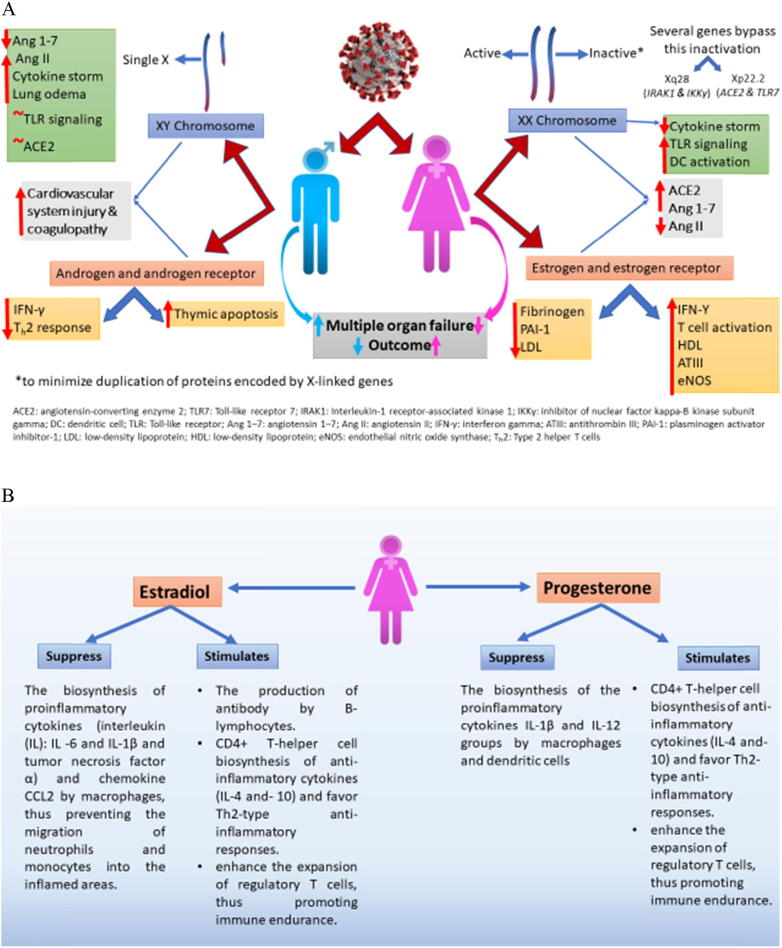
COVID-19 virus is classified as a respiratory disease that can be mainly transmitted via respiratory droplets, however, there are recently published reports suggested its ability to transmit via sexual intercourse, assisted reproductive technology (ART) treatments, pregnancy, and nursing. Although SARS-CoV-2 mainly attacks respiratory systems, manifestations of multiple organs have been detected. A significant concern was raised about whether COVID-19 may affect female and male reproductive functions. These findings imposed more restrictions on social relationships between individuals even if inside the family, adding more physiologic load. In this context, there is a crucial need to identify the biological and behavioral reproductive risk factors associated with COVID-19 disease. Questions regarding the potential risks of sexual transmission during intercourse and/or application of ART, vertical transmission (throughout pregnancy, delivery, and breastfeeding), the health of pregnant and postpartum women, and fetal or postnatal health problems of neonates/children remain largely unanswered. The contribution of individuals to different social and economic activities depends on the maintenance of good quality life and health. The ongoing COVID-19 pandemic raised on the end of December 2019 has drastically affected different aspects of human wellbeing. The pandemic not only affected the health of individuals, but also negatively affected mental health and social interaction. This review illustrates: a) scientific findings related to the impact of the COVID-19 pandemic on the reproductive process, considering gender, hormonal balance, gonad functions, pregnancy, and ART, b) the sociosexual dimension of COVID-19 disease and precautions that should be taken to avoid infection via sexual transmission or vertical transmission, which may alleviate the fear associated with continuing normal social relationships and economic activities.
新冠病毒被归类为一种呼吸系统疾病,主要通过呼吸道飞沫传播,然而,最近有报道称其可通过性行为、辅助生殖技术(ART)治疗、妊娠和哺乳传播。虽然严重急性呼吸综合征冠状病毒2(SARS-CoV-2)主要攻击呼吸系统,但已检测到多器官的表现。人们对新冠病毒是否会影响男性和女性生殖功能提出了重大担忧。这些发现对个体之间的社会关系施加了更多限制,即使是在家庭内部,也增加了更多生理负担。在这种背景下,迫切需要确定与新冠病毒疾病相关的生物学和行为生殖风险因素。关于性交和/或ART应用期间性传播的潜在风险、垂直传播(整个孕期、分娩和母乳喂养期间)、孕妇和产后妇女的健康以及新生儿/儿童的胎儿或产后健康问题,仍有许多问题未得到解答。个体对不同社会和经济活动的贡献取决于高质量生活和健康的维持。2019年12月底爆发的新冠疫情极大地影响了人类福祉的各个方面。这场疫情不仅影响了个体的健康,还对心理健康和社会互动产生了负面影响。本综述阐述了:a)与新冠疫情对生殖过程的影响相关的科学发现,包括性别、激素平衡、性腺功能、妊娠和ART;b)新冠病毒疾病的社会性别维度以及为避免通过性传播或垂直传播感染而应采取的预防措施,这可能减轻与继续正常社会关系和经济活动相关的恐惧。