Condor Capcha Jose Manuel, Lambert Guerline, Dykxhoorn Derek M, Salerno Alessandro G, Hare Joshua M, Whitt Michael A, Pahwa Savita, Jayaweera Dushyantha T, Shehadeh Lina A
Division of Cardiology, Department of Medicine, University of Miami Leonard M. Miller School of Medicine, Miami, FL, United States.
Interdisciplinary Stem Cell Institute, University of Miami Leonard M. Miller School of Medicine, Miami, FL, United States.
Front Cardiovasc Med. 2021 Jan 15;7:618651. doi: 10.3389/fcvm.2020.618651. eCollection 2020.
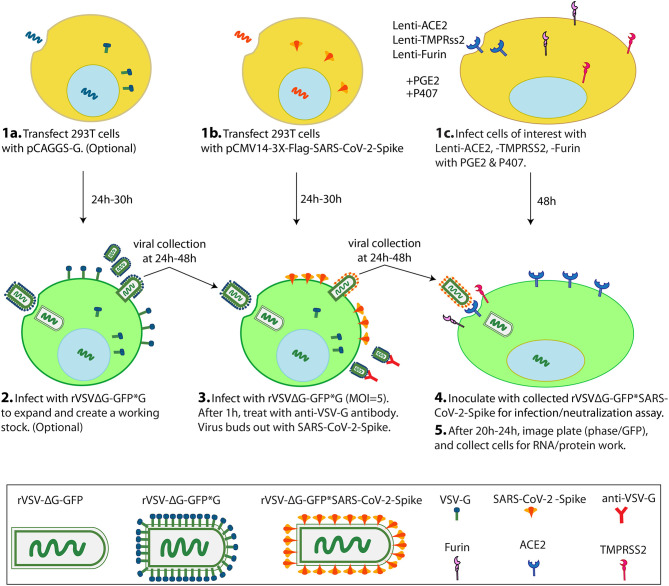
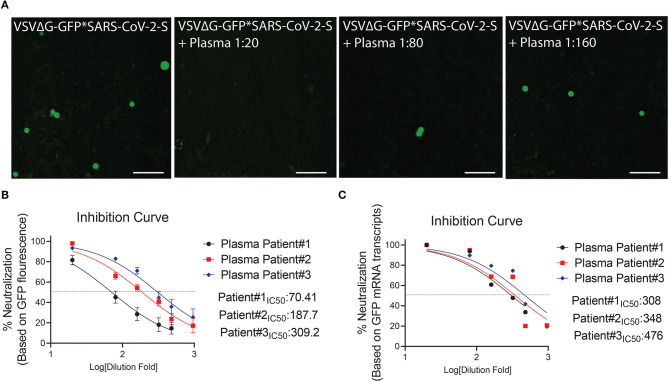
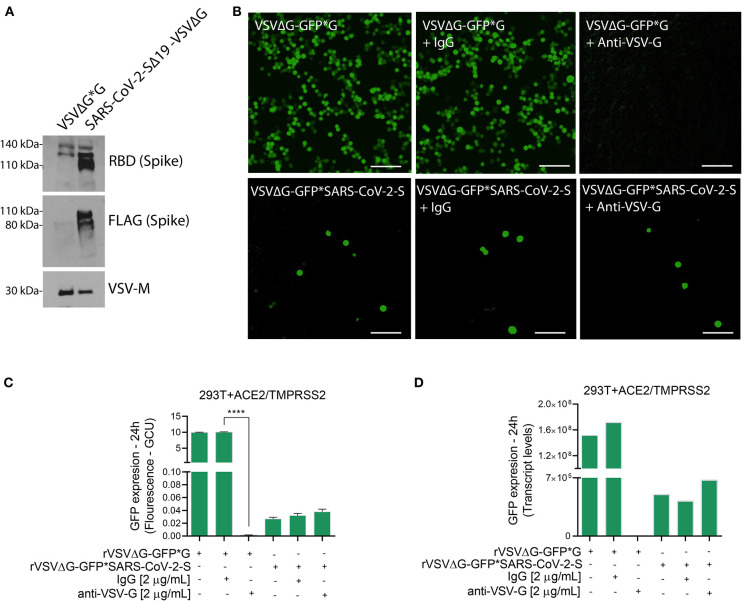
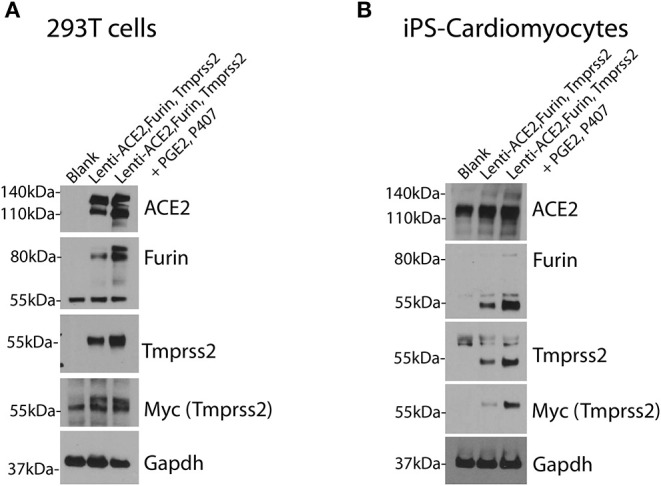
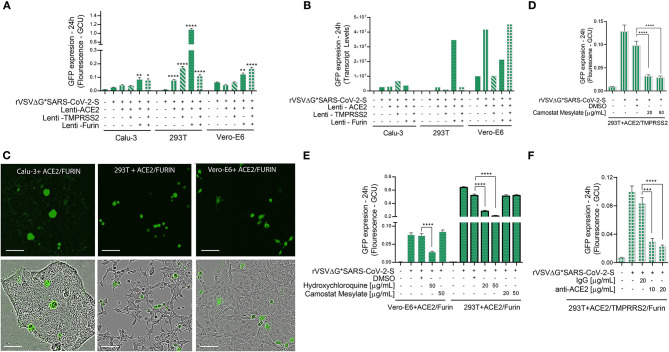
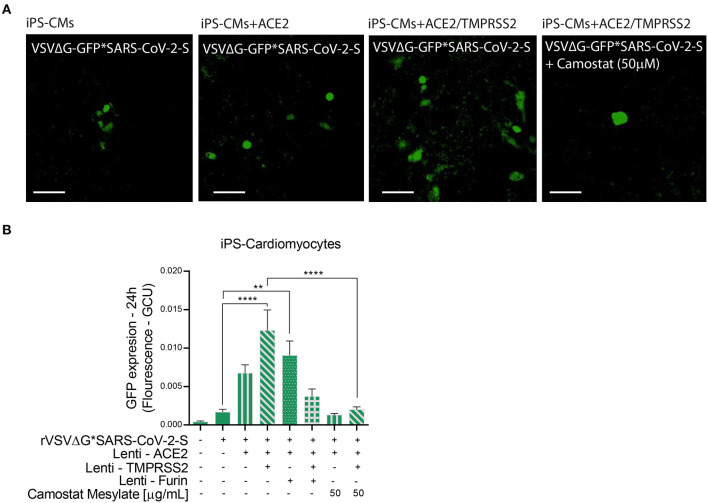
The COVID-19 pandemic caused by the SARS-CoV-2 coronavirus requires reliable assays for studying viral entry mechanisms which remains poorly understood. This knowledge is important for the development of therapeutic approaches to control SARS-CoV-2 infection by permitting the screening for neutralizing antibodies and other agents that can block infection. This is particularly important for patients who are at high risk for severe outcomes related to COVID-19. The production of pseudotyped viral particles may seem like a daunting task for a non-virology laboratory without experience in the two most commonly used pseudotyping systems, namely retro/lentiviruses and vesicular stomatitis virus (VSV) which lacks the VSV envelope glycoprotein (VSVΔG). By incorporating the most up-to-date knowledge, we have developed a detailed, easy-to-follow novel protocol for producing SARS-CoV-2 spike-bearing pseudovirus using the VSV-ΔG system. We describe the infection assay which uses GFP fluorescence as a measure of infection in a 24-well live imaging system. We present results of our optimization of the system to enhance viral infection levels through the over-expression of human ACE2 receptor and the overexpression of at least one of two proteases - TMPRSS2 or Furin, as well as, supplementation with Poloxamer 407 (P407) and Prostaglandin E2 (PGE2) as adjuvants. We show that the system works efficiently in three unrelated, clinically relevant cell lines: human 293T (renal epithelial) cells, human Calu-3 (lung epithelial) cells, and the non-human primate (African Green Monkey) cell line, Vero-E6 (renal epithelial) cells. In addition, we have used this system to show infection of human induced pluripotent stem cell-derived cardiomyocytes (iPS-CMs). This system is efficient (virus generation, titration, and infection assays can be performed in 1 week), quantitative, inexpensive, and readily scalable for application in drug development and therapeutic screening approaches.
由严重急性呼吸综合征冠状病毒 2(SARS-CoV-2)引起的 COVID-19 大流行需要可靠的检测方法来研究病毒进入机制,而目前对该机制的了解仍很有限。这些知识对于开发控制 SARS-CoV-2 感染的治疗方法很重要,因为它可以用于筛选中和抗体和其他能够阻断感染的药物。这对于 COVID-19 相关严重后果高风险患者尤为重要。对于没有两种最常用假型化系统经验的非病毒学实验室来说,生产假型病毒颗粒似乎是一项艰巨的任务,这两种系统分别是逆转录/慢病毒系统和缺乏水泡性口炎病毒包膜糖蛋白(VSVΔG)的水泡性口炎病毒(VSV)系统。通过纳入最新知识,我们开发了一种详细的、易于遵循的新颖方案,用于使用 VSV-ΔG 系统生产携带 SARS-CoV-2 刺突蛋白的假病毒。我们描述了感染检测方法,该方法在 24 孔实时成像系统中使用 GFP 荧光作为感染的衡量指标。我们展示了通过过表达人血管紧张素转换酶 2(ACE2)受体以及两种蛋白酶(跨膜丝氨酸蛋白酶 2(TMPRSS2)或弗林蛋白酶(Furin))中的至少一种,以及补充泊洛沙姆 407(P407)和前列腺素 E2(PGE2)作为佐剂来优化系统以提高病毒感染水平的结果。我们表明该系统在三种不相关的、临床相关的细胞系中有效运作:人 293T(肾上皮)细胞、人 Calu-3(肺上皮)细胞和非人类灵长类动物(非洲绿猴)细胞系 Vero-E6(肾上皮)细胞。此外,我们使用该系统展示了人诱导多能干细胞衍生的心肌细胞(iPS-CMs)的感染情况。该系统高效(病毒生成、滴定和感染检测可在 1 周内完成)、定量、廉价且易于扩展,可应用于药物开发和治疗筛选方法。