• 文献检索
  • 文档翻译
  • 深度研究
  • 学术资讯
  • Suppr Zotero 插件Zotero 插件
  • 邀请有礼
  • 套餐&价格
  • 历史记录
应用&插件
Suppr Zotero 插件Zotero 插件浏览器插件Mac 客户端Windows 客户端微信小程序
定价
高级版会员购买积分包购买API积分包
服务
文献检索文档翻译深度研究API 文档MCP 服务
关于我们
关于 Suppr公司介绍联系我们用户协议隐私条款
关注我们

Suppr 超能文献

核心技术专利:CN118964589B侵权必究
粤ICP备2023148730 号-1Suppr @ 2026

文献检索

告别复杂PubMed语法,用中文像聊天一样搜索,搜遍4000万医学文献。AI智能推荐,让科研检索更轻松。

立即免费搜索

文件翻译

保留排版,准确专业,支持PDF/Word/PPT等文件格式,支持 12+语言互译。

免费翻译文档

深度研究

AI帮你快速写综述,25分钟生成高质量综述,智能提取关键信息,辅助科研写作。

立即免费体验

青少年和成人注意缺陷多动障碍中类似结构脑异常的证据:机器学习分析。

Evidence for similar structural brain anomalies in youth and adult attention-deficit/hyperactivity disorder: a machine learning analysis.

机构信息

Department of Psychiatry and Behavioral Sciences, SUNY Upstate Medical University, Syracuse, NY, USA.

Department of Psychology, Syracuse University, Syracuse, NY, USA.

出版信息

Transl Psychiatry. 2021 Feb 1;11(1):82. doi: 10.1038/s41398-021-01201-4.

DOI:10.1038/s41398-021-01201-4
PMID:33526765
原文链接:https://pmc.ncbi.nlm.nih.gov/articles/PMC7851168/
Abstract

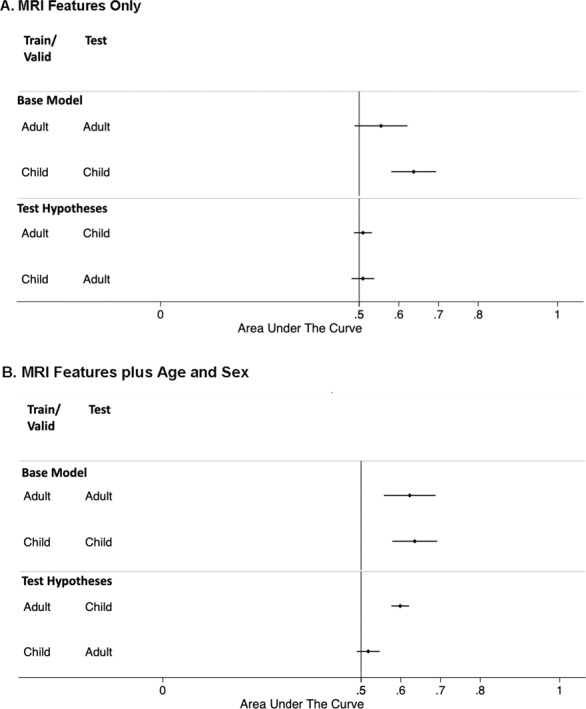
Attention-deficit/hyperactivity disorder (ADHD) affects 5% of children world-wide. Of these, two-thirds continue to have impairing symptoms of ADHD into adulthood. Although a large literature implicates structural brain differences of the disorder, it is not clear if adults with ADHD have similar neuroanatomical differences as those seen in children with recent reports from the large ENIGMA-ADHD consortium finding structural differences for children but not for adults. This paper uses deep learning neural network classification models to determine if there are neuroanatomical changes in the brains of children with ADHD that are also observed for adult ADHD, and vice versa. We found that structural MRI data can significantly separate ADHD from control participants for both children and adults. Consistent with the prior reports from ENIGMA-ADHD, prediction performance and effect sizes were better for the child than the adult samples. The model trained on adult samples significantly predicted ADHD in the child sample, suggesting that our model learned anatomical features that are common to ADHD in childhood and adulthood. These results support the continuity of ADHD's brain differences from childhood to adulthood. In addition, our work demonstrates a novel use of neural network classification models to test hypotheses about developmental continuity.

摘要

注意缺陷多动障碍(ADHD)影响全球 5%的儿童。其中,三分之二的儿童在成年后仍持续存在 ADHD 损害症状。尽管大量文献表明该疾病存在大脑结构差异,但尚不清楚 ADHD 成人是否具有与近期来自大型 ENIGMA-ADHD 联盟的报告中所见相似的神经解剖学差异,该报告发现 ADHD 儿童存在结构差异,但 ADHD 成人则没有。本文使用深度学习神经网络分类模型来确定 ADHD 儿童的大脑中是否存在与 ADHD 成人相同的神经解剖学变化,反之亦然。我们发现,结构 MRI 数据可以显著区分 ADHD 儿童和对照组参与者,无论是儿童还是成人。与 ENIGMA-ADHD 的先前报告一致,儿童样本的预测性能和效应量优于成人样本。在儿童样本中,在成人样本上训练的模型可以显著预测 ADHD,这表明我们的模型学习到了 ADHD 在儿童期和成年期共有的解剖学特征。这些结果支持 ADHD 从儿童期到成年期大脑差异的连续性。此外,我们的工作还展示了神经网络分类模型在测试关于发育连续性的假设方面的一种新应用。
https://cdn.ncbi.nlm.nih.gov/pmc/blobs/69ea/7851168/cd3b65d60b28/41398_2021_1201_Fig1_HTML.jpg

相似文献

1
Evidence for similar structural brain anomalies in youth and adult attention-deficit/hyperactivity disorder: a machine learning analysis.青少年和成人注意缺陷多动障碍中类似结构脑异常的证据:机器学习分析。
Transl Psychiatry. 2021 Feb 1;11(1):82. doi: 10.1038/s41398-021-01201-4.
2
Machine Learning Techniques for the Diagnosis of Attention-Deficit/Hyperactivity Disorder from Magnetic Resonance Imaging: A Concise Review.机器学习技术在磁共振成像中对注意缺陷多动障碍的诊断:简明综述。
Neurol India. 2021 Nov-Dec;69(6):1518-1523. doi: 10.4103/0028-3886.333520.
3
Analysis of structural brain asymmetries in attention-deficit/hyperactivity disorder in 39 datasets.分析 39 个数据集注意力缺陷/多动障碍的大脑结构不对称。
J Child Psychol Psychiatry. 2021 Oct;62(10):1202-1219. doi: 10.1111/jcpp.13396. Epub 2021 Mar 22.
4
Predicting clinical symptoms of attention deficit hyperactivity disorder based on temporal patterns between and within intrinsic connectivity networks.基于内在连通性网络之间和内部的时间模式预测注意缺陷多动障碍的临床症状。
Neuroscience. 2017 Oct 24;362:60-69. doi: 10.1016/j.neuroscience.2017.08.038. Epub 2017 Aug 24.
5
Genetic diversity of Attention-Deficit/Hyperactivity Disorder.注意缺陷多动障碍的遗传多样性。
Pak J Biol Sci. 2021 Jan;24(8):913-919. doi: 10.3923/pjbs.2021.913.919.
6
BrainNET: Inference of Brain Network Topology Using Machine Learning.脑网络:使用机器学习推断脑网络拓扑结构。
Brain Connect. 2020 Oct;10(8):422-435. doi: 10.1089/brain.2020.0745. Epub 2020 Oct 8.
7
Shared and distinct resting functional connectivity in children and adults with attention-deficit/hyperactivity disorder.注意缺陷多动障碍患儿及成人静息态功能连接的共享与差异。
Transl Psychiatry. 2020 Feb 12;10(1):65. doi: 10.1038/s41398-020-0740-y.
8
Gender Differences in Dynamic Functional Network Connectivity in Pediatric and Adult Patients with Attention-Deficit/Hyperactivity Disorder.性别差异在儿童和成人注意缺陷/多动障碍患者动态功能网络连接中的表现。
Brain Connect. 2023 May;13(4):226-236. doi: 10.1089/brain.2022.0069. Epub 2023 Mar 27.
9
Functional and structural brain network development in children with attention deficit hyperactivity disorder.注意缺陷多动障碍儿童的功能性和结构性脑网络发育。
Hum Brain Mapp. 2023 Jun 1;44(8):3394-3409. doi: 10.1002/hbm.26288. Epub 2023 Mar 29.
10
A review of fronto-striatal and fronto-cortical brain abnormalities in children and adults with Attention Deficit Hyperactivity Disorder (ADHD) and new evidence for dysfunction in adults with ADHD during motivation and attention.注意力缺陷多动障碍(ADHD)儿童和成人的额-纹状体和额-皮质脑异常综述,以及新的证据表明,ADHD 成人在动机和注意力方面存在功能障碍。
Cortex. 2012 Feb;48(2):194-215. doi: 10.1016/j.cortex.2011.04.007. Epub 2011 Apr 27.

引用本文的文献

1
Toward a fair, gender-debiased classifier for the diagnosis of attention deficit/hyperactivity disorder- a Machine-Learning based classification study.迈向用于诊断注意力缺陷/多动障碍的公平、无性别偏见分类器——一项基于机器学习的分类研究。
BMC Med Inform Decis Mak. 2025 Aug 5;25(1):290. doi: 10.1186/s12911-025-03126-0.
2
Artificial intelligence for children with attention deficit/hyperactivity disorder: a scoping review.人工智能在注意力缺陷多动障碍儿童中的应用:一项范围综述。
Exp Biol Med (Maywood). 2025 Apr 24;250:10238. doi: 10.3389/ebm.2025.10238. eCollection 2025.
3
White Matter Microstructural Abnormalities in Children with Familial vs. Non-Familial Attention-Deficit/Hyperactivity Disorder (ADHD).

本文引用的文献

1
Machine Learning and MRI-based Diagnostic Models for ADHD: Are We There Yet?机器学习和基于 MRI 的 ADHD 诊断模型:我们做到了吗?
J Atten Disord. 2023 Feb;27(4):335-353. doi: 10.1177/10870547221146256. Epub 2023 Jan 18.
2
Deep learning for small and big data in psychiatry.精神病学中针对大数据和小数据的深度学习
Neuropsychopharmacology. 2021 Jan;46(1):176-190. doi: 10.1038/s41386-020-0767-z. Epub 2020 Jul 15.
3
Shared genetic background between children and adults with attention deficit/hyperactivity disorder.患有注意力缺陷多动障碍的儿童和成人之间的共同遗传背景。
家族性与非家族性注意力缺陷多动障碍(ADHD)儿童的白质微观结构异常
Biomedicines. 2025 Mar 10;13(3):676. doi: 10.3390/biomedicines13030676.
4
Virtual reality-assisted prediction of adult ADHD based on eye tracking, EEG, actigraphy and behavioral indices: a machine learning analysis of independent training and test samples.基于眼动追踪、脑电图、活动记录仪和行为指标的虚拟现实辅助成人注意力缺陷多动障碍预测:独立训练和测试样本的机器学习分析
Transl Psychiatry. 2024 Dec 31;14(1):508. doi: 10.1038/s41398-024-03217-y.
5
Resting-State Functional Connectivity Predicts Attention Problems in Children: Evidence from the ABCD Study.静息态功能连接可预测儿童的注意力问题:来自青少年大脑认知发展研究(ABCD研究)的证据。
NeuroSci. 2024 Oct 12;5(4):445-461. doi: 10.3390/neurosci5040033. eCollection 2024 Dec.
6
The Utility of Neuromuscular Assessment to Identify ADHD Among Patients with a Complex Symptom Picture.神经肌肉评估在识别复杂症状患者中的 ADHD 中的效用。
J Atten Disord. 2024 Oct;28(12):1577-1588. doi: 10.1177/10870547241273102. Epub 2024 Sep 2.
7
Exploring protocol development: Implementing systematic contextual memory to enhance real-time fMRI neurofeedback.探索协议开发:实施系统性情境记忆以增强实时功能磁共振成像神经反馈。
J Electr Bioimpedance. 2024 May 31;15(1):41-62. doi: 10.2478/joeb-2024-0006. eCollection 2024 Jan.
8
Can we diagnose mental disorders in children? A large-scale assessment of machine learning on structural neuroimaging of 6916 children in the adolescent brain cognitive development study.我们能诊断儿童的精神障碍吗?对青少年大脑认知发展研究中6916名儿童的结构神经影像进行机器学习的大规模评估。
JCPP Adv. 2023 Jun 28;3(4):e12184. doi: 10.1002/jcv2.12184. eCollection 2023 Dec.
9
Predicting individual cases of major adolescent psychiatric conditions with artificial intelligence.人工智能预测青少年主要精神疾病的个体病例。
Transl Psychiatry. 2023 Oct 10;13(1):314. doi: 10.1038/s41398-023-02599-9.
10
Predicting long-term outcome in anorexia nervosa: a machine learning analysis of brain structure at different stages of weight recovery.预测神经性厌食症的长期预后:基于体重恢复不同阶段脑结构的机器学习分析。
Psychol Med. 2023 Dec;53(16):7827-7836. doi: 10.1017/S0033291723001861. Epub 2023 Aug 9.
Neuropsychopharmacology. 2020 Sep;45(10):1617-1626. doi: 10.1038/s41386-020-0664-5. Epub 2020 Apr 12.
4
Recommendations and future directions for supervised machine learning in psychiatry.精神病学中监督机器学习的建议和未来方向。
Transl Psychiatry. 2019 Oct 22;9(1):271. doi: 10.1038/s41398-019-0607-2.
5
Exploring characteristic features of attention-deficit/hyperactivity disorder: findings from multi-modal MRI and candidate genetic data.探索注意缺陷多动障碍的特征:多模态 MRI 和候选遗传数据的发现。
Brain Imaging Behav. 2020 Dec;14(6):2132-2147. doi: 10.1007/s11682-019-00164-x.
6
Brain Imaging of the Cortex in ADHD: A Coordinated Analysis of Large-Scale Clinical and Population-Based Samples.ADHD 大脑皮层的影像学研究:基于大样本临床和人群的综合分析。
Am J Psychiatry. 2019 Jul 1;176(7):531-542. doi: 10.1176/appi.ajp.2019.18091033. Epub 2019 Apr 24.
7
Discovery of the first genome-wide significant risk loci for attention deficit/hyperactivity disorder.发现首个与注意缺陷多动障碍全基因组显著相关的风险位点。
Nat Genet. 2019 Jan;51(1):63-75. doi: 10.1038/s41588-018-0269-7. Epub 2018 Nov 26.
8
Discriminating ADHD From Healthy Controls Using a Novel Feature Selection Method Based on Relative Importance and Ensemble Learning.使用基于相对重要性和集成学习的新型特征选择方法区分注意力缺陷多动障碍与健康对照。
Annu Int Conf IEEE Eng Med Biol Soc. 2018 Jul;2018:4632-4635. doi: 10.1109/EMBC.2018.8513155.
9
Live fast, die young? A review on the developmental trajectories of ADHD across the lifespan.活得快,死得早?ADHD 一生发展轨迹综述。
Eur Neuropsychopharmacol. 2018 Oct;28(10):1059-1088. doi: 10.1016/j.euroneuro.2018.08.001. Epub 2018 Sep 6.
10
Genetics of attention deficit hyperactivity disorder.注意缺陷多动障碍的遗传学。
Mol Psychiatry. 2019 Apr;24(4):562-575. doi: 10.1038/s41380-018-0070-0. Epub 2018 Jun 11.