Skull Base Research Center, Loghman Hakim Hospital, Shahid Beheshti University of Medical Sciences, Tehran, Iran.
Department of Infectious Diseases and Tropical Medicine, Loghman Hakim Hospital, Shahid Beheshti University of Medical Sciences, Tehran, Iran.
J Neurovirol. 2021 Feb;27(1):154-159. doi: 10.1007/s13365-021-00949-1. Epub 2021 Feb 2.
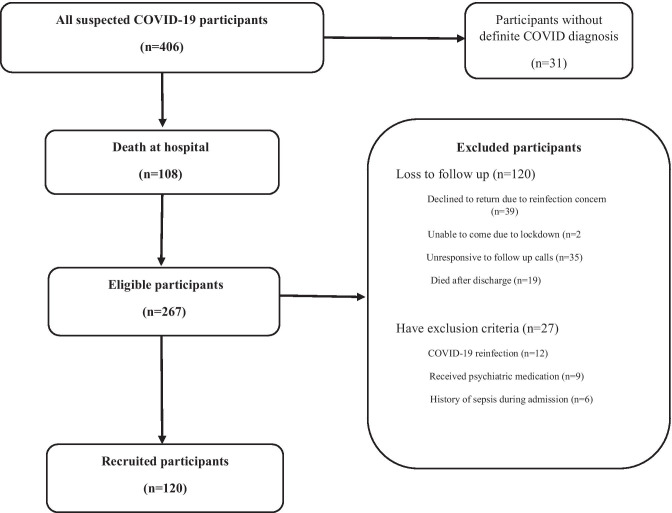
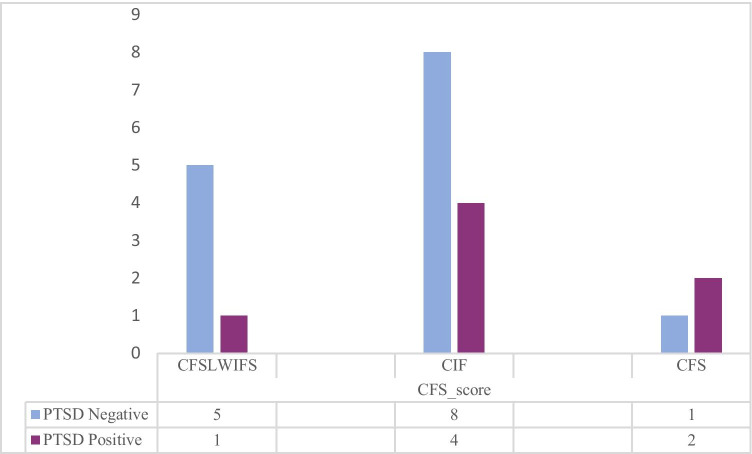
As the SARS-COV-2 becomes a global pandemic, many researchers have a concern about the long COVID-19 complications. Chronic fatigue syndrome/myalgic encephalomyelitis (CFS/ME) is a persistent, debilitating, and unexplained fatigue disorder. We investigated psychological morbidities such as CFS and post-traumatic stress disorder (PTSD) among survivors of COVID-19 over 6 months. All COVID-19 survivors from the university-affiliated hospital of Tehran, Iran, were assessed 6 months after infection onset by a previously validated questionnaire based on the Fukuda guidelines for CFS/EM and DSM-5 Checklist for PTSD (The Post-traumatic Stress Disorder Checklist for DSM-5 or PCL-5) to determine the presence of stress disorder and chronic fatigue problems. A total of 120 patients were enrolled. The prevalence rate of fatigue symptoms was 17.5%. Twelve (10%) screened positive for chronic idiopathic fatigue (CIF), 6 (5%) for CFS-like with insufficient fatigue syndrome (CFSWIFS), and 3 (2.5%) for CFS. The mean total scores in PCL-5 were 9.27 ± 10.76 (range:0-44), and the prevalence rate of PTSD was 5.8%. There was no significant association after adjusting between CFS and PTSD, gender, comorbidities, and chloroquine phosphate administration. The obtained data revealed the prevalence of CFS among patients with COVID-19, which is almost similar to CFS prevalence in the general population. Moreover, PTSD in patients with COVID-19 is not associated with the increased risk of CFS. Our study suggested that medical institutions should pay attention to the psychological consequences of the COVID-19 outbreak.
随着 SARS-CoV-2 成为全球大流行,许多研究人员对 COVID-19 的长期并发症感到担忧。慢性疲劳综合征/肌痛性脑脊髓炎 (CFS/ME) 是一种持续的、使人衰弱的、无法解释的疲劳障碍。我们调查了 COVID-19 幸存者在感染后 6 个月的心理病态,如 CFS 和创伤后应激障碍 (PTSD)。所有来自伊朗德黑兰大学附属医院的 COVID-19 幸存者在感染后 6 个月,通过之前基于福冈 CFS/ME 指南和 DSM-5 PTSD 清单(DSM-5 创伤后应激障碍清单或 PCL-5)验证的问卷进行评估,以确定应激障碍和慢性疲劳问题的存在。共有 120 名患者入组。疲劳症状的患病率为 17.5%。12 人(10%)筛查出慢性特发性疲劳(CIF)阳性,6 人(5%)为 CFS 样伴不足疲劳综合征(CFSWIFS)阳性,3 人(2.5%)为 CFS 阳性。PCL-5 的平均总分是 9.27±10.76(范围:0-44), PTSD 的患病率为 5.8%。在调整 CFS 和 PTSD、性别、合并症和磷酸氯喹给药后,两者之间没有显著关联。获得的数据显示 COVID-19 患者中 CFS 的患病率与一般人群中 CFS 的患病率相似。此外,COVID-19 患者的 PTSD 与 CFS 的风险增加无关。我们的研究表明,医疗机构应关注 COVID-19 爆发带来的心理后果。