Department of Pediatric Neurology, the First Hospital of Jilin University, Changchun, China.
J Int Med Res. 2021 Feb;49(2):300060520984929. doi: 10.1177/0300060520984929.
Paroxysmal tonic upgaze (PTU) is an infantile-onset paroxysmal neurological disorder that is characterized by episodes of sustained conjugate upward eye deviation. The paroxysmal abnormal eye movements need to be differentiated from seizures. We report a case of PTU with occipital discharge on electroencephalography (EEG), which made the diagnosis more complicated.
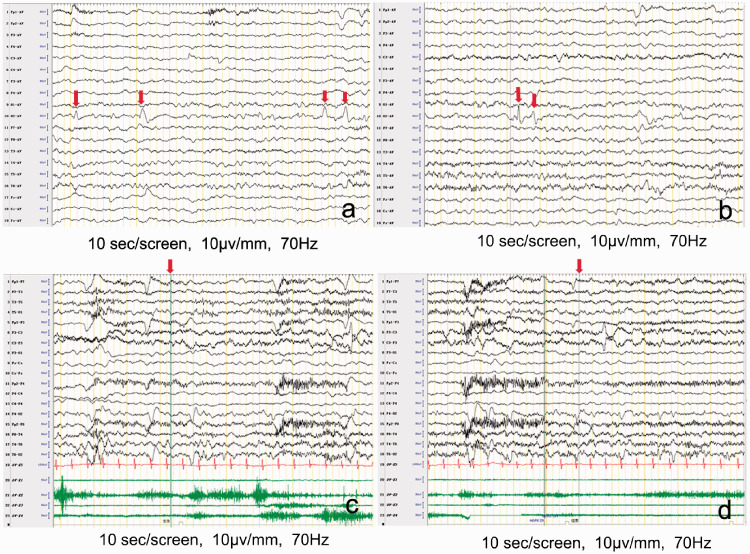
A 6-month-old girl presented with paroxysmal upward deviation or left strabismus of the eyes, with a bowed head, lowered jaw, raised eyebrows, closed lips, and slight grin. Each episode lasted for a few seconds, and episodes occurred multiple times per day. EEG showed spike waves in the right occipital region, and the girl was initially misdiagnosed with epilepsy. After further analysis using video EEG, we corrected her diagnosis as PTU and stopped the administration of an antiepileptic drug.
PTU accompanied by discharge on EEG may lead to a misdiagnosis. Video EEG monitoring, and especially the analysis of EEG traces synchronized with attacks, can provide evidence to distinguish between seizures and non-epileptic events.
阵发性强直上视(PTU)是一种婴儿期起病的阵发性神经障碍,其特征为持续性共轭性上视眼球偏斜。阵发性异常眼球运动需要与癫痫发作相鉴别。我们报告了一例脑电图(EEG)显示枕区放电的 PTU 病例,这使得诊断更加复杂。
一名 6 月龄女孩出现阵发性上视或眼球向左斜视,伴有低头、下颌下垂、眉毛抬高、嘴唇紧闭和轻微咧嘴笑。每次发作持续数秒,每天发作多次。EEG 显示右枕区棘波,女孩最初被误诊为癫痫。进一步使用视频脑电图分析后,我们将其诊断更正为 PTU,并停止使用抗癫痫药物。
伴有 EEG 放电的 PTU 可能导致误诊。视频脑电图监测,特别是与发作同步的 EEG 轨迹分析,可以提供证据,以区分癫痫发作和非癫痫性事件。