Mobarez Ashraf Mohabati, Mostafavi Ehsan, Khalili Mohammad, Esmaeili Saber
Department of Bacteriology, Faculty of Medical Sciences, Tarbiat Modares University, Tehran, Iran.
Department of Epidemiology and Biostatics, Pasteur Institute of Iran, Tehran, Iran.
Int J Microbiol. 2021 Jan 18;2021:6632036. doi: 10.1155/2021/6632036. eCollection 2021.
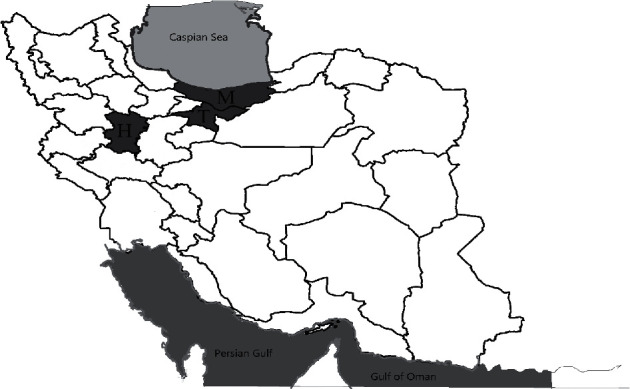
is the causative agent of Q fever in humans and animals. This study aimed to determine the frequency of in milk samples of dairy animals (goats, sheep, and cattle) in some selected regions in Iran, where there is no information about prevalence of . In this study, 162 individual milk samples were collected from 43 farms in three provinces (Tehran, Hamadan, and Mazandaran). Real-time PCR was used for the detection of IS1111a element of . In total, 23 of 162 samples (14.2%, 95% confidence interval (CI): 9.65-20.2%) were positive for by real-time PCR. was detected in 10.17% (95% CI: 4.74-20.46) of goat milk samples. In sheep milk samples, 18.6% (95% CI: 9.74-32.62) were positive, and was detected in 15% (95% CI: 8.1-26.11) of cattle milk samples. Molecular evidence of the presence of was seen in milk samples of dairy animals in all the studied regions. These findings demonstrated that infection, especially in raw milk samples, deserves more attention from the health care system and veterinary organization in Iran.
是人和动物Q热的病原体。本研究旨在确定伊朗一些选定地区奶牛(山羊、绵羊和牛)牛奶样本中的感染频率,这些地区尚无关于感染率的信息。在本研究中,从德黑兰、哈马丹和马赞德兰三省的43个农场采集了162份个体牛奶样本。采用实时荧光定量PCR检测的IS1111a元件。通过实时荧光定量PCR检测,162份样本中共有23份(14.2%,95%置信区间(CI):9.65 - 20.2%)呈阳性。山羊奶样本中检测到感染的比例为10.17%(95% CI:4.74 - 20.46)。绵羊奶样本中18.6%(95% CI:9.74 - 32.62)呈阳性,牛奶样本中15%(95% CI:8.1 - 26.11)检测到感染。在所有研究地区的奶牛牛奶样本中均发现了存在的分子证据。这些发现表明,感染,尤其是生牛奶样本中的感染,值得伊朗医疗保健系统和兽医组织给予更多关注。