Institute of Biochemistry and Biotechnology, University of Veterinary and Animal Sciences, Lahore, Punjab, Pakistan.
Department of Population Medicine and Diagnostic Sciences, College of Veterinary Medicine, Cornell University, Ithaca, New York, United States of America.
PLoS One. 2023 Aug 11;18(8):e0289944. doi: 10.1371/journal.pone.0289944. eCollection 2023.
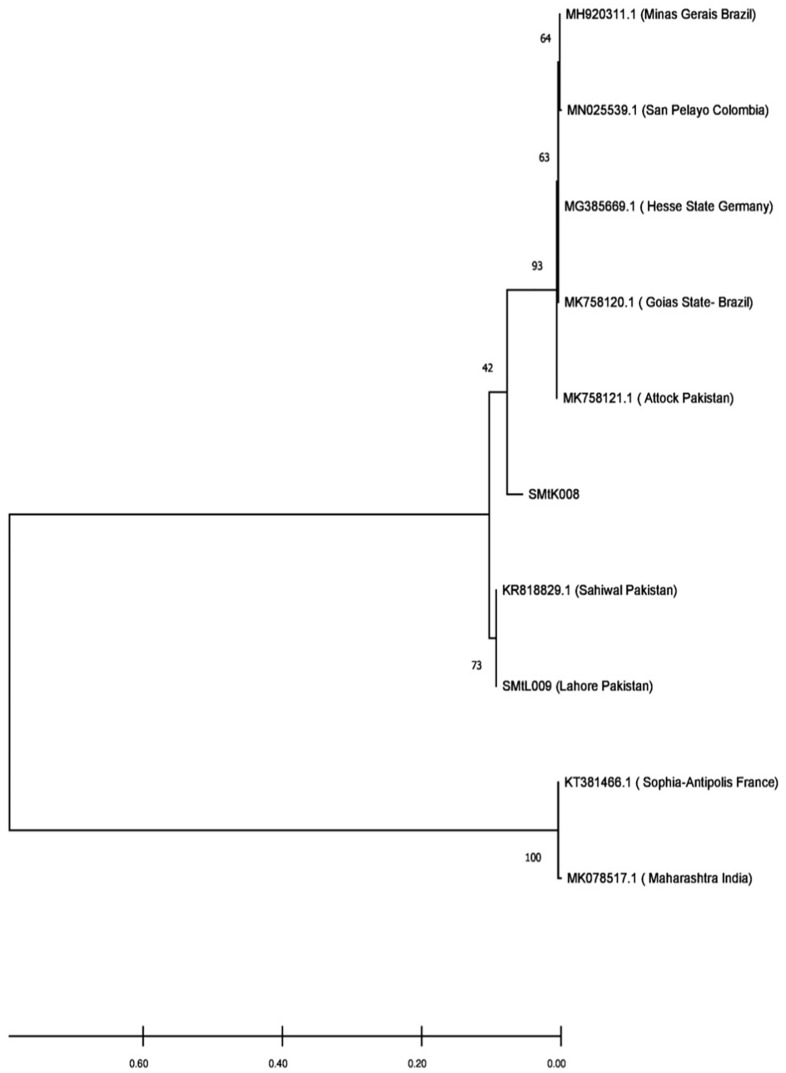
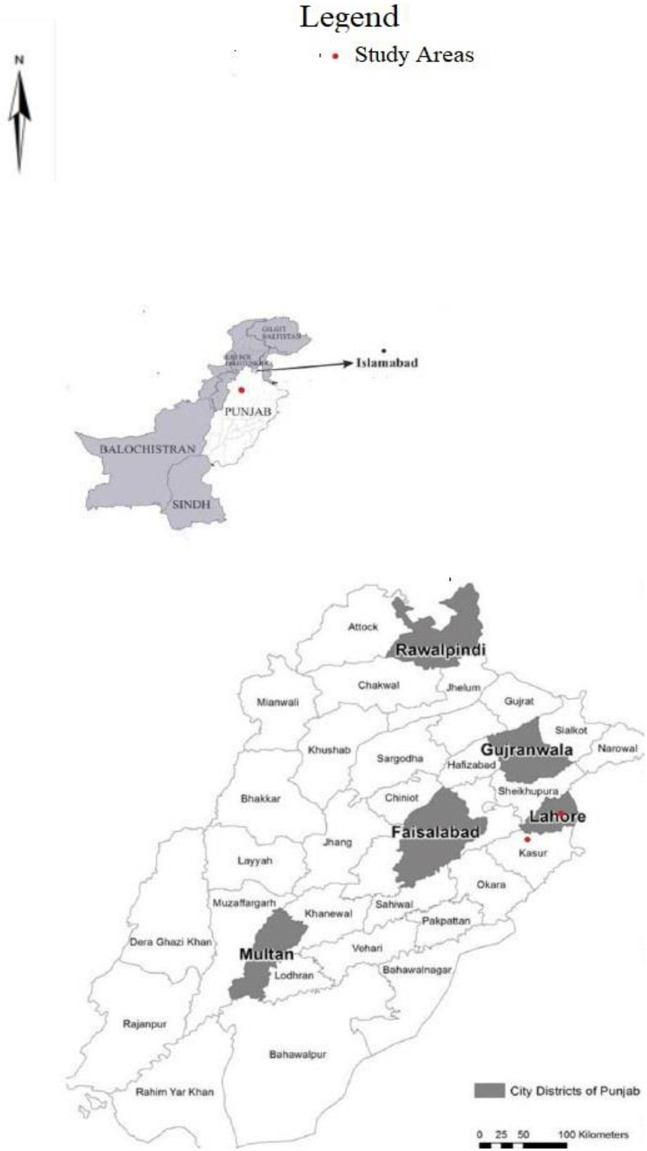
Coxiella burnetii is the zoonotic pathogen that causes Q fever; it is widespread globally. Livestock animals are its main reservoir, and infected animals shed C. burnetii in their birth products, feces, vaginal mucus, urine, tissues, and food obtained from them, i.e., milk and meat. There were previously very few reports on the prevalence of C. burnetii in raw meat. This study aimed to determine the prevalence of C.burnetii and its molecular characterization in raw ruminant meat from the Kasur and Lahore districts in Punjab, Pakistan, as this has not been reported so far. In this study, 200 meat samples, 50 from each species of cattle, buffalo, goat, and sheep, were collected from the slaughterhouses in each district, Kasur and Lahore in 2021 and 2022. PCR was used for the detection of the IS1111 element of C. burnetii. The data were recorded and univariate analysis was performed to determine the frequency of C. burnetii DNA in raw meat samples obtained from different ruminant species using the SAS 9.4 statistical package. Of the total of 200 raw meat samples, C. burnetii DNA was present in 40 (20%) of them, tested by PCR using the IS1111 sequence. The prevalence of C.burnetii differed among the studied species of ruminants. When species were compared pairwise, the prevalence in cattle was statistically significantly lower than in sheep (P = 0.005). The sequence alignment based on origin implied that the strains are genetically diverse in different districts of Punjab, Pakistan. The findings demonstrated that the prevalence of C. burnetii, especially in raw meat samples, deserves more attention from the health care system and professionals from Punjab, Pakistan, i.e., abattoir workers and veterinarians.
贝氏考克斯体是引起 Q 热的人畜共患病病原体;它在全球广泛分布。家畜是其主要宿主,感染动物会在其分娩产物、粪便、阴道黏液、尿液、组织和从其获得的食物(即牛奶和肉类)中排出 C. burnetii。以前关于生肉中 C. burnetii 流行率的报告非常少。本研究旨在确定巴基斯坦旁遮普省卡苏尔和拉合尔地区生反刍动物肉中 C.burnetii 的流行率及其分子特征,因为到目前为止还没有这方面的报告。在这项研究中,从 2021 年和 2022 年每个区的屠宰场收集了 200 个肉样,每个区每种牛、水牛、山羊和绵羊各 50 个。使用 PCR 检测 C. burnetii 的 IS1111 元件。使用 SAS 9.4 统计软件包记录数据并进行单变量分析,以确定从不同反刍动物物种获得的生肉样本中 C. burnetii DNA 的频率。在总共 200 个生肉样本中,使用 IS1111 序列的 PCR 检测到 40 个(20%)样本中存在 C. burnetii DNA。 C.burnetii 的流行率在研究的反刍动物物种之间存在差异。当对物种进行两两比较时,牛中的流行率明显低于绵羊(P=0.005)。基于起源的序列比对表明,在巴基斯坦旁遮普不同地区的菌株在遗传上是多样化的。研究结果表明,C. burnetii 的流行率,尤其是在生肉样本中,值得巴基斯坦旁遮普省的医疗保健系统和专业人员(如屠宰场工人和兽医)更加关注。