Evaluation, Data Integration, and Technical Assistance (EDIT) Program, Institute for Sexual and Gender Minority Health and Wellbeing, Northwestern University, 625 N Michigan Ave #14-043, Chicago, IL, 60611, USA.
Department of Medical Social Sciences, Northwestern University Feinberg School of Medicine, Chicago, IL, USA.
AIDS Behav. 2021 Sep;25(9):2907-2919. doi: 10.1007/s10461-021-03167-2. Epub 2021 Feb 3.
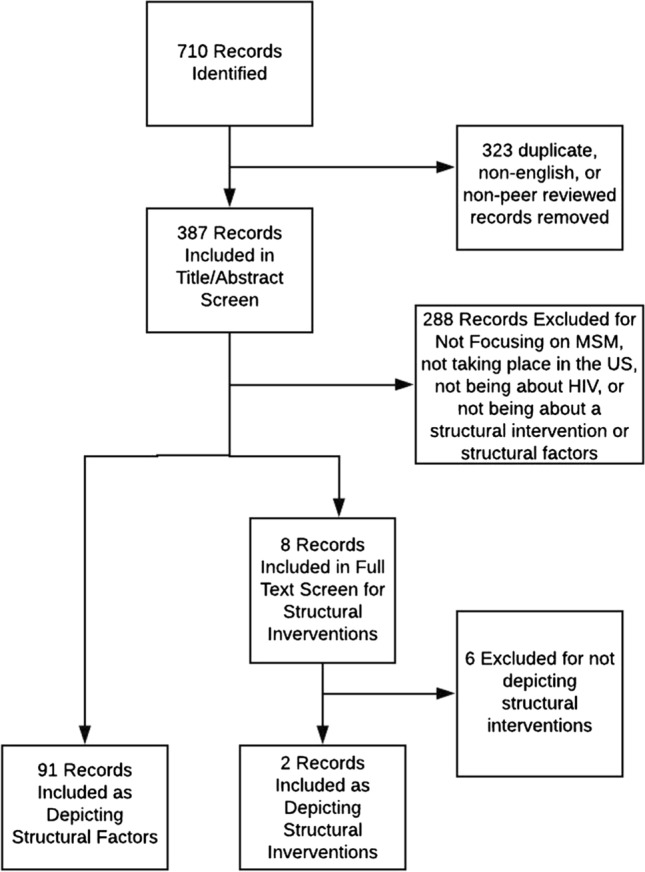
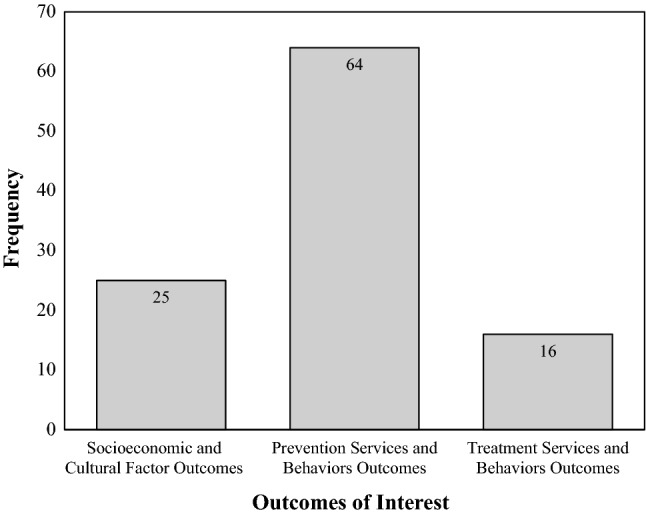
The preponderance of HIV interventions have been behavioral, targeting individual, dyadic, or group dynamics. However, structural-level interventions are required to decrease HIV transmission and increase engagement in care, especially for men who have sex with men (MSM), particularly Black and Latinx MSM. A systematic literature review was conducted to assess the current state of structural interventions; only two studies detailing structural interventions related to HIV for Black and Latinx MSM in the US were identified. An additional 91 studies which discussed structural-level barriers to optimal HIV outcomes among MSM, yet which did not directly evaluate a structural intervention, were also identified. While this paucity of findings was discouraging, it was not unexpected. Results of the systematic review were used to inform guidelines for the implementation and evaluation of structural interventions to address HIV among MSM in the U.S. These include deploying specific interventions for multiply marginalized individuals, prioritizing the deconstruction of structural stigma, and expanding the capacity of researchers to evaluate "natural" policy-level structural interventions through a standardization of methods for rapid evaluative response, and through universal application of sex, sexual orientation, and gender identity demographic measures.
大多数艾滋病毒干预措施都是针对个人、对偶或群体动态的行为措施。然而,需要采取结构性干预措施来减少艾滋病毒传播并增加对治疗的参与,特别是对于男男性行为者(MSM),尤其是黑人男性和拉丁裔男性。进行了系统的文献综述,以评估结构性干预措施的现状;仅确定了两项针对美国黑人男性和拉丁裔 MSM 的与艾滋病毒相关的结构性干预措施的研究。还确定了另外 91 项研究,这些研究讨论了 MSM 中与艾滋病毒相关的最佳结果的结构性障碍,但没有直接评估结构性干预措施。尽管这种研究结果很少令人沮丧,但这并不出人意料。系统评价的结果被用来为在美国解决 MSM 中的艾滋病毒问题的结构性干预措施的实施和评估提供指导。这些措施包括为多重边缘化个人部署具体的干预措施,优先消除结构性耻辱,以及通过标准化快速评估反应的方法和普遍应用性别、性取向和性别认同人口统计措施,扩大研究人员评估“自然”政策层面结构性干预措施的能力。