Deluty Sarah B, Scott Danielle M, Waugh Sabrina C, Martin Veronica K, McCaw Katherine A, Rupert Jessica R, Webb Tracy L, Baumgarn Stacey A, Carpenter Molly J, Duncan Colleen G
College of Veterinary Medicine and Biomedical Sciences, Fort Collins, CO, United States.
Department of Clinical Sciences, College of Veterinary Medicine and Biomedical Sciences, Fort Collins, CO, United States.
Front Vet Sci. 2021 Jan 18;7:622199. doi: 10.3389/fvets.2020.622199. eCollection 2020.
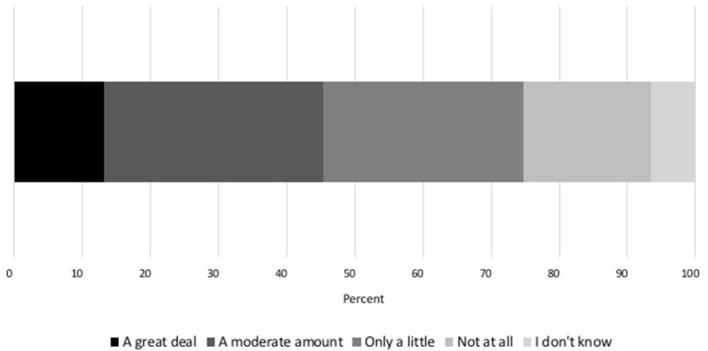
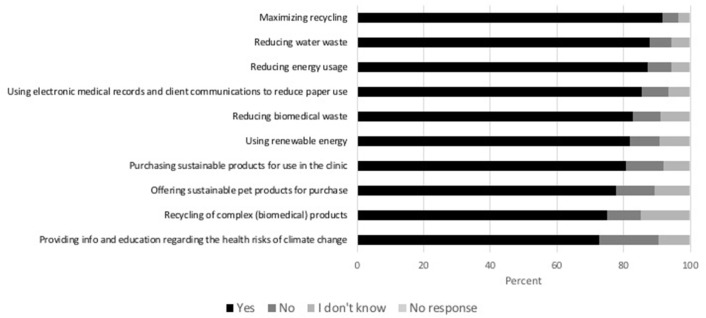
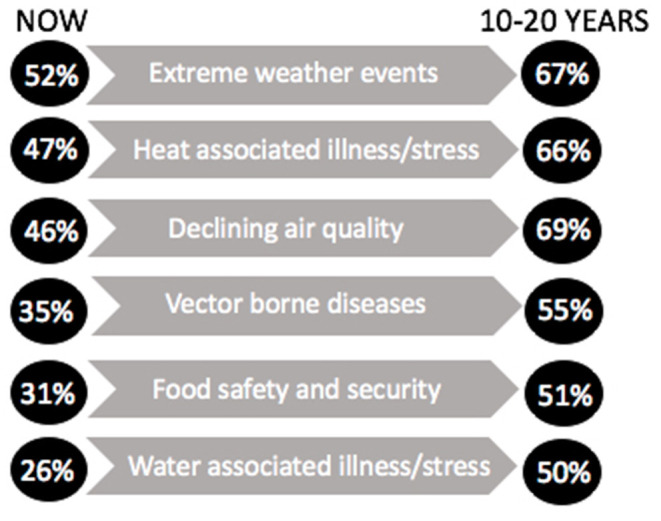
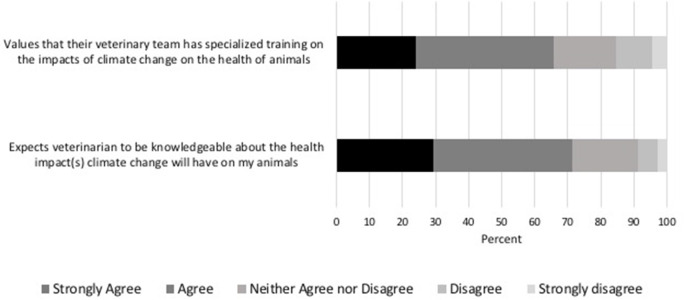
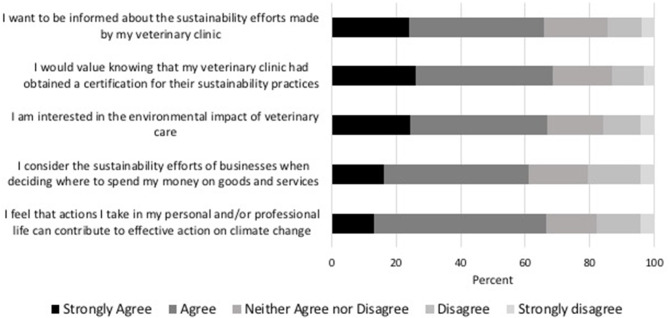
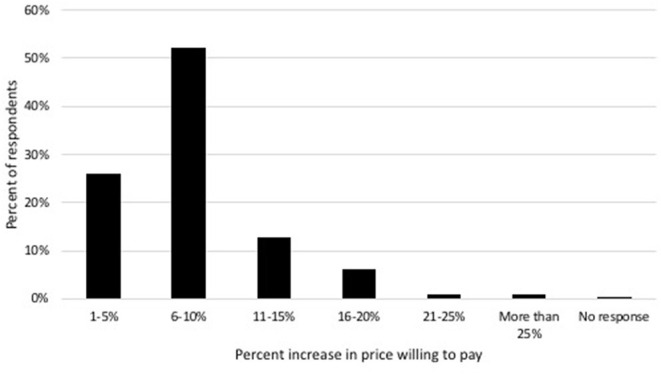
To assess how pet owners perceive the role of veterinary medicine in addressing climate change and animal health and determine if there is a client-driven economic incentive to establish sustainable veterinary business practices. 1,044 dog and/or cat owners residing in the United States who had used veterinary services within the last 3 years. An online Amazon mTurk survey about climate change and the perceived effects on client-owned dogs and cats was distributed to pet owners. Most respondents believe climate change is occurring, and two-thirds of pet owners would value knowing their veterinarian received training on the animal health impacts of climate change. Over half of the respondents would pay more for veterinary services at a clinic with a reduced environmental impact. Additionally, clients would value some form of sustainability certification to aid in identification of such practices. Demographic influences found to be statistically significant included age, political ideology and where one resides (i.e., urban, suburban, or rural) whereas gender and income level, were not found to be significant. Our data suggest there is an economic incentive for veterinary professionals to be knowledgeable about the health impacts of climate change and to implement and market sustainable practice initiatives. Prioritizing sustainable practice initiatives and climate change education in veterinary practices has the potential to mutually benefit both practitioner and client through shared patient health and financial incentives.
评估宠物主人如何看待兽医学在应对气候变化和动物健康方面的作用,并确定是否存在客户驱动的经济激励因素来建立可持续的兽医业务实践。1044名居住在美国且在过去3年内使用过兽医服务的狗和/或猫的主人。向宠物主人发放了一份关于气候变化以及对客户拥有的狗和猫的感知影响的在线亚马逊土耳其机器人调查。大多数受访者认为气候变化正在发生,三分之二的宠物主人会重视了解他们的兽医接受过关于气候变化对动物健康影响的培训。超过一半的受访者愿意为环境影响较小的诊所的兽医服务支付更多费用。此外,客户会重视某种形式的可持续性认证,以帮助识别此类实践。发现具有统计学意义的人口统计学影响因素包括年龄、政治意识形态以及居住地点(即城市、郊区或农村),而性别和收入水平则没有统计学意义。我们的数据表明,兽医专业人员了解气候变化对健康的影响并实施和推广可持续实践倡议存在经济激励因素。在兽医实践中优先考虑可持续实践倡议和气候变化教育有可能通过共同的患者健康和经济激励因素使从业者和客户双方都受益。