School of Human Movement and Nutrition Sciences, University of Queensland, Brisbane, QLD 4072, Australia.
Grains & Legumes Nutrition Council, 1 Rivett Road, North Ryde, NSW 2113, Australia.
Nutrients. 2021 Feb 2;13(2):489. doi: 10.3390/nu13020489.
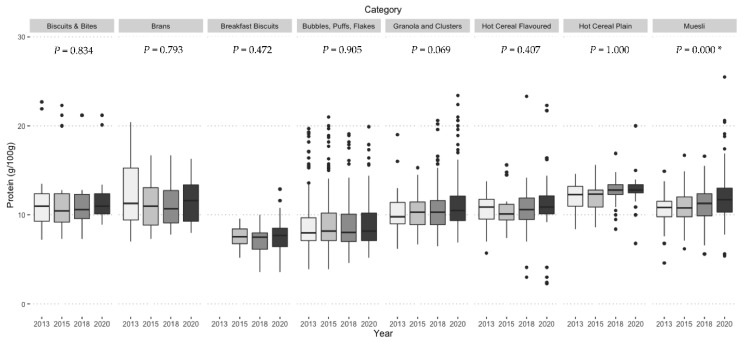
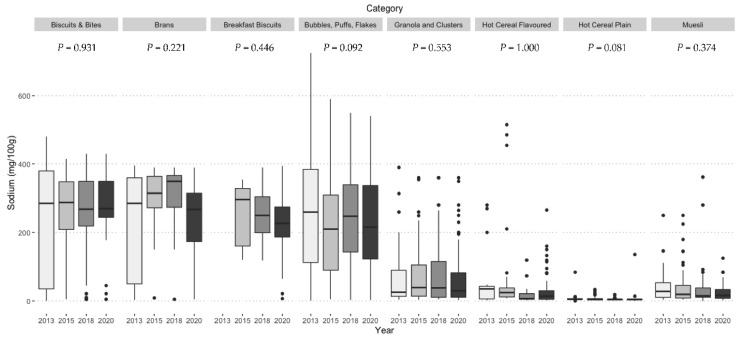
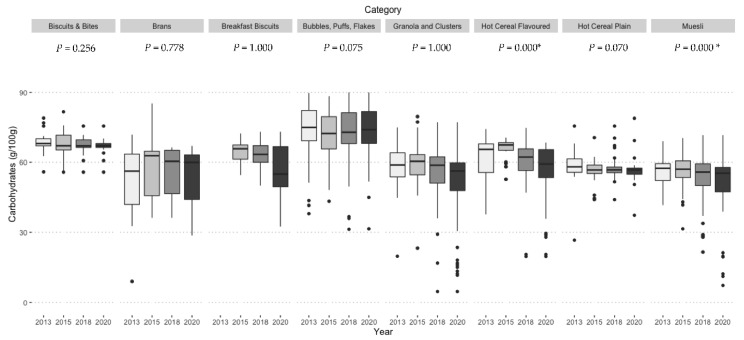
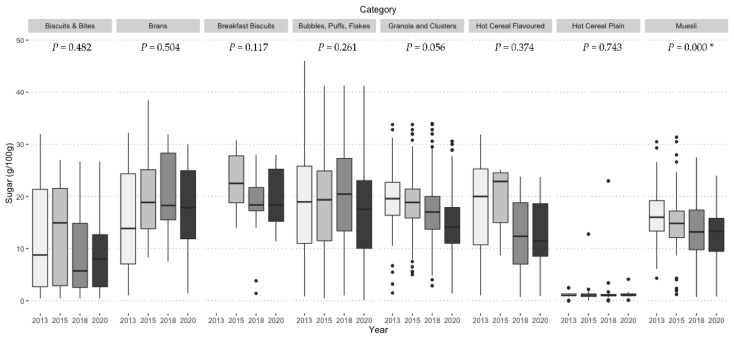
Breakfast cereal improves overall diet quality yet is under constant scrutiny with assertions that the category has not improved over time. This study aimed to comprehensively analyse the category of breakfast cereals, the nutritional values, and health claims across eight distinct sub-categories at four time points (2013, 2015, 2018, and 2020). An audit of products from four major supermarkets in metropolitan Sydney (Aldi, Coles, IGA, and Woolworths) collected ingredient lists, nutrition information, claims and Health Star Rating (HSR) for biscuits and bites; brans; bubbles, puffs, and flakes; granola and clusters; hot cereal flavoured; hot cereal plain; muesli; breakfast biscuits. The median (IQR) were calculated for energy, protein, fat, saturated fat, carbohydrate, sugars, dietary fibre, and sodium for comparisons over time points by nutrient. Data from 2013 was compared with 2020 (by sub-category and then for a sub-section of common products available at each time point). Product numbers between 2013 ( = 283) and 2020 ( = 543) almost doubled, led by granola and clusters. Whole grain cereals ≥ 8 g/serve made up 67% of products (↑114%). While there were positive changes in nutrient composition over time within the full data set, the most notable changes were in the nutrition composition of cereals marketed as the same product in both years ( = 134); with decreases in mean carbohydrate (2%), sugar (10%) and sodium (16%) ( < 0.000), while protein and total fat increased significantly ( = 0.036; = 0.021). Claims regarding Dietary Fibre and Whole Grain doubled since 2013. Analysis of sub-categories of breakfast cereal assisted in identifying some changes over time, but products common to both timeframes provided a clearer analysis of change within the breakfast category, following introduction of HSR. Whole grain products were lower in the two target nutrients, sodium and sugars, and well-chosen products represent a better choice within this category.
早餐麦片改善整体饮食质量,但一直受到质疑,即该品类并没有随着时间的推移而改善。本研究旨在全面分析早餐麦片品类,分析营养值和健康声称在四个时间点(2013 年、2015 年、2018 年和 2020 年)的八个不同子品类中的情况。对悉尼大都市区四家大型超市(Aldi、Coles、IGA 和 Woolworths)的产品进行审计,收集了饼干和小食、麦麸、气泡、膨化和薄片、格兰诺拉麦片和麦片团、热谷物调味、热谷物原味、麦斯威尔、早餐饼干的成分清单、营养信息、声称和健康星级评级(HSR)。按营养成分计算了各时间点的能量、蛋白质、脂肪、饱和脂肪、碳水化合物、糖、膳食纤维和钠的中位数(IQR)。2013 年的数据与 2020 年进行了比较(按子类别,然后按每个时间点的常见产品进行比较)。2013 年(=283)和 2020 年(=543)的产品数量几乎翻了一番,主要是格兰诺拉麦片和麦片团。每份含 8 克以上全谷物的麦片占产品的 67%(↑114%)。虽然整个数据集的营养成分随时间发生了积极变化,但最显著的变化是在这两年中以相同产品销售的麦片的营养成分(=134);平均碳水化合物(-2%)、糖(-10%)和钠(-16%)减少(<0.000),而蛋白质和总脂肪显著增加(=0.036;=0.021)。膳食纤维和全谷物的声称自 2013 年以来增加了一倍。早餐麦片子类别的分析有助于确定随时间的一些变化,但两个时间框架内的共同产品提供了更清晰的早餐类别内变化分析,遵循 HSR 引入之后的变化。全谷物产品在钠和糖这两个目标营养素方面含量较低,而精心挑选的产品是该类别中的更好选择。