Department of Physics and Astronomy, University of Bologna, 40127, Bologna, Italy.
Department of Experimental, Diagnostic and Specialty Medicine, University of Bologna, 40127, Bologna, Italy.
Sci Rep. 2021 Feb 4;11(1):3030. doi: 10.1038/s41598-021-82726-y.
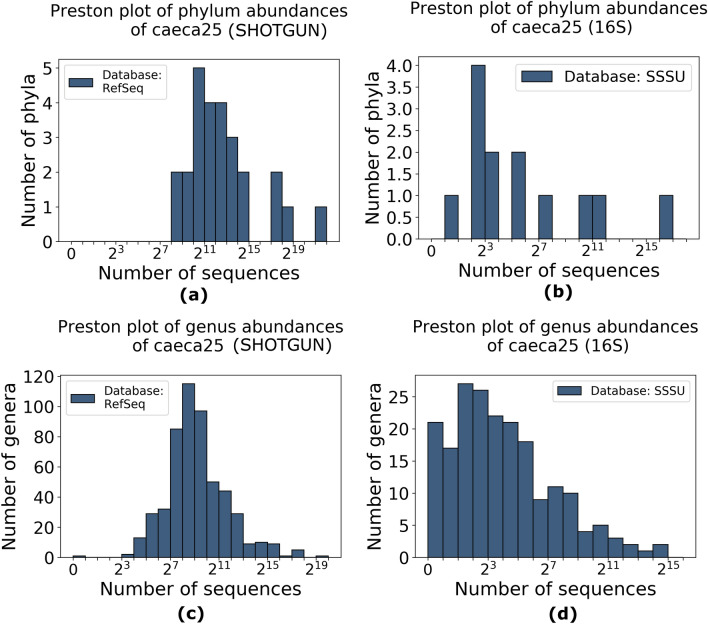
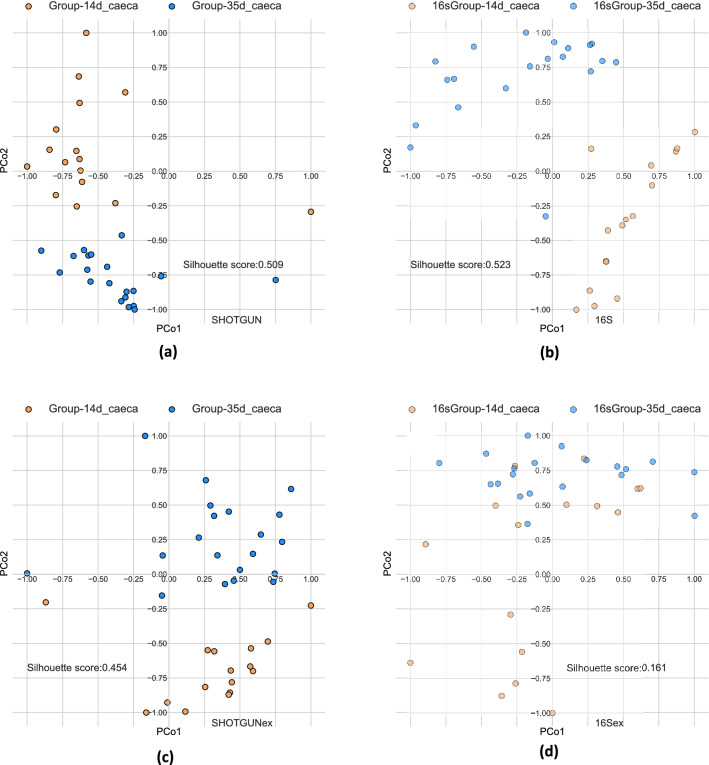
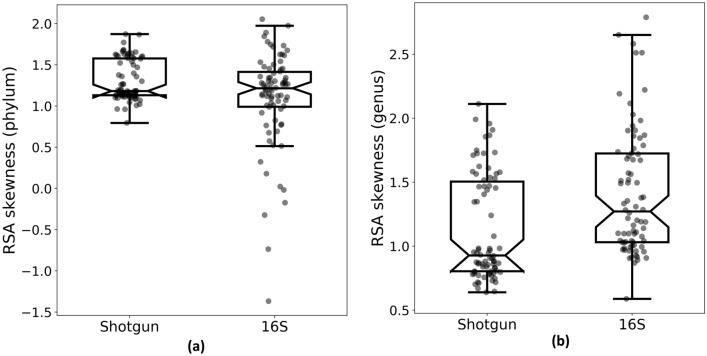
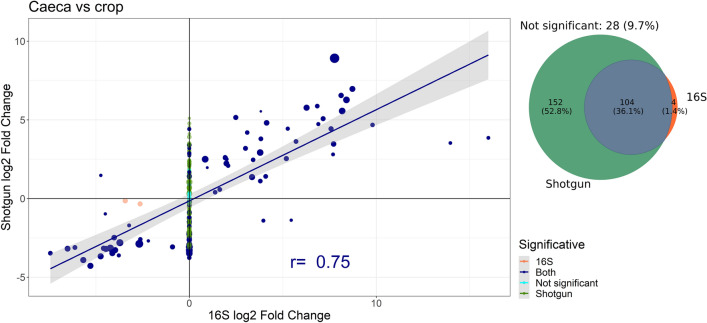
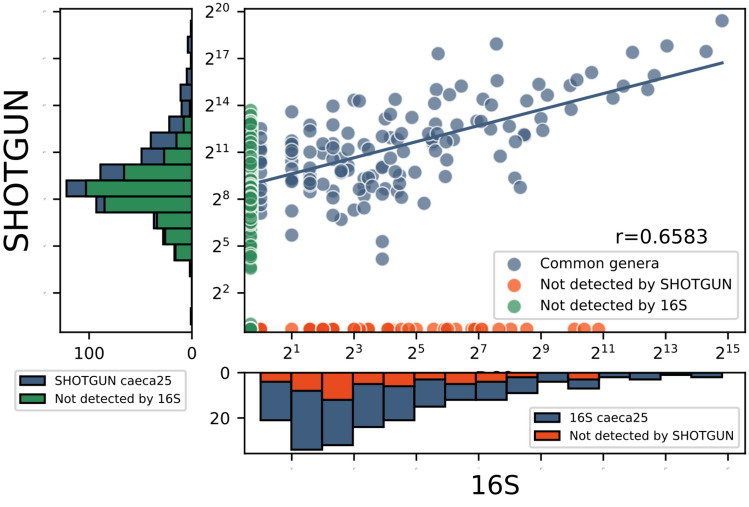
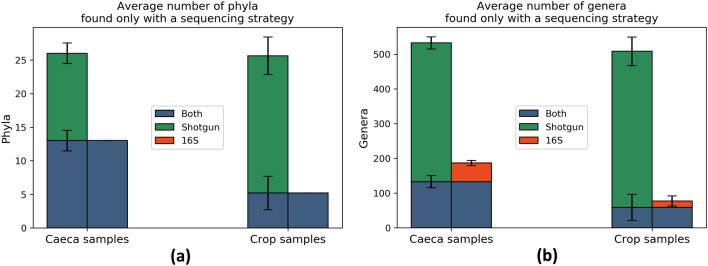
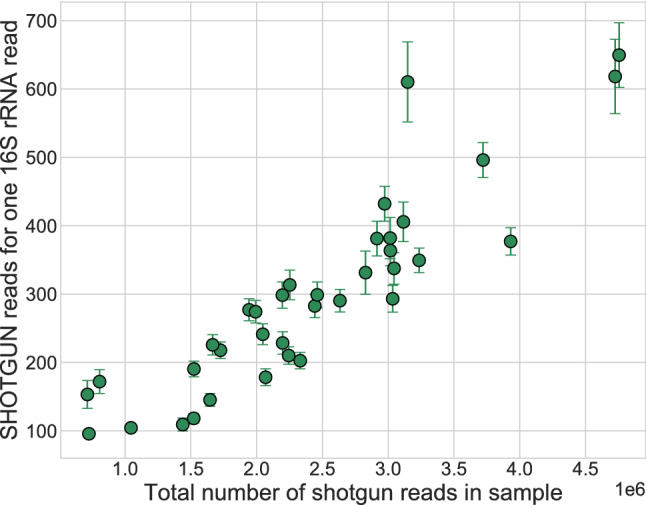
In this paper we compared taxonomic results obtained by metataxonomics (16S rRNA gene sequencing) and metagenomics (whole shotgun metagenomic sequencing) to investigate their reliability for bacteria profiling, studying the chicken gut as a model system. The experimental conditions included two compartments of gastrointestinal tracts and two sampling times. We compared the relative abundance distributions obtained with the two sequencing strategies and then tested their capability to distinguish the experimental conditions. The results showed that 16S rRNA gene sequencing detects only part of the gut microbiota community revealed by shotgun sequencing. Specifically, when a sufficient number of reads is available, Shotgun sequencing has more power to identify less abundant taxa than 16S sequencing. Finally, we showed that the less abundant genera detected only by shotgun sequencing are biologically meaningful, being able to discriminate between the experimental conditions as much as the more abundant genera detected by both sequencing strategies.
在本文中,我们通过比较宏分类组学(16S rRNA 基因测序)和宏基因组学(全鸟枪法宏基因组测序)的分类学结果,以研究它们在细菌分析中的可靠性,以鸡肠道作为模型系统进行研究。实验条件包括两个胃肠道隔间和两个采样时间。我们比较了两种测序策略获得的相对丰度分布,然后测试了它们区分实验条件的能力。结果表明,16S rRNA 基因测序仅检测到由鸟枪法测序揭示的肠道微生物群落的一部分。具体来说,当可用的读取数足够多时,鸟枪法测序比 16S 测序更有能力识别丰度较低的分类群。最后,我们表明,仅通过鸟枪法测序检测到的丰度较低的属具有生物学意义,能够像两种测序策略都检测到的更丰富的属一样,很好地区分实验条件。