Centro de Biotecnología y Genómica de Plantas, Universidad Politécnica de Madrid (UPM) - Instituto Nacional de Investigación y Tecnología Agraria y Alimentaria (INIA), Campus de Montegancedo UPM, Pozuelo de Alarcón (Madrid), Spain.
Departamento de Biotecnología-Biología Vegetal, Escuela Técnica Superior de Ingeniería Agronómica, Alimentaría y de Biosistemas, UPM, Madrid, Spain.
Plant J. 2021 May;106(3):601-615. doi: 10.1111/tpj.15185. Epub 2021 Mar 22.
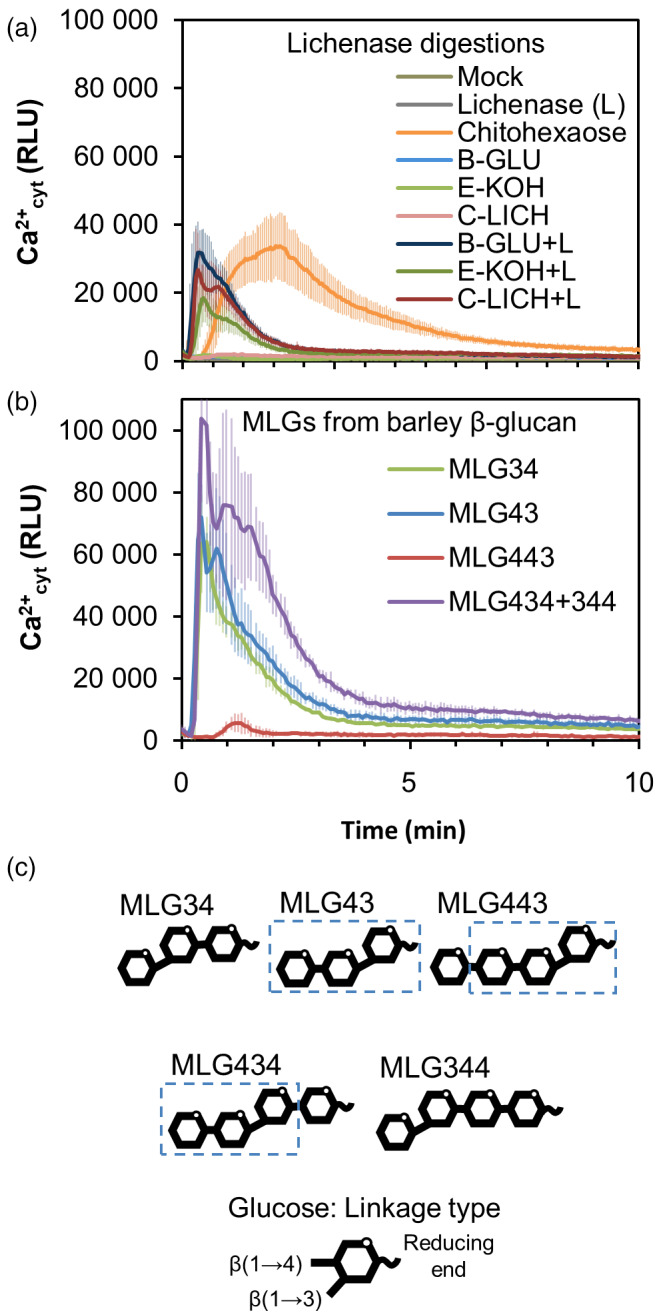
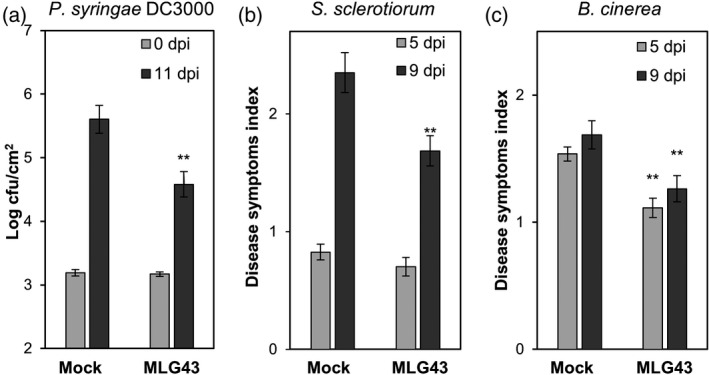
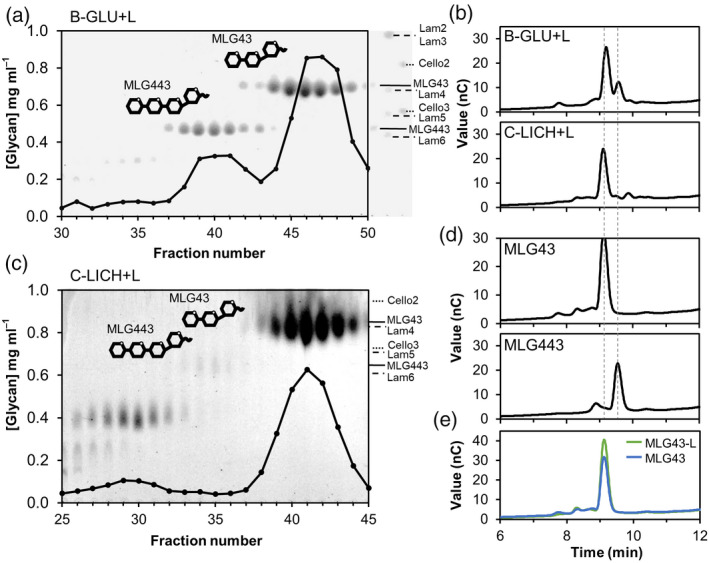
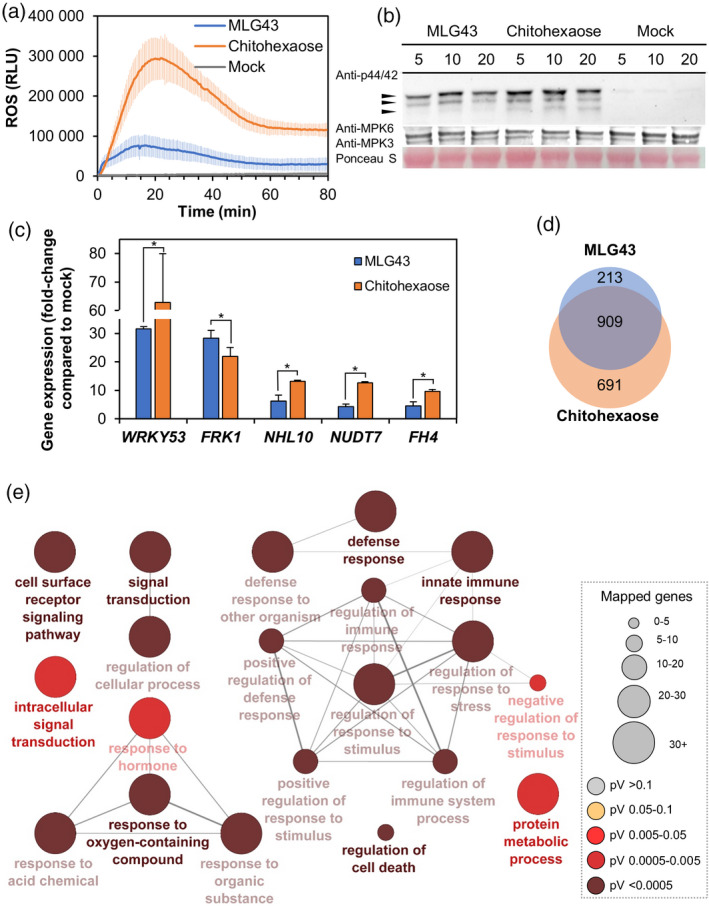
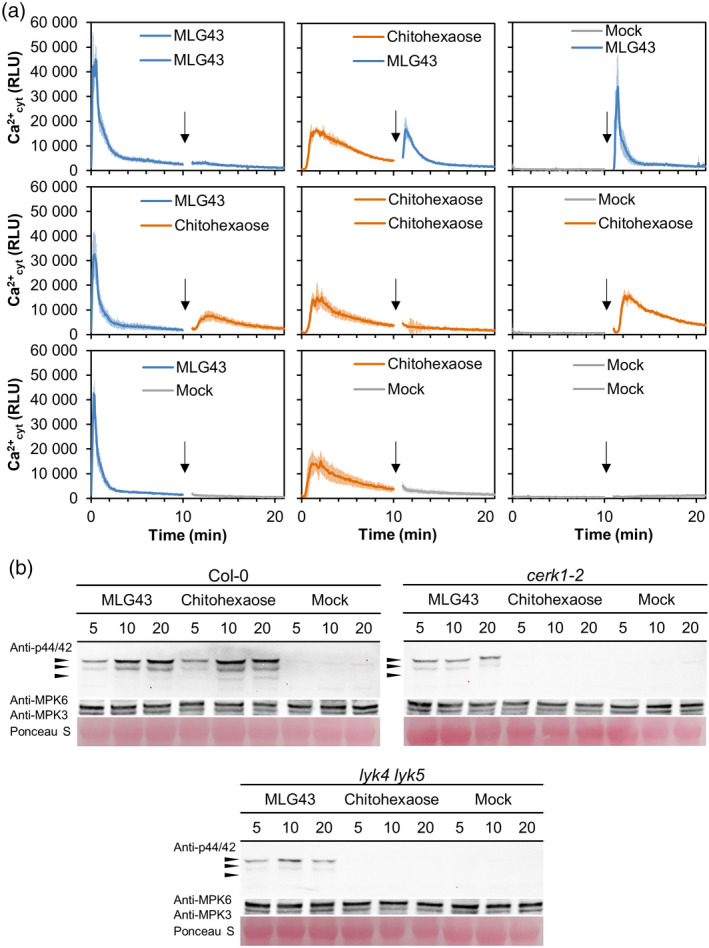
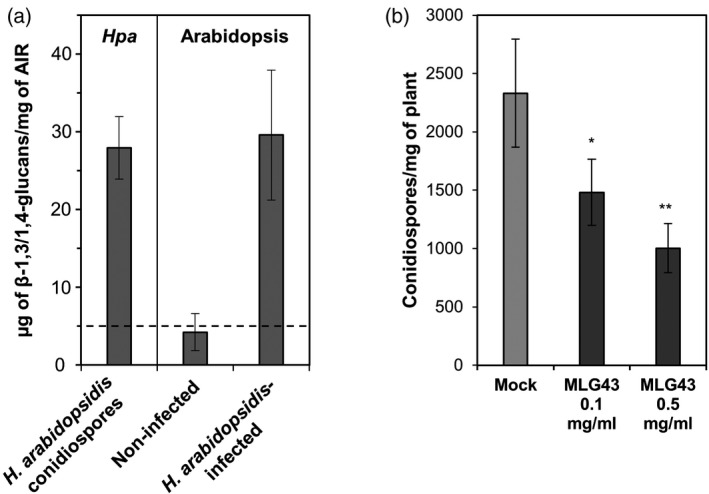
Pattern-triggered immunity (PTI) is activated in plants upon recognition by pattern recognition receptors (PRRs) of damage- and microbe-associated molecular patterns (DAMPs and MAMPs) derived from plants or microorganisms, respectively. To understand better the plant mechanisms involved in the perception of carbohydrate-based structures recognized as DAMPs/MAMPs, we have studied the ability of mixed-linked β-1,3/1,4-glucans (MLGs), present in some plant and microbial cell walls, to trigger immune responses and disease resistance in plants. A range of MLG structures were tested for their capacity to induce PTI hallmarks, such as cytoplasmic Ca elevations, reactive oxygen species production, phosphorylation of mitogen-activated protein kinases and gene transcriptional reprogramming. These analyses revealed that MLG oligosaccharides are perceived by Arabidopsis thaliana and identified a trisaccharide, β-d-cellobiosyl-(1,3)-β-d-glucose (MLG43), as the smallest MLG structure triggering strong PTI responses. These MLG43-mediated PTI responses are partially dependent on LysM PRRs CERK1, LYK4 and LYK5, as they were weaker in cerk1 and lyk4 lyk5 mutants than in wild-type plants. Cross-elicitation experiments between MLG43 and the carbohydrate MAMP chitohexaose [β-1,4-d-(GlcNAc) ], which is also perceived by these LysM PRRs, indicated that the mechanism of MLG43 recognition could differ from that of chitohexaose, which is fully impaired in cerk1 and lyk4 lyk5 plants. MLG43 treatment confers enhanced disease resistance in A. thaliana to the oomycete Hyaloperonospora arabidopsidis and in tomato and pepper to different bacterial and fungal pathogens. Our data support the classification of MLGs as a group of carbohydrate-based molecular patterns that are perceived by plants and trigger immune responses and disease resistance.
模式触发免疫(PTI)是植物在识别来自植物或微生物的损伤和微生物相关分子模式(DAMPs 和 MAMPs)的模式识别受体(PRRs)后被激活的。为了更好地理解植物在感知被认为是 DAMPs/MAMPs 的碳水化合物结构中涉及的机制,我们研究了存在于一些植物和微生物细胞壁中的混合连接β-1,3/1,4-葡聚糖(MLGs)触发植物免疫反应和抗病性的能力。测试了一系列 MLG 结构,以确定它们诱导 PTI 特征的能力,例如细胞质 Ca 升高、活性氧物质产生、丝裂原活化蛋白激酶的磷酸化和基因转录重编程。这些分析表明,MLG 寡糖被拟南芥识别,并鉴定出一种三糖,β-d-纤维二糖基-(1,3)-β-d-葡萄糖(MLG43),作为触发强烈 PTI 反应的最小 MLG 结构。这些 MLG43 介导的 PTI 反应部分依赖于 LysM PRRs CERK1、LYK4 和 LYK5,因为它们在 cerk1 和 lyk4 lyk5 突变体中比在野生型植物中弱。MLG43 与碳水化合物 MAMP 几丁六糖[β-1,4-d-(GlcNAc)]之间的交叉诱导实验表明,MLG43 识别的机制可能与几丁六糖不同,几丁六糖在 cerk1 和 lyk4 lyk5 植物中完全受损。MLG43 处理可增强拟南芥对卵菌 Hyaloperonospora arabidopsidis 的抗病性,以及番茄和辣椒对不同细菌和真菌病原体的抗病性。我们的数据支持将 MLGs 归类为一组碳水化合物分子模式,这些模式被植物感知并触发免疫反应和抗病性。